





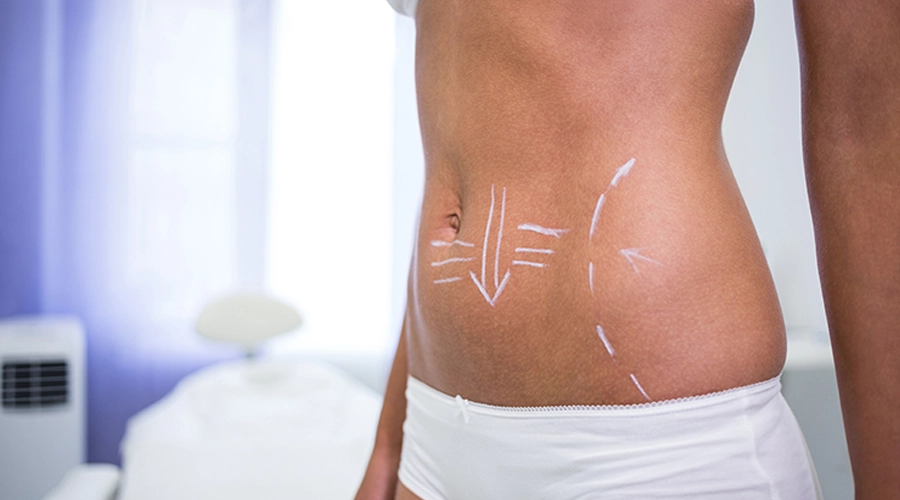
The extent of surgery is not the same for everyone. Excess skin, fat distribution, muscle structure, and previous operations all affect surgical planning. Different approaches, such as a mini or full tummy tuck, are selected based on this assessment. The most appropriate technique is determined after an examination by a plastic surgeon.
What Is a Tummy Tuck (Abdominoplasty)?
A tummy tuck is a body contouring procedure that surgically removes loose skin and tissue from the abdomen. If necessary, looseness of the abdominal wall may also be tightened during surgery.
Pregnancy, major weight loss, and repeated weight fluctuations can reduce the elasticity of abdominal skin. In some people, the connective tissue between the abdominal muscles may also become stretched. This can create a protruding appearance in the abdomen.
Exercise can improve muscle strength, but it cannot remove significant excess skin. Likewise, weight loss does not always fully tighten loose skin. For suitable patients, a tummy tuck is therefore a surgical option that addresses both the skin and abdominal wall.
What Does a Tummy Tuck Do?
A tummy tuck primarily aims to reduce excess skin and reshape the abdominal contour. The extent of the procedure is tailored to the patient’s existing anatomical changes.
Abdominoplasty may be considered for the following concerns:
- Significant excess skin in the lower and middle abdomen
- Loose skin remaining after weight loss
- Abdominal laxity after pregnancy
- Rectus diastasis in suitable cases
- Excess lower-abdominal skin containing some stretch marks
- Contour irregularities between the abdomen and waist
A tummy tuck does not remove all stretch marks. Stretch marks located on skin that is removed may be excised with that skin. The position of stretch marks in other areas may change.
Tummy Tuck vs Liposuction: What Is the Difference?
A tummy tuck focuses on excess skin and looseness of the abdominal wall, while liposuction targets localized fat. For this reason, the two procedures are not direct alternatives to each other.
Liposuction may be considered when the main concern is localized fat and skin elasticity is good. If significant sagging is present, fat removal alone may not be enough. In some patients, both procedures can be performed as part of the same surgical plan.
| Feature | Tummy Tuck | Liposuction |
| Primary goal | Excess skin and abdominal contour | Localized fat deposits |
| Effect on loose skin | Excess skin can be removed | Does not correct significant skin laxity |
| Muscle separation | Can be repaired in suitable cases | Not treated |
| Incision | Longer, depending on the extent of surgery | Small access incisions are used |
| Purpose | To reshape the abdominal wall | To contour the body by reducing fat |
| Can they be combined? | Yes, in suitable patients | Yes, in suitable patients |
The appropriate procedure is not determined by the amount of fat alone. Skin quality and the condition of the abdominal wall must also be assessed.
What Are the Types of Tummy Tuck?
Types of tummy tuck vary according to where the laxity is located and how much skin needs to be removed. Not every patient requires a full tummy tuck.
| Technique | When Is It Typically Considered? | Treatment Area |
| Mini tummy tuck | Limited excess skin below the belly button | Lower abdomen |
| Full tummy tuck | Significant laxity in the lower and upper abdomen | A large portion of the front abdominal wall |
| Extended tummy tuck | Loose skin extending from the abdomen toward the sides | Abdomen and flanks |
| Fleur-de-lis tummy tuck | Significant horizontal and vertical excess skin | More extensive skin removal |
| Circumferential tummy tuck | Circumferential skin laxity after major weight loss | Waistline and torso |
Mini Tummy Tuck
A mini tummy tuck is generally considered for people with limited skin laxity below the belly button. It treats a smaller area than a full tummy tuck.
Repositioning the belly button may not be necessary in many mini tummy tuck procedures. However, the exact technique depends entirely on the patient’s anatomy.
Full Tummy Tuck
A full tummy tuck is an abdominoplasty technique designed to address more extensive laxity in both the lower and upper abdomen. A horizontal incision is made in the lower abdomen.
After excess skin is removed, the remaining tissues are repositioned. The abdominal wall may be tightened when required. An additional incision around the belly button may also be necessary.
Extended Tummy Tuck
An extended tummy tuck may be considered when loose skin extends toward the sides of the abdomen. The incision extends farther toward the flanks than in a standard tummy tuck.
After significant weight loss, excess skin may be present around the waist as well as the abdomen. The surgical plan is tailored to how these areas are distributed.
Fleur-de-Lis Tummy Tuck
The fleur-de-lis technique may be used when there is significant excess skin in both the horizontal and vertical directions. It requires a vertical incision in addition to the horizontal incision.
This technique is often considered after major weight loss. It allows more extensive skin removal but may result in longer surgical scars.
Circumferential Tummy Tuck
A circumferential tummy tuck may be considered when excess skin is not limited to the front of the torso. The sides and back of the waist can also be included in the surgical plan.
Extensive skin laxity can occur particularly after bariatric surgery or major weight loss. In these patients, the scope of surgery should be planned in detail.
How Is a Tummy Tuck Performed?
During a tummy tuck, excess skin is removed and the remaining tissues are repositioned to create a new abdominal contour. The details of the procedure vary according to the abdominoplasty technique selected.
The operation is usually performed under general anesthesia. An incision is planned in the lower abdomen, positioned as low as reasonably possible so it can be concealed by underwear.
The surgeon then releases the skin and underlying tissue to the required level. If there is significant abdominal wall laxity, tightening may be performed using an appropriate surgical technique.
After the excess skin is removed, the remaining tissue is repositioned downward. In a full tummy tuck, a new opening is created for the belly button in the repositioned skin.
Liposuction may be added in suitable patients to improve the contour of the abdomen and waist. The incisions are then closed. Some techniques may require temporary drains.
How Long Does Tummy Tuck Surgery Take?
A tummy tuck usually takes several hours, although the exact duration depends on the extent of surgery. A full abdominoplasty generally takes longer than a mini tummy tuck.
Muscle repair, liposuction, or the addition of another cosmetic procedure can increase operating time. Mayo Clinic states that most tummy tuck procedures take less than four hours.
Operating time alone does not indicate how complex the procedure is. Surgical safety and the patient’s anatomical needs are more important factors in planning.
Can Rectus Diastasis Be Repaired During a Tummy Tuck?
In suitable patients, abdominal muscle separation can be addressed during a tummy tuck by tightening the abdominal wall. This condition is medically known as rectus diastasis.
With rectus diastasis, the connective tissue between the right and left rectus abdominis muscles becomes widened. A midline abdominal bulge may be noticeable, particularly after pregnancy.
Not every case of diastasis requires surgery. Appropriate exercise and physiotherapy may be considered in mild cases. Surgery may become an option when significant separation is accompanied by excess skin.
Who Is a Good Candidate for a Tummy Tuck?
A tummy tuck may be considered for people who are in suitable general health and have a relatively stable weight. Significant excess skin is one of the important factors assessed when determining candidacy.
People with loose abdominal skin after pregnancy may be candidates for surgery. The procedure can also be performed for women and men with sagging skin after major weight loss.
Suitable candidates generally have realistic expectations. Avoiding smoking and being able to maintain a stable weight after surgery are also important for recovery.
Age alone is not enough to determine whether surgery is appropriate. Overall health, existing medical conditions, and surgical risks should be assessed together.
Who May Not Be Suitable for Tummy Tuck Surgery?
Suitability for a tummy tuck is not determined only by the degree of abdominal sagging. General health and surgical risks also require detailed assessment.
Active smoking or nicotine use may increase the risk of wound-healing complications. Certain uncontrolled chronic conditions may also increase surgical risk.
Surgery may be postponed for people who plan to lose a significant amount of weight in the near future. Likewise, the timing of surgery may need to be reconsidered if pregnancy is planned soon.
Obesity, clotting disorders, current medications, and previous abdominal surgery should also be assessed. A single body mass index threshold should not be considered appropriate for every patient.
How to Prepare for Tummy Tuck Surgery
The purpose of preparation before a tummy tuck is to reduce surgical risks and plan the recovery process safely. It is important to give the surgeon a complete medical history.
The following points are generally reviewed before surgery:
- All prescription and over-the-counter medications should be disclosed.
- Vitamins and herbal supplements should be reported to the surgeon.
- Smoking and the use of other nicotine products should be disclosed.
- Required blood tests and medical assessments should be completed.
- Medications that may affect bleeding risk should not be changed without medical supervision.
- Support should be arranged for the first few days after surgery.
- Weight should be kept as stable as possible.
Stopping aspirin or other medications is not appropriate for everyone. Medication changes should only be made under the guidance of the relevant healthcare professionals.
What Is Recovery Like After a Tummy Tuck?
Recovery after a tummy tuck is gradual, and activity restrictions are usually required during the first few weeks. Swelling, tightness, and tenderness can be expected in the early recovery period.
Early mobility is important for reducing the risk of blood clots. Patients are usually encouraged to begin short, gentle walks early in recovery under the guidance of their healthcare team.
| Recovery Period | What You May Generally Expect |
| First few days | Swelling, tightness, and short, controlled walks |
| First 1-2 weeks | Gradual increase in daily movement |
| 2-4 weeks | Returning to work may be considered depending on the nature of the job |
| Around 4-6 weeks | Activity restrictions may be reduced with the surgeon’s approval |
| Following months | Swelling subsides and the abdominal contour becomes more defined |
| 12-18 months | The surgical scar continues to mature over time |
These timeframes represent a general recovery pattern. Recovery may differ after mini, full, or combined procedures.
How Long Should You Wear a Compression Garment After a Tummy Tuck?
A compression garment is generally worn for several weeks after a tummy tuck, although the exact duration depends on the surgical plan. It can help control swelling and support healing tissues.
Some patients may be advised to wear it for around four to six weeks. A shorter or longer period may be needed. The level of compression and daily wear time should follow the surgeon’s instructions.
When Can You Stand Up Straight After a Tummy Tuck?
Returning to a fully upright posture after a tummy tuck is usually gradual. During the first few days, patients may need to walk slightly bent forward to reduce tension on the incision line.
Posture generally improves naturally as healing progresses. Patients should not force themselves upright. The surgeon’s recommendations about movement and positioning should be followed.
Remaining completely inactive is also not recommended. Controlled short walks support circulation and can help reduce the risk of blood clots.
Does a Tummy Tuck Leave a Scar?
A tummy tuck leaves a permanent surgical scar. The incision is usually planned low on the abdomen so that it can be concealed beneath clothing.
A full tummy tuck may leave a horizontal scar across the lower abdomen as well as a scar around the belly button. The incision is generally shorter with a mini tummy tuck.
The scar may appear more noticeable during the first few months. Its color and firmness change over time. Scar maturation can take a year or longer.
Genetic factors, smoking, wound healing, and tension on the incision can affect the appearance of the scar. Appropriate scar care should be tailored by the surgeon.
Can You Get Pregnant After a Tummy Tuck?
Pregnancy is possible after a tummy tuck, but it can alter the surgical result. As the abdomen expands, the skin and abdominal wall may stretch again.
For this reason, many people may prefer to have abdominoplasty after completing their pregnancy plans. If pregnancy is being considered, the timing of surgery should be discussed with the surgeon and relevant healthcare professionals.
Having had a tummy tuck is not, by itself, considered a barrier to a normal pregnancy. However, each person’s medical history should be assessed individually.
When Will You See the Final Results of a Tummy Tuck?
Changes from a tummy tuck can be noticeable early on, but swelling needs to subside before the final contour becomes clear. During the first few weeks, swelling can obscure the true result.
The appearance of the abdomen becomes more defined over the following months. Scar maturation can continue for considerably longer.
Results vary according to skin quality, starting anatomy, and the technique used. The same procedure does not create the same abdominal shape in every patient.
Are Tummy Tuck Results Permanent?
Excess skin removed during a tummy tuck does not grow back, but the body continues to change over time. Major weight fluctuations and pregnancy can affect the abdomen again.
Maintaining a stable weight is important for preserving the result. Natural age-related skin laxity also continues over time.
The long-term result therefore depends on more than the surgical technique alone. Weight changes and lifestyle can also affect abdominal contour.
What Are the Risks of Tummy Tuck Surgery?
A tummy tuck is a major surgical procedure and, like other operations, carries certain risks of complications. The level of risk may vary according to the patient’s health and the extent of surgery.
Possible complications may include:
- Bleeding and hematoma
- Infection
- Fluid accumulation known as a seroma
- Delayed wound healing
- Prominent or widened scarring
- Temporary or permanent changes in skin sensation
- Asymmetry
- Circulation problems affecting the skin or fatty tissue
- Complications related to anesthesia
- Deep vein thrombosis and other blood-clot complications
- Need for revision surgery
Smoking and nicotine use can have a particularly negative effect on wound healing. Individual risks should be discussed in detail during the preoperative assessment.
What Procedures Can Be Combined With a Tummy Tuck?
A tummy tuck can be combined with liposuction or other body contouring procedures in suitable patients. However, not every combination is safe or appropriate for every patient.
Liposuction may be added specifically to contour localized fat around the abdomen and waist. Combined surgical plans may be considered for people who need several areas assessed after pregnancy.
A tummy tuck may also be part of some mommy makeover treatment plans. Performing additional procedures, such as breast surgery, during the same operation can increase surgical time.
The decision to combine procedures should not be based on aesthetic goals alone. Overall health, operating time, and factors such as blood-clot risk should be considered together.
Tummy Tuck Turkey Prices in 2026
Tummy tuck costs in 2026 vary from person to person depending on the technique used and the extent of surgery. It is not appropriate to provide a single price without an examination.
A mini tummy tuck does not involve the same surgical scope as a full or extended abdominoplasty. The need for rectus diastasis repair or additional liposuction can also change the treatment plan.
Key factors that may affect the cost of tummy tuck surgery include:
- The tummy tuck technique used
- The amount and distribution of excess skin
- Whether muscle repair is required
- Areas treated with liposuction
- The extent and estimated duration of surgery
- The type of anesthesia used
- Hospital and operating room facilities
- Whether an overnight hospital stay is required
- Additional surgical procedures
- The postoperative follow-up plan
An up-to-date, personalized tummy tuck price for 2026 should be determined after a surgical assessment. When comparing costs, patients should not focus only on the surgery fee. It is also important to ask whether anesthesia, hospital fees, follow-up appointments, and postoperative care are included.
Frequently Asked Questions
Does a tummy tuck help you lose weight?
No. A tummy tuck is not a weight-loss procedure. It is designed to remove excess skin and a limited amount of tissue. In general, planning surgery after weight loss is complete and body weight has stabilized may be more appropriate.
Is a tummy tuck painful?
Because anesthesia is used, pain is not felt during the surgical procedure. Tightness and discomfort can occur afterward. The intensity of these symptoms varies depending on the extent of surgery and the individual’s pain threshold.
When can I return to work after a tummy tuck?
For many people, returning to work may be considered after around two to four weeks. Recovery time can differ between desk-based jobs and physically demanding work. The exact timing should be determined after follow-up with the surgeon.
When can I exercise after tummy tuck surgery?
Strenuous exercise should not be started too early. Controlled walking is generally preferred during the first few weeks. Heavy lifting and demanding exercise may be restricted for around six weeks or longer.
When can I shower after a tummy tuck?
The timing of the first shower depends on the dressings used, whether drains are present, and the condition of the wound. The surgeon’s wound-care instructions should be followed. It is not appropriate to give a single standard timeframe for patients with drains or special dressings.
Does the belly button change during a tummy tuck?
During a full tummy tuck, the belly button may be brought through to an appropriate position in the newly tightened skin. In a mini tummy tuck, the belly button may not need to be altered. The technique used depends on the amount and location of excess skin.
Can a C-section scar be removed during a tummy tuck?
A C-section scar may be removed during surgery if it lies within the lower abdominal skin that is planned for excision. It is not always possible to remove every C-section scar completely. The position of the new tummy tuck incision is planned in relation to existing scars.
Can men have a tummy tuck?
Yes. A tummy tuck can be performed for suitable male and female patients. Men can also develop excess skin and abdominal wall laxity, particularly after significant weight loss. The surgical plan is personalized to the patient’s body structure.
Can loose skin return after a tummy tuck?
Significant weight changes, pregnancy, and aging can cause the abdomen to become lax again. Maintaining a stable weight can help preserve the surgical result for longer. However, the natural aging process cannot be stopped completely.