




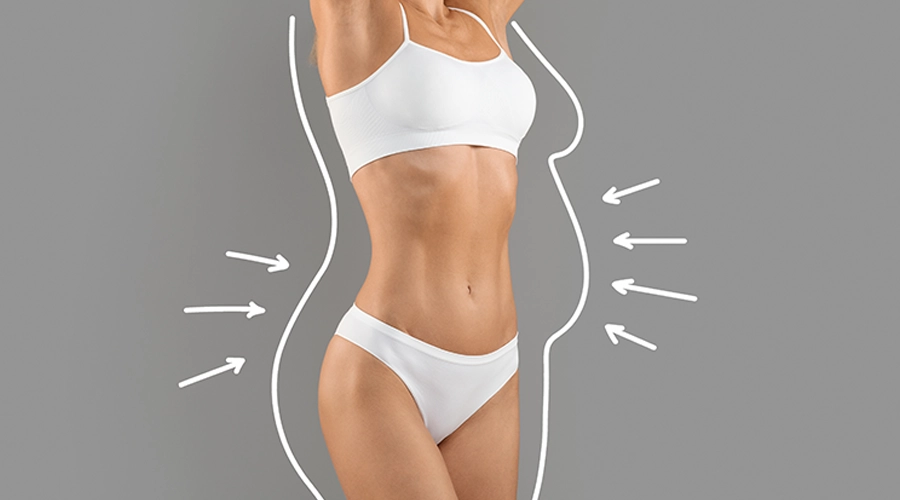
The most appropriate procedure depends on the person’s anatomy, skin quality, fat distribution and expectations. For this reason, body contouring is not a single standard operation. Liposuction, tummy tuck, arm lift and thigh lift address different needs. Buttock contouring, gynecomastia surgery and mommy makeover procedures may also be considered within this scope.
What Is Body Contouring?
Body contouring includes cosmetic surgery procedures designed to improve shape and proportion in specific areas of the body.
Weight changes, pregnancy, genetic factors and ageing can lead to different changes in body tissues. For some people, the main concern is localised fat. For others, loose skin or tissue sagging is more prominent.
To select the right procedure, fat tissue, skin elasticity and muscle structure are assessed separately. Treatment is not the same for someone with excess fat alone and someone with significant skin laxity.
Which Areas Can Be Treated with Body Contouring?
Body contouring can be performed on many areas, including the abdomen, waist, back, arms, thighs, chest and buttocks.
The treatment area should be determined by anatomical need rather than appearance alone. Excess fat, skin laxity and loss of volume may all be present in the same area.
For this reason, the consultation does not focus on only one part of the body. Overall body proportions and the transitions between neighbouring areas are also considered in the surgical plan.
What Types of Body Contouring Surgery Are Available?
Body contouring surgery includes a range of procedures designed to address different anatomical concerns.
| Procedure | Primary goal | When it is commonly considered |
| Liposuction | Reduce localised fat | Localised fat resistant to diet and exercise |
| Tummy tuck (abdominoplasty) | Remove excess skin and tighten the abdominal contour | Abdominal sagging after pregnancy or weight changes |
| Arm lift | Reduce excess skin on the upper arms | Significant upper-arm sagging |
| Thigh lift | Reshape upper-thigh tissues | Inner-thigh sagging after weight loss |
| BBL | Change buttock shape and volume with fat transfer | Reshaping buttock volume or overall body proportions |
| Buttock implants | Add volume to the buttocks | Selected cases where fat transfer is not suitable |
| Gynecomastia surgery | Reduce excess male breast tissue | Enlargement of the male chest |
| Six-pack surgery | Enhance abdominal muscle definition | Shaping muscle contours in patients with suitable anatomy |
| Breast surgery | Change breast volume, shape or sagging | Breast size, volume loss or sagging |
| Mommy makeover | Address changes in multiple areas after childbirth | Combined changes in the abdomen and breasts |
These procedures do not all serve the same purpose. A more extensive operation is not automatically the most suitable option for a particular patient.
What Is the Difference Between Liposuction and a Tummy Tuck?
Liposuction reduces fat tissue, while a tummy tuck primarily targets excess skin and laxity of the abdominal wall.
These two procedures are often confused, but their primary goals are different.
| Liposuction | Tummy Tuck |
| Targets localised fat | Targets excess and loose skin |
| Skin removal is not the main part of the procedure | Excess skin can be surgically removed |
| Does not repair weakened abdominal muscles | The abdominal wall can be repaired when necessary |
| Good skin elasticity is an advantage | May be considered for significant skin sagging |
| Not a weight-loss method | Not a weight-loss method |
If skin elasticity is good, liposuction alone may be considered. If there is significant sagging, fat removal by itself may not be enough. In some patients, both procedures can be planned together.
Does Body Contouring Help You Lose Weight?
Body contouring is not a weight-loss treatment; its main purpose is to reshape body contours.
Liposuction in particular is not an alternative to obesity treatment or healthy eating. It focuses on fat tissue in specific areas and does not, by itself, correct loose skin.
For people planning significant weight loss, it may be preferable to complete that process first. Maintaining a stable weight is important for surgical planning and long-term preservation of results.
Who May Be a Good Candidate for Body Contouring?
Body contouring may be considered for adults whose general health is suitable for surgery and who have realistic expectations.
People with a stable weight may be better candidates for surgical body contouring. Smoking, chronic health conditions and previous operations should also be assessed.
Body contouring may be considered in situations such as:
- Significant loose skin after weight loss
- Persistent localised fat despite diet and exercise
- Changes in the abdomen or breasts after pregnancy
- Excess skin on the upper arms or thighs
- Gynecomastia in men
- A desire to reshape the proportions of the buttocks and waist
- Noticeable disproportion between specific areas of the body
Suitability is not determined by appearance alone. Surgical safety should always take priority over aesthetic expectations.
Who May Not Be Suitable for Body Contouring?
Body contouring may need to be postponed or may not be recommended for people with uncontrolled health conditions.
Active infections, conditions that impair wound healing and a high surgical risk require careful assessment. Smoking and nicotine use can also negatively affect wound healing.
Surgery may be postponed for people planning major weight loss in the near future. The timing of some procedures may also be adjusted for those planning a pregnancy soon.
A final decision should be made after reviewing the patient’s medical history and the scope of the planned procedure.
How Should You Prepare for Body Contouring Surgery?
Before body contouring, general health, current medications and surgical goals are assessed in detail.
Previous operations, chronic conditions and medication use should be fully disclosed during the consultation. Vitamins and herbal supplements are also part of this assessment.
Blood tests and other investigations may be requested as part of surgical preparation. Some medications may need to be adjusted, but no medication should be stopped without medical advice.
If the patient smokes, they may be asked to stop before surgery. A balanced diet and adequate protein intake are also among the factors that can support healing.
How Is Body Contouring Surgery Performed?
The way body contouring surgery is performed depends on the selected procedure.
Before surgery, treatment areas are identified and the surgical plan is finalised. The type of anaesthesia is selected according to the scope of the procedure and the patient’s health.
If liposuction is planned, fat is removed using thin cannulas. In lift procedures, excess skin is surgically removed. During a tummy tuck, additional repair of the abdominal wall may be performed when needed.
If fat transfer is planned, the harvested fat can be processed and transferred to the target area. For procedures such as buttock implants, implant size and placement are selected individually.
Drains may be used after some procedures. Compression garments or other supportive garments may also be recommended depending on the type of operation.
Can Multiple Body Contouring Procedures Be Performed at the Same Time?
In suitable patients, more than one body contouring procedure may be combined within the same surgical plan.
Liposuction combined with a tummy tuck is a common example. In a mommy makeover, procedures involving the abdomen and breasts may be considered together.
However, there is no fixed number of procedures that can safely be performed in one session. Operation time, the risk of blood loss and the patient’s overall health are assessed together.
Performing several extensive procedures in a single operation may not be appropriate for every patient. In some cases, staging the operations at different times may be a safer approach.
What Is Recovery Like After Body Contouring Surgery?
Recovery after body contouring varies according to the type and extent of surgery performed.
Swelling, tenderness and bruising may occur during the first few days. Protecting the surgical area and following postoperative care instructions are important.
| Period | What can generally be expected |
| First few days | Swelling, bruising and tenderness with movement may occur |
| First 1-2 weeks | Daily activity may be increased gradually |
| First few weeks | A compression garment may be required |
| 3-6 weeks | Activity levels may be increased under medical guidance |
| Following months | Body contours become more defined as swelling decreases |
| Long term | Scars continue to mature and fade |
This recovery timeline is not the same for every operation. For example, liposuction and an extensive tummy tuck do not have identical recovery periods.
Early, controlled walking can be important after some procedures to help reduce the risk of blood clots. Return to strenuous exercise should take place at the time recommended by the doctor.
Are Compression Garments Used After Body Contouring?
Compression garments may be recommended after many body contouring procedures, but they are not required after every operation.
They may be used to support the surgical area and help control swelling. How long they are worn depends on the procedure performed.
A tighter garment does not mean faster recovery. The wrong size or excessive pressure can cause circulation problems. The garment type and duration of use should therefore follow the surgeon’s advice.
When Will You See the Results of Body Contouring?
Early changes after body contouring may be visible soon after surgery, but swelling needs to subside before the final appearance can be assessed.
After liposuction in particular, it may take several months for the tissues to settle fully. Following more extensive lift procedures, the tissues and surgical scars also continue to change over time.
Results should not be judged only by the first few weeks after surgery. Swelling, tissue firmness and temporary asymmetry can affect the early appearance.
Are Body Contouring Results Permanent?
The changes achieved with body contouring can be long lasting, but the body continues to change over time.
Maintaining a stable weight is important for preserving contour after liposuction. Significant weight gain can enlarge the remaining fat cells. Ageing can also change skin elasticity over time.
Pregnancy and major weight changes can particularly affect results in the abdomen and breasts. Long-term planning is therefore an important part of the decision to have surgery.
Does Body Contouring Leave Scars?
Body contouring procedures that require incisions can leave scars, and scar length depends on the operation performed.
Liposuction is performed through small entry points. Longer incisions may be required for procedures such as tummy tuck, arm lift and thigh lift.
Surgical planning aims to place incisions in natural creases or areas that can be concealed by clothing where possible. However, no surgical incision can be guaranteed to heal without any visible scar.
Scar appearance can be affected by genetics, skin characteristics and wound care. Scar tissue may continue to change for months.
What Are the Risks of Body Contouring Surgery?
Like other surgical procedures, body contouring operations carry certain risks.
Bleeding, infection, fluid accumulation and wound-healing problems may occur. Changes in sensation, prominent scarring and contour irregularities are also possible complications.
More serious but less common risks include deep vein thrombosis and pulmonary embolism. Complications related to anaesthesia are also part of the surgical risk assessment.
Each procedure has its own additional risks. For example, buttock augmentation with fat transfer requires specific safety considerations.
Risks should be discussed with the patient in detail according to the planned operation. The scope of surgery should be defined within safe surgical limits.
How Is the Right Body Contouring Procedure Chosen?
The most appropriate body contouring procedure is selected by determining whether the main concern is fat, skin, muscle or loss of volume.
For someone with localised fat alone, liposuction may be sufficient. If there is significant skin laxity, a lift procedure may be required.
If there is muscle separation in the abdomen, removing fat alone will not address the underlying issue. Likewise, planning an unnecessarily extensive incision in someone with good skin elasticity may not be appropriate.
Treatment should therefore not be selected only by comparing the desired appearance with a photograph. The patient’s own anatomy and safe surgical limits should guide the plan.
Is Body Contouring Different for Women and Men?
The basic surgical principles of body contouring are similar, although the target contours may differ between women and men.
In women, the abdomen, waist, buttocks, breasts and thighs are commonly assessed areas. Changes after pregnancy may also affect surgical planning.
In men, the abdomen, waist and chest may be more prominent areas of concern. Gynecomastia surgery and abdominal muscle definition procedures may be considered as part of male body contouring.
In both cases, the goal is not to create a standardised body shape. The surgical plan should be tailored to the patient’s anatomy and expectations.
Body Contouring Turkey Prices 2026
Body contouring costs in 2026 vary according to the type and extent of surgery performed.
Because ‘body contouring’ does not refer to a single operation, there is no one price that applies to everyone. Liposuction and a combined tummy tuck do not involve the same surgical scope. Likewise, the costs of an arm lift and a mommy makeover are calculated differently.
Key factors that may affect pricing include:
- The type of cosmetic surgery performed
- The number of areas treated
- The extent of the operation
- Whether a single or combined procedure is planned
- The surgical technique used
- Anaesthesia and operating theatre requirements
- Whether an overnight hospital stay is required
- Any implants or additional materials required
- The patient’s anatomical needs
- The postoperative follow-up plan
It is not appropriate to provide an exact price before an individual surgical plan has been confirmed. The final fee can be given after the consultation and the scope of the operation have been determined.
Frequently Asked Questions
Is Body Contouring Painful?
The level of pain after body contouring depends on the operation performed. Tenderness and tightness may occur during the first few days. Pain management is planned individually.
How Long Does Body Contouring Surgery Take?
Operation time varies depending on the procedures being performed. A single-area procedure and combined body contouring do not take the same amount of time.
When Can You Return to Work After Body Contouring?
Return to work depends on the extent of surgery and the physical demands of the job. Recovery time may differ between desk-based work and physically demanding work.
When Can You Exercise After Body Contouring?
Return to exercise depends on the type of surgery and the progress of healing. Light movement may begin earlier, while strenuous exercise requires medical approval.
Can Fat Return After Liposuction?
Fat cells removed by liposuction do not return in the same way. However, the remaining fat cells can enlarge with weight gain, which is why weight management remains important.
Does Body Contouring Completely Remove Cellulite?
No. Liposuction in particular is not a cellulite treatment. Because the appearance of cellulite is related to skin structure and connective tissue, it needs to be assessed separately.
What Is the Ideal Weight for Body Contouring?
There is no single ideal weight. In general, being at a stable weight is important for surgical planning, as major weight changes can affect the results.
Can You Have Body Contouring After Pregnancy?
Yes, but it may be appropriate to wait until the body has recovered after childbirth and the pregnancy-related changes have stabilised. Breastfeeding and plans for another pregnancy are also considered when deciding on timing.
Can You Get Pregnant Again After Body Contouring?
Many body contouring procedures do not directly prevent future pregnancy. However, another pregnancy can change surgical results in the abdomen and breasts.
Can Body Contouring Procedures Be Combined?
Yes. Some procedures can be combined in suitable patients, but the decision should take the patient’s health and the total surgical burden into account.
Can Men Have Body Contouring Surgery?
Yes. Procedures such as liposuction, abdominal contouring, gynecomastia surgery and abdominal muscle definition may be considered for men.
Is There an Age Limit for Body Contouring?
Age alone does not determine whether surgery is appropriate. General health, healing capacity and the risks of the planned procedure are more important factors.