




What Is Hair Mesotherapy?
Among the injectable approaches used to support scalp health, hair mesotherapy involves delivering small amounts of selected substances into the superficial layers of the scalp. These formulations may contain vitamins, amino acids, minerals, peptides, or other ingredients intended to support the environment surrounding hair follicles.
The procedure is often promoted as a way to reduce hair shedding and improve hair quality. However, formulations vary considerably, and strong clinical evidence supporting the effectiveness of most mesotherapy mixtures remains limited.
Understanding how the treatment works, what it can realistically achieve, and which patients may benefit is essential before considering the procedure.
How Does Hair Mesotherapy Work?
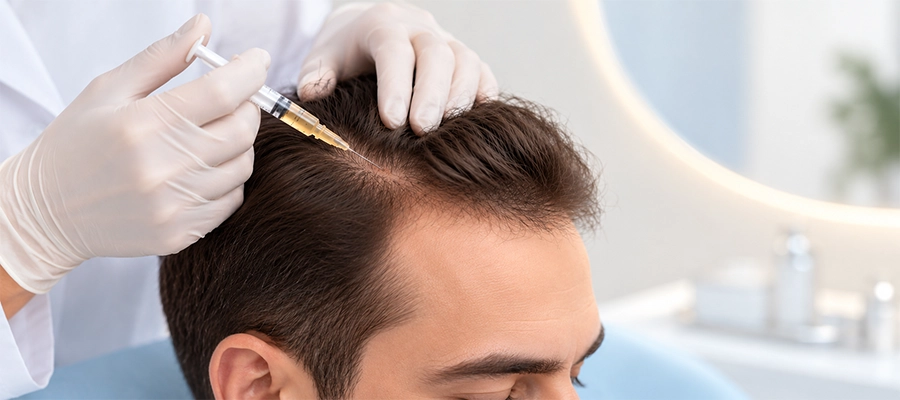
The treatment involves injecting selected ingredients into the scalp near areas affected by thinning or hair loss.
The proposed mechanism depends on the substances used in the formulation.
Some products contain nutrients involved in normal cellular function, while others include compounds marketed for their potential effects on scalp hydration or follicular activity.
The intention is to deliver these substances directly into the local tissue rather than relying entirely on oral supplementation.
However, direct injection does not automatically mean that the ingredients will stimulate hair growth.
Hair follicles operate through complex biological cycles influenced by genetics, hormones, inflammation, and overall health.
Clinical evidence has not established that standard mesotherapy formulations consistently improve these processes in people without a relevant deficiency or specific medical indication.
How Is Hair Mesotherapy Performed?
The procedure usually begins with an examination of the scalp and a discussion of the patient’s hair loss history.
The clinician evaluates the distribution of thinning, scalp condition, and possible underlying causes before selecting an appropriate approach.
If mesotherapy is considered suitable, the scalp is cleaned and the intended treatment areas are identified.
Small amounts of the selected formulation are injected using fine needles or a specialized injection device.
The injections are distributed across the treatment area according to the planned protocol.
Patients may experience mild stinging, pressure, or temporary discomfort during the procedure.
After treatment, minor redness, tenderness, or small injection marks may appear.
The clinician should provide instructions about scalp hygiene, physical activity, and symptoms that require medical attention.
What Ingredients Are Used in Hair Mesotherapy?
Mesotherapy does not refer to a single standardized medication or formulation.
Different products may contain combinations of vitamins, amino acids, minerals, peptides, and other substances.
B vitamins, including biotin and pantothenic acid, are sometimes included because they participate in normal cellular metabolism.
Certain formulations may also contain zinc, copper, or amino acids associated with protein production.
Other products include hyaluronic acid or compounds marketed as supporting scalp hydration and tissue function.
However, the presence of these ingredients does not establish that scalp injections will improve hair growth.
Biotin deficiency, for example, is relatively uncommon, and additional biotin has not been shown to improve hair growth consistently in people without a deficiency.
High-dose biotin supplementation can also interfere with certain laboratory tests, making accurate medical evaluation important.
The safety of a mesotherapy formulation depends on its individual components, preparation quality, and suitability for injection.
Who Is a Good Candidate for Hair Mesotherapy?
Some adults experiencing mild hair thinning or increased shedding may be evaluated for mesotherapy as a supplementary procedure.
However, the cause of hair loss should be identified before treatment begins.
Patients with androgenetic alopecia may be offered supportive interventions, but established medical therapies should remain central to treatment planning.
People experiencing temporary shedding after illness, childbirth, or significant stress may improve when the underlying trigger resolves.
In these cases, injections may not be necessary.
Individuals with active scalp infections, significant inflammation, or known allergies to formulation ingredients may not be suitable candidates.
Pregnancy and breastfeeding also require particular caution because safety information for many injectable mixtures is insufficient.
A dermatological examination helps determine whether the procedure is appropriate or whether another treatment is more likely to help.
What Are the Benefits of Hair Mesotherapy?
The proposed benefits include supporting the scalp environment and delivering selected ingredients to areas affected by thinning.
Some patients report improvements in the appearance or texture of their hair following treatment.
However, these observations do not necessarily demonstrate that the injections caused the improvement.
Hair growth can change naturally over time, particularly when temporary shedding is resolving.
The scientific evidence supporting many commercial mesotherapy formulations remains limited, and studies often use different ingredients and treatment schedules.
Consequently, reliable conclusions about long-term effectiveness are difficult to establish.
Mesotherapy should not be presented as a guaranteed solution for hair loss or as a replacement for treatments supported by stronger clinical evidence.
Can Hair Mesotherapy Help with Hair Loss?
The potential effect on hair shedding depends largely on the underlying cause.
Genetic hair loss develops through progressive changes in follicle size and sensitivity to androgen hormones.
Temporary shedding, such as telogen effluvium, may occur after illness, nutritional deficiency, or major physical stress.
These conditions require different management approaches.
Although mesotherapy is used in some clinical settings, evidence that standard vitamin-based injections reliably reduce hair loss remains insufficient.
Correcting a documented nutritional deficiency or treating an underlying medical condition may be more important than injecting additional nutrients into the scalp.
For androgenetic alopecia, treatments such as topical minoxidil have stronger clinical evidence.
A dermatologist can determine whether mesotherapy has any reasonable supplementary role in an individual treatment plan.
Can Hair Mesotherapy Stimulate Hair Growth?
Hair growth depends on the activity of existing follicles and their progression through the normal growth cycle.
Certain mesotherapy ingredients are promoted as stimulating this activity.
However, convincing evidence that commonly used vitamin and nutrient mixtures consistently produce new hair growth is lacking.
Some patients may notice changes in hair appearance during treatment, but these changes can also reflect natural recovery or the effects of other therapies.
Importantly, mesotherapy cannot create new follicles in areas where they have been permanently destroyed.
This limitation is particularly relevant in advanced baldness and scarring forms of alopecia.
Patients seeking hair regrowth should receive a diagnosis and discuss treatments with established evidence for their specific condition.
Can Hair Mesotherapy Improve Hair Thickness and Density?
Hair thickness and density are related but different characteristics.
Thickness describes the diameter of individual hair shafts, while density refers to the number of hairs within a particular area.
In androgenetic alopecia, affected follicles gradually produce thinner hairs, which can make the scalp more visible.
Mesotherapy is sometimes promoted as a way to reverse this process.
However, high-quality clinical evidence demonstrating consistent improvements in hair shaft diameter or density remains limited for most formulations.
Changes in hair appearance may also be influenced by styling, hair care, or the natural hair growth cycle.
Objective assessment through standardized photographs or trichoscopy is more reliable than judging results from appearance alone.
What Types of Hair Loss Can Be Treated with Hair Mesotherapy?
The suitability of mesotherapy depends on the type of hair loss and the ingredients being used.
In androgenetic alopecia, the condition is driven primarily by genetic and hormonal influences.
Although mesotherapy may be considered as an adjunct in selected cases, it is not a proven replacement for established medical treatments.
Telogen effluvium often develops after illness, childbirth, major stress, or nutritional changes. Management focuses on identifying and addressing the trigger.
Alopecia areata is an autoimmune condition that can cause sharply defined patches of hair loss. It requires condition-specific treatment rather than routine vitamin injections.
Scarring alopecias involve inflammation that may permanently damage follicles. Early diagnosis and appropriate medical treatment are essential.
For these reasons, mesotherapy should not be regarded as a universal treatment for every form of hair loss.
Hair Mesotherapy Turkey Prices 2026
In 2026, hair mesotherapy prices vary according to the formulation used, the treatment area, and the number of planned sessions. The clinician’s experience, clinic location, and any additional diagnostic assessments may also influence the overall cost. An accurate price can be determined after evaluating the scalp and establishing an individualized treatment plan.
Frequently Asked Questions
Does Hair Mesotherapy Really Work?
The effectiveness of mesotherapy depends on the formulation and the condition being treated. Although some small studies and clinical observations suggest potential benefits, strong evidence supporting most commonly used mixtures remains limited. Patients should not expect guaranteed reductions in shedding or significant hair regrowth.
Can Hair Mesotherapy Regrow Lost Hair?
Mesotherapy has not been shown to create new hair follicles. Any potential improvement would depend on existing follicles remaining capable of producing hair. Completely bald areas where follicles have been permanently lost are unlikely to respond.
Can Hair Mesotherapy Stop Hair Loss Permanently?
There is no reliable evidence that mesotherapy permanently stops hair loss. Genetic hair loss is generally progressive and may require ongoing medical management. Temporary shedding may improve after its underlying cause is addressed, regardless of whether mesotherapy is performed.
Is Hair Mesotherapy Effective for Genetic Hair Loss?
Evidence supporting standard mesotherapy formulations for androgenetic alopecia remains limited. Treatments such as topical minoxidil and appropriate prescription medications have stronger scientific support. Mesotherapy should not replace these options without a clear medical reason.
Is Hair Mesotherapy Better Than PRP?
Current evidence does not establish that mesotherapy is better than platelet-rich plasma therapy. PRP has been studied in several controlled trials for androgenetic alopecia, with some showing modest improvements in hair density. Mesotherapy formulations are more variable, making direct comparisons difficult.
Can Hair Mesotherapy Replace a Hair Transplant?
Mesotherapy cannot replace a hair transplant when permanent follicle loss has created areas of established baldness. Hair transplantation moves existing follicles from a donor region to areas requiring coverage. Mesotherapy does not restore destroyed follicles or provide equivalent coverage.
Does Hair Mesotherapy Make Hair Thicker?
Some patients report that their hair appears fuller after treatment, but consistent increases in hair shaft thickness have not been established for most mesotherapy formulations. Results may vary according to the cause of thinning and any accompanying treatments. Objective follow-up is necessary to determine whether a meaningful change has occurred.