





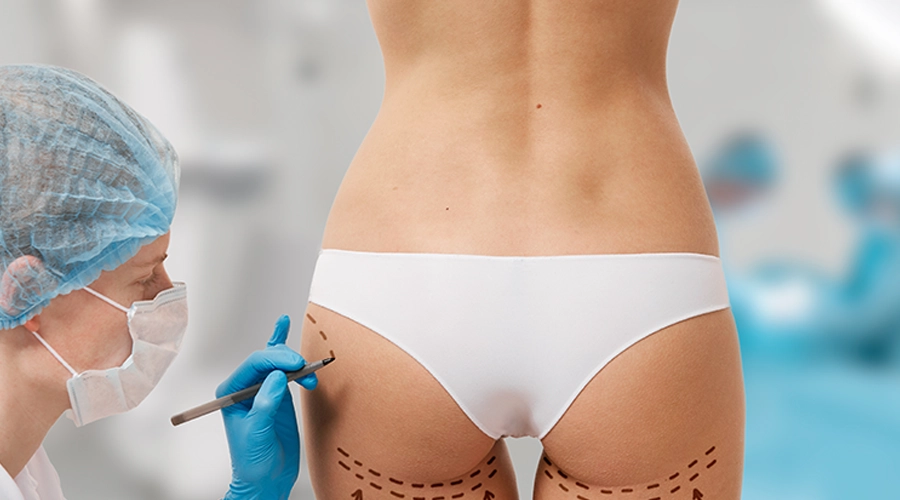
Butt implants are not used solely to make the buttocks look larger. Upper-buttock fullness, side-profile projection and balance between the two sides are also considered during planning. Implant size alone therefore does not determine the result. The implant should be selected according to the patient’s anatomy.
What Is Butt Implant Surgery?
Butt implant surgery increases buttock volume by placing a specially designed implant within the gluteal tissues. The procedure may also be referred to as gluteal implant surgery or buttock augmentation with implants.
Unlike fat transfer, butt implant surgery uses an externally introduced source of volume. This can be particularly relevant for people with a low body-fat percentage. Implants may be used to enhance buttock roundness, projection and overall body proportions.
Are Butt Implants the Same as Hip Replacement Implants?
No. Cosmetic butt implants and orthopaedic hip replacement implants are completely different procedures.
A butt implant is a cosmetic implant intended to add volume to the gluteal muscle area and surrounding soft tissues. A hip replacement implant, by contrast, is an orthopaedic device used to treat a damaged hip joint.
For this reason, terms such as gluteal implants, butt implants or buttock implants are more accurate when referring to cosmetic buttock augmentation.
Who May Be a Good Candidate for Butt Implants?
Butt implants may be considered for adults who are in suitable general health and want to increase buttock volume. Realistic expectations about the procedure and its results are also important.
Butt implant surgery may be considered in situations such as:
- Buttocks that appear small or flat in relation to the rest of the body
- Insufficient projection when viewed from the side
- A noticeable difference in volume between the two sides
- Insufficient donor fat for fat transfer
- A desire for a more defined and predictable increase in volume
- Previous body-contouring procedures that did not meet expectations
Suitability is not determined by weight or body mass index alone. Muscle thickness, skin quality and buttock width should also be assessed.
Who May Not Be a Suitable Candidate?
Butt implant surgery is not suitable for everyone seeking buttock augmentation. Conditions that may increase surgical risk should be assessed first.
An active infection, uncontrolled systemic disease or a significant wound-healing problem may change the surgical plan. Smoking can also impair wound healing. All medications and previous operations should be disclosed to the surgeon.
For people with significant skin laxity, implants alone may not be enough. In some cases, a different body-contouring procedure may be more appropriate.
How Are Butt Implant Size and Shape Selected?
Butt implant size and shape are selected according to the patient’s anatomy and the desired change. There is no single implant size that is suitable for everyone.
Planning includes an assessment of buttock width, height and existing projection. Muscle thickness and skin elasticity are also considered. Daily activity levels and the appearance the patient wants to achieve are important factors as well.
Choosing a very large implant does not always produce a better result. Excessive or unsuitable volume can place unnecessary pressure on the tissues. It may also make implant edges more noticeable or contribute to positioning problems.
What Is the Difference Between Round and Anatomical Butt Implants?
Implant shape can influence how volume is distributed across the buttocks. The choice should be based on the patient’s existing buttock anatomy.
Round implants may create more pronounced volume in the central area. Anatomical or oval designs can provide a more controlled distribution of volume across different areas.
Implant shape alone does not determine the result. The placement plane, implant volume and existing soft-tissue coverage must all be considered together.
Where Are Butt Implants Placed?
Butt implants can be placed in different anatomical planes. The technique is selected according to the surgeon’s assessment and the patient’s anatomy.
Different approaches have been described, including intramuscular, submuscular and subfascial placement. Each technique can differ in terms of tissue coverage, implant control and complication profile.
| Placement approach | Key feature |
| Intramuscular | The implant is positioned within the gluteal muscle. |
| Submuscular | The implant is placed in a deeper anatomical plane. |
| Subfascial | The implant is positioned beneath the fascia overlying the muscle. |
Current research suggests that the implant placement plane may influence complication rates. In a large 2025 analysis, some complications were reported more frequently with subfascial placement, while lower rates were reported with intramuscular and submuscular techniques. However, selecting the most appropriate approach still requires an individual surgical assessment.
How Is Butt Implant Surgery Performed?
During butt implant surgery, a surgical incision is made and the implant is positioned in the planned anatomical space. The procedure is performed under anaesthesia.
Where possible, the incision may be planned within natural creases. A pocket of the appropriate size is then created for the implant. The position and symmetry of the implants on both sides are checked.
After the implants are placed, the tissues are closed in layers. A drain may be used when needed to help manage fluid accumulation.
There is no single standard operating time for butt implant surgery. The technique used and any additional procedures performed during the same session can affect the duration.
How Is Butt Implant Surgery Planned Before the Procedure?
Before surgery, the patient’s general health and buttock anatomy should be assessed in detail. This evaluation helps the surgeon plan the procedure safely.
During the surgical consultation, the patient’s expectations, current medications and previous operations are discussed. Smoking and other tobacco use should also be disclosed.
The surgeon may request blood tests or additional investigations when necessary. Aspirin or certain other medicines that may increase bleeding risk may need to be adjusted. Medication should never be stopped without medical advice.
What Is Recovery Like After Butt Implant Surgery?
Recovery after butt implant surgery is gradual, and the area needs to be protected during the first few weeks. Swelling, tightness and tenderness with movement can occur.
Dressings may be applied to the incision after surgery. Some patients may need a temporary drain. A supportive medical garment may also be recommended by the surgeon.
During the early recovery period, it is important to avoid remaining in the same position for long periods. Sleeping and sitting instructions are determined according to the surgical technique used.
Recovery instructions after butt implant surgery are not the same as the rules followed after a BBL. For this reason, patients should follow their surgeon’s individual guidance rather than relying on general online advice about buttock enhancement procedures.
When Can You Sit After Butt Implant Surgery?
Sitting instructions should be tailored to the implant position and the surgical technique. During the early recovery period, excessive pressure on the incision and implant area should be avoided.
There is no exact day that applies to every patient for returning to normal sitting. Follow-up appointments are used to assess wound healing and implant position.
People who work at a desk for long periods should plan their return to work accordingly. Their working arrangements may need to be adjusted during the first few weeks.
How Should You Sleep After Butt Implant Surgery?
After surgery, sleeping positions are planned to reduce pressure on the implants. The recommended position can vary depending on the surgical technique.
Some patients may be advised to sleep on their stomach or in a controlled side-lying position. However, the location of the incision and any additional procedures may change this recommendation.
The instructions provided by the operating surgeon should be followed when deciding on sleeping positions after butt implant surgery.
When Can You Return to Work and Daily Activities?
The return to daily activities depends on the extent of the procedure and the patient’s occupation. Desk-based work and physically demanding work are not assessed in the same way.
Controlled movement, such as walking, is important for circulation during the first weeks. Heavy lifting and intense exercise may not be appropriate during the early recovery period.
Patients should wait for their surgeon’s approval before returning to sport or high-intensity activities. Recovery can progress at different rates from one person to another.
When Will You See the Results of Butt Implant Surgery?
The increase in buttock volume can be visible immediately after surgery, but the initial appearance does not represent the final result.
Swelling takes time to subside, and the tissues need time to adapt around the implants. As the implants settle, the buttock contour becomes more defined. The American Society of Plastic Surgeons notes that the final appearance after implant-based augmentation may become clearer at around three months.
The tissues may take longer to settle completely. Surgical scars can continue to mature for several months.
Are Butt Implants Permanent?
Butt implants are surgical implants designed to provide long-term volume. However, they should not be viewed as devices that will never require monitoring or further treatment throughout a patient’s lifetime.
Implant position and the surrounding tissues can change over time. Ageing, weight changes and trauma can also affect the appearance of the buttocks.
If an implant-related problem develops, revision or implant removal surgery may be required. Routine follow-up is therefore important.
Will Butt Implant Surgery Leave Scars?
Butt implant surgery requires an incision, so a surgical scar will form. The aim is to place the incision within natural creases where possible.
Scars may be more noticeable during the first few months. Their colour and firmness are expected to reduce over time. However, no surgical procedure can guarantee completely scar-free healing.
Scar visibility can be influenced by skin characteristics, genetics and wound care. Smoking and wound-healing complications may also affect the final appearance.
What Are the Risks of Butt Implant Surgery?
Because butt implant augmentation is a surgical procedure, it carries a risk of complications. These risks should be assessed carefully before surgery.
Possible complications may include:
- Infection
- Bleeding or haematoma
- Fluid accumulation known as a seroma
- Delayed wound healing
- Wound separation
- Asymmetry
- Implant displacement
- A visible or palpable implant
- Capsular contracture
- Numbness or altered sensation
- Persistent pain
- The need for revision surgery
- Complications related to anaesthesia
- Blood clots and related complications
Not every patient undergoing buttock augmentation will experience these complications. Individual risk varies according to the patient’s health and the technique used.
Current research also suggests that implant type and placement strategy may affect the complication profile. The surgical technique should therefore not be selected on aesthetic goals alone.
Butt Implants vs BBL: What Is the Difference?
The main difference between butt implants and a Brazilian Butt Lift (BBL) is the material used to add volume to the buttocks. A BBL uses the patient’s own fat, whereas butt implant surgery uses an implant designed specifically for the gluteal area.
| Feature | Butt Implants | BBL |
| Source of volume | Implant designed for the buttocks | The patient’s own fat |
| Donor fat required | No | Yes |
| Very slim patients | May be considered in suitable patients | There may not be enough donor fat |
| Volume | Planned according to implant size | Depends on the amount of fat that can be transferred |
| Waist contouring | Not provided by the implant alone | Can be combined with liposuction |
| Changes over time | Can be affected by ageing and tissue changes | Can be affected by weight changes |
| Procedure-specific risks | Implant position, capsule-related issues, infection | Complications specific to fat transfer |
A BBL may be an option for patients who have sufficient donor fat. In people with very low body fat, there may not be enough fat available to create the required volume.
In selected patients, implants and fat transfer may also be considered together. Whether a combined approach is appropriate is determined through an anatomical assessment.
Can Butt Implant Surgery Be Combined with Other Procedures?
Buttock augmentation may be considered alongside certain body-contouring procedures within the same surgical plan. However, not every combination is suitable for every patient.
Liposuction may be planned to improve the contour of the waist and back. This can support the volume created by the implants by shaping the surrounding areas.
In some patients, butt implant surgery may also be considered alongside more extensive procedures such as a tummy tuck or mommy makeover. The total operating time and overall recovery burden must be evaluated together.
Multiple procedures should be performed during the same surgical session only when the patient’s general health and surgical safety allow it.
Butt Implant Surgery Turkey Prices 2026
The cost of butt implant surgery in 2026 varies according to the implant used and the individual surgical plan. A single fixed price is not appropriate for every patient.
Key factors that may affect the cost include implant type, surgical technique and the overall scope of the operation. Hospital, anaesthesia and operating-theatre fees can also influence the total cost.
If liposuction or another body-contouring procedure is added, the scope of surgery changes. This can also affect the overall cost.
International data show that surgeon, operating-theatre and anaesthesia fees can each contribute separately to the total cost.
Quoting an exact price online without a current and verified clinic fee can be misleading. An examination or medical pre-assessment is required for an individualised quote.
Frequently Asked Questions
Can Butt Implants Look Natural?
A natural-looking result depends on placing the right implant in the appropriate anatomical position. Implant volume should be planned in proportion to the patient’s body.
Implants that are too large or unsuitable for the available tissues may appear more obvious. Implant selection is therefore not based on the desired size alone.
Can Butt Implants Be Felt from the Outside?
How noticeable a butt implant feels depends on soft-tissue thickness and implant position. In very slim patients, parts of the implant may be more noticeable.
Adequate muscle and soft-tissue coverage over the implant is important in this respect.
Can Butt Implants Rupture?
Butt implants are designed to withstand normal everyday movement. However, no medical implant can be considered completely immune to damage.
Clinical assessment may be needed after significant trauma or if another implant-related problem develops.
Is Butt Implant Surgery Painful?
Pain, tightness and discomfort with movement may occur during the first few days. The level of discomfort varies according to the technique used and the individual patient.
The surgeon will plan appropriate treatment to manage pain after the operation.
Can You Exercise After Butt Implant Surgery?
Exercise should be resumed gradually and in a controlled manner. During the early recovery period, activities that place high loads on the implant area should be avoided.
The surgeon’s approval should be obtained before returning to squats or heavy lower-body exercises in particular.
Can Butt Implants Be Removed?
Yes. Butt implants can be removed for medical or personal reasons. However, the appearance of the area after removal will depend on the remaining tissues.
In some cases, additional contouring procedures may be considered at the same time as implant removal.
Do Butt Implants Need to Be Replaced?
There is no rule that every butt implant must be replaced after a specific number of years. The need for replacement depends on the condition of the implant and the surrounding tissues.
Revision surgery may be considered if pain, a change in implant position, infection or another implant-related problem develops.
Can You Get Pregnant After Butt Implant Surgery?
Having butt implants does not, by itself, prevent pregnancy. However, pregnancy and subsequent weight changes can alter body contours.
Patients planning a pregnancy in the near future should discuss the timing of surgery with their surgeon.
Does Weight Gain or Weight Loss Affect Butt Implant Results?
Weight changes do not make the implant itself larger or smaller. However, they can change the appearance of the fat and skin surrounding the implant.
Significant weight changes can also affect the proportion between the waist and buttocks. Maintaining a relatively stable weight is generally recommended to help preserve the result.
How Long Does It Take for Butt Implant Results to Settle?
The increase in buttock volume is visible immediately, but swelling needs to subside before the final contour can be assessed. The tissues gradually adapt around the implants over time.
As most of the swelling decreases, the result becomes more defined during the first few months. Scar maturation can take longer.