




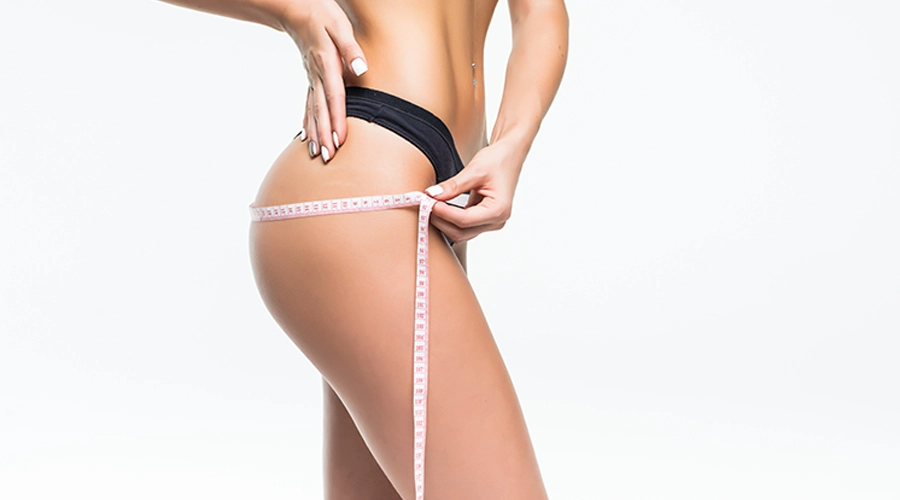
A BBL is not intended only to increase buttock size. Waist contour, buttock projection, and overall body proportions are assessed together. The surgical plan is therefore tailored to the patient’s anatomy, fat distribution, and expectations.
What Is a Brazilian Butt Lift (BBL)?
A Brazilian Butt Lift is a body-contouring surgery in which fat removed by liposuction is transferred to the buttocks.
The medical basis of the procedure is autologous fat transfer. “Autologous” means that the fat used is taken from the patient’s own body. Fat is commonly harvested from the abdomen, flanks, back, or thighs, then processed and transferred to the buttock area in a controlled manner.
The word “lift” in “Brazilian Butt Lift” does not always mean that loose skin is surgically tightened. If there is significant skin laxity, other surgical techniques may need to be considered.
Why Is BBL Surgery Performed?
A BBL may be performed to add volume to the buttocks while contouring the waist and surrounding areas.
Surgical planning considers more than buttock size alone. Buttock width, projection, waist-to-hip ratio, and side contours are assessed together.
A BBL may be planned to:
- Increase buttock volume
- Create more defined buttock projection
- Reduce noticeable asymmetry between the right and left sides
- Improve the transition between the waist and buttocks
- Improve hip dips in suitable patients
- Create a more balanced body contour in areas treated with liposuction
The degree of change that can be achieved depends on the available fat tissue and the patient’s anatomical limits.
How Is a Brazilian Butt Lift Performed?
BBL surgery generally involves three main stages: fat removal, fat preparation, and fat transfer to the buttocks.
First, the areas from which fat will be harvested are selected according to the surgical plan. The abdomen, waist, back, and thighs are common donor areas. Fat removed by liposuction is then prepared using appropriate techniques.
The prepared fat is then transferred to pre-planned areas of the buttocks. Current safety recommendations support injecting fat into the subcutaneous tissue above the gluteal muscle. Real-time ultrasound may help the surgeon monitor the position of the cannula tip.
The duration of the procedure can vary depending on the extent of liposuction and the amount of fat to be transferred. The anesthesia and hospital-stay plan is also determined individually.
Where Is Fat Taken From for a BBL?
Fat for a BBL can be harvested from areas with sufficient fat stores where contouring may also improve body shape.
The abdomen and waist are among the most commonly used areas. This is not only because they may provide enough fat. Contouring these areas can also change the waist-to-hip ratio.
Depending on the patient’s anatomy, donor areas may include:
- Abdomen
- Flanks
- Lower or upper back
- Hips
- Inner or outer thighs
The same amount of fat does not need to be removed from every area. The liposuction plan should be individualized while preserving balanced body proportions.
Can 360 Liposuction and a BBL Be Performed Together?
In suitable patients, circumferential liposuction and a BBL may be considered within the same surgical plan.
360 liposuction refers to more comprehensive contouring around the abdomen, waist, and back. A portion of the suitable fat collected during liposuction may be used for the BBL.
However, more extensive liposuction can affect the overall surgical burden and recovery requirements. The amount of fat that can be safely removed is not determined by aesthetic goals alone. General health and surgical risks must also be considered.
Who Is a Good Candidate for a BBL?
Suitable candidates for a BBL should be in appropriate general health for surgery and have enough donor fat for transfer.
Relatively stable body weight is also important. Significant weight changes can affect both the liposuction areas and the transferred fat.
Candidate assessment typically includes existing medical conditions, current medications, and smoking or nicotine use. Previous surgeries and any history of blood clots should also be reviewed.
Very lean patients without enough donor fat may not be able to achieve the desired volume through fat transfer alone. In these cases, other options may be discussed.
Who May Not Be Suitable for a BBL?
A BBL may be postponed or considered unsuitable for patients with uncontrolled health conditions.
Active infection, serious clotting disorders, or conditions that increase anesthesia risk require specific assessment. Smoking and nicotine use are also important because they can impair tissue healing.
Elective cosmetic surgery is generally postponed during pregnancy or breastfeeding. People planning significant weight loss in the near future may also be advised to wait until their weight is stable.
The final decision should not be based on appearance alone. Physical examination, medical history, and any necessary tests should be assessed together.
How Should You Prepare for BBL Surgery?
Preparation before a BBL is intended to reduce surgical risks and ensure the recovery period is planned appropriately.
All medications, vitamins, and supplements should be disclosed to the surgeon. Individual adjustments may be needed for products that affect bleeding or clotting.
Smoking and nicotine use should also be discussed openly. The surgeon should advise which products need to be stopped and when.
Required blood tests and anesthesia assessments are completed before surgery. Planning transportation and support at home in advance can also make recovery easier.
What Is Important for BBL Safety?
One of the most important aspects of BBL safety is transferring fat into the correct anatomical layer.
Fat embolism is a serious and potentially life-threatening complication of gluteal fat injection. Current international recommendations support placing fat in the subcutaneous plane above the gluteal fascia.
Real-time ultrasound may be used to visualize the position of the injection cannula. During consultation, it is important to ask about the injection technique and the safety protocols used.
The surgical facility, anesthesia conditions, and post-operative follow-up plan should also be considered as part of overall safety.
What Are the Risks of BBL Surgery?
A BBL is a surgical procedure and, like any operation, carries a risk of complications.
Fat embolism is one of the most important risks associated with BBL surgery. If fat enters the vascular system, it can cause serious circulatory and respiratory problems. This is why the injection plane and surgical technique are critical.
Other possible complications include infection, bleeding, hematoma, seroma, and blood clots. Asymmetry, contour irregularities, or fat necrosis may also occur.
Not all transferred fat survives. Some of the fat may be absorbed over time, which can reduce volume. In some patients, revision or additional surgery may be required.
Sudden shortness of breath, chest pain, or a marked deterioration in general condition requires urgent medical assessment.
What Is BBL Recovery Like?
Recovery after a BBL involves healing in both the liposuction areas and the areas where fat has been transferred to the buttocks.
Swelling, bruising, tenderness, and tightness can occur during the early recovery period. Compression garments recommended by the surgeon may be used over liposuction areas. Light walking is generally encouraged early to support circulation.
| Recovery period | What you may generally expect |
| First few days | Swelling, tenderness, and restricted movement may occur |
| First few weeks | Daily activity is gradually increased, and direct pressure on the buttocks may be limited |
| Following weeks | Swelling decreases and body contours become more defined |
| A few months | Fat retention and the final contour can be assessed more clearly |
These timelines vary from person to person. The individual follow-up plan provided by the surgeon should always take priority.
When Can You Sit After a BBL?
The timing for resuming prolonged direct pressure on the buttocks after a BBL depends on the surgeon’s recovery protocol.
The aim is to protect the transferred fat during the initial healing period. For this reason, sitting time or sitting position may be restricted during the first weeks.
If needed, special supports may be used to help keep pressure off the buttocks. However, the duration and method of use should be personalized.
People with desk-based jobs should not plan their return to work based on pain alone. The need to sit for long periods should also be considered.
How Should You Sleep After a BBL?
During the initial recovery period, sleeping positions that avoid prolonged direct pressure on the buttocks may be preferred.
Sleeping on the stomach or, for suitable patients, on the side may be recommended. However, the liposuction areas or any procedures performed at the same time can affect the recommended sleeping position.
For example, when a tummy tuck and BBL are performed in the same session, standard positioning advice may not always be suitable. The sleeping plan should therefore reflect all procedures performed.
Do You Need a Compression Garment After a BBL?
Compression garments may be used to help control swelling in areas treated with liposuction.
The garment should be selected so that it does not place unnecessary pressure on the buttocks. How long it is worn depends on the extent of surgery and the patient’s recovery.
An excessively tight or poorly fitting garment is not appropriate. The size and compression level should be determined by the surgical team.
When Will You See BBL Results?
Early changes may be visible after a BBL, but it can take several months to assess the final result.
During the first weeks, swelling can make the buttocks and liposuction areas look different from their final appearance. Some of the transferred fat may also be absorbed by the body during healing.
As swelling decreases and the remaining fat stabilizes, the result becomes clearer. For many patients, this process continues for several months.
Is a BBL Permanent?
Fat cells that successfully establish themselves can behave like the patient’s natural fat tissue over the long term.
However, BBL results are not completely fixed. Weight gain can enlarge fat cells, while weight loss can reduce their volume. Aging and changes in skin elasticity can also affect the appearance.
For this reason, maintaining a relatively stable weight after surgery is generally recommended.
What Is a Skinny BBL?
A Skinny BBL is a term used to describe lower-volume fat transfer in leaner patients who have limited donor fat.
Rather than being a separate surgical technique, a Skinny BBL is primarily a planning approach. The goal is usually subtle contour refinement rather than a large increase in volume.
Very lean patients may not have enough donor fat available for safe transfer. In these cases, removing excessive fat solely to achieve a desired appearance would not be appropriate.
BBL vs Buttock Implants: What Is the Difference?
A BBL uses the patient’s own fat, whereas buttock augmentation with implants uses a surgical prosthesis.
| Feature | BBL | Buttock implants |
| Material used | The patient’s own fat tissue | Surgical implant |
| Need for donor fat | Required | Not required |
| Liposuction | A core part of the procedure | Not mandatory |
| Volume planning | Limited by the amount of available fat | Planned according to implant size |
| Recovery | Recovery involves both fat transfer and liposuction areas | Recovery primarily focuses on the implant area |
Buttock implants may be considered for patients who do not have enough donor fat. The two procedures have different risks and recovery requirements.
How Are BBL and Liposuction Related?
Liposuction is a fundamental part of a traditional BBL procedure.
The fat used for a BBL is first removed from the body through liposuction. As a result, the procedure affects two different areas at the same time.
Volume can be reduced in the donor areas while volume is added to the buttocks. This two-way change plays an important role in reshaping overall body proportions.
For more detailed information about liposuction, visit our Liposuction page.
Can a BBL and Tummy Tuck Be Combined?
In suitable patients, a BBL and tummy tuck may be considered within the same surgical plan.
Combining the two procedures can affect operating time and recovery requirements. Sitting and sleeping positions, in particular, need to be planned so they are compatible with both procedures.
Patients with significant excess abdominal skin may not achieve their desired result with liposuction alone. In such cases, a tummy tuck may also be considered.
If multiple areas are being contoured after pregnancy, different procedure combinations may be considered as part of a mommy makeover.
Brazilian Butt Lift (BBL) Turkey Prices 2026
Brazilian Butt Lift cost in 2026 varies according to the extent of liposuction and the individual surgical plan.
There is no single standard price for a BBL. The amount of fat to be harvested, the number of donor areas, and the overall scope of surgery differ from one patient to another.
The areas treated with liposuction are among the main factors that can affect cost. Limited liposuction and more extensive circumferential liposuction do not involve the same surgical plan.
The amount of fat to be transferred, operating time, and any additional procedures can also affect the total cost. Anesthesia, hospital facilities, post-operative follow-up, and medical products used are also considered.
If a tummy tuck or other body-contouring procedures are added, the scope of surgery changes. For this reason, a confirmed personalized quote can only be provided after examination and surgical planning.
Frequently Asked Questions About Brazilian Butt Lift (BBL)
What does BBL stand for?
BBL stands for “Brazilian Butt Lift.” The procedure is based on transferring the patient’s own fat to the buttocks.
Does a BBL actually lift the buttocks?
A BBL can create a more lifted appearance primarily by adding volume and improving contour. It does not directly remove significant loose skin.
What weight do you need to be for a BBL?
There is no single ideal body weight that applies to everyone considering a BBL. Sufficient donor fat and overall health are assessed together.
Can very slim people have a BBL?
Some slim patients may be suitable for limited fat transfer. If there is not enough donor fat, the desired volume may not be achievable.
Can fat from another person be used for a BBL?
A standard BBL uses the patient’s own fat tissue. Fat taken from another person is not a routine method for BBL surgery.
Does transferred fat disappear after a BBL?
Some of the transferred fat may be absorbed by the body during healing. The fat cells that survive can then behave like natural body fat.
Will the buttocks get smaller if you lose weight after a BBL?
Significant weight loss can reduce the volume of transferred fat cells. Maintaining a stable weight can therefore help preserve the result.
When can you exercise after a BBL?
The timing for returning to strenuous exercise depends on healing and the extent of surgery. Activity should be increased gradually under the surgeon’s guidance.
When can you return to work after a BBL?
Return to work depends on the type of job and the pace of recovery. Planning is especially important for people whose work requires prolonged sitting.
Does a BBL leave scars?
Because small access points are used for liposuction and fat transfer, scarring is usually limited. The appearance of scars varies with individual healing.
Can you get pregnant after a BBL?
A BBL does not directly prevent pregnancy. However, pregnancy and weight changes can alter body contours after surgery.
Is BBL surgery dangerous?
A BBL is a surgical procedure that can involve serious complications. Adhering to current safety protocols is particularly important because of the risk of fat embolism.