

Heavy or droopy eyelids can constantly make one appear exhausted or sick. No matter how much rest you get, saggy eyelids will still make you look sleep-deprived. The interesting part is that heavy lids are usually a result of too much fat and skin on the eyelids. The best eyelid cosmetic surgery to tackle heavy lids is the upper blepharoplasty surgery. If you are interested in knowing about this procedure, this blog will explain what exactly this surgery is and the outcomes you should realistically expect from it.
👁️ Understanding the Causes of Heavy Eyelids
Heavy eyelids negatively impact both the aesthetics and the function of the eyes. From genetics and daily habits to age-related changes, many factors play a role in heavy, droopy, and lax upper eyelids. The key reasons for heavy eyelids are as follows:
Age-related
The skin around the eyes is highly susceptible to the effects of aging. As we age, the quantity of collagen and elastin in our skin gradually decreases, leading to an increase in skin laxity and drooping. These changes affect all of the upper eyelid; However, the part close to the temples becomes more lax and in some cases forms a hood over the lateral part of the eye, a condition known as Dermatochalasis. These extra skin folds lead to a feeling of heaviness and, in severe cases, may obscure vision.
Genetics
Genetics is another important factor in eyelid appearance. Some individuals naturally have excess skin in their upper lids, which can droop with age and cause Dermatochalasis. The muscle responsible for lifting the upper lid can be weak or stretched, leading to a condition called Ptosis. Ptotic lids tend to droop due to muscle weakness. Moreover, the condition can affect one or both eyes.
Lifestyle
Apart from aging and genetics, lifestyle and habits play a significant role in causing a feeling of heavy eyelids. Tiredness, stress, lack of sleep, ocular allergies (excessive rubbing of the lids), screen use, dry eye conditions, sinus-related issues, dehydration, stress, fluid retention (high salt diet), etc., can all lead to puffy, droopy, lax, and heavy upper eyelids. Furthermore, neurological issues like stroke and nerve palsies may also contribute to heavy and droopy lids.

👨⚕️ What is Upper Blepharoplasty? The Surgical Solution Explained
A blepharoplasty is a type of eyelid surgery in which extra skin, muscle, and fat deposits are removed or repositioned to improve appearance, function, or both. Additionally, the procedure can be performed for both upper and lower eyelids. The indications for upper blephroplasty (hooded eyelid surgery) include:
- Removing an obstruction to the field of vision
- Droopy eyelid correction for cosmetic improvement
- Treating dermatochalasis
- Improving excessive lid laxity or fat prolapse
📍In common language, an upper blepharoplasty is also known as an eyelid lift. The incision for this surgery is made in the upper lid crease or the lash line. Excess muscle, fat, and skin are excised or repositioned depending on the pre-operative plan. The incision is secured with the help of sutures. An upper blepharoplasty can also be classified based on the indications, as a functional blepharoplasty or a cosmetic blepharoplasty.
📍The end goal of an upper blepharoplasty is to achieve a more alert and youthful appearance to the ocular area, improve the function of the upper eyelid, and remove any obstruction in the field of vision.

💉 Upper Blepharoplasty vs. Alternative Treatments
An upper eyelid surgery, or blepharoplasty, is an effective way to treat sagging eyelids. However, surgery is not the only option available to treat lid laxity. For individuals with mild upper lid laxity/heaviness or who are unwilling to commit to a surgical correction, alternative treatment options exist. These include:
Botox Brow Lift
Botox injections temporarily raise a mildly droopy lid and open up the eyes. The effects last 3-4 months, and re-application is eventually needed to maintain outcomes.
RF/Ultrasound Treatment
Radio Frequency or ultrasound therapy is a great way to improve the early stages of lid laxity. The outcomes are temporary, and more than one session is usually required.
Thread Lift
A Thread lift is a minimally invasive treatment to address lid laxity. It is not suitable for severe cases, and the results may last 6-12 months.
Dermal Fillers
Fillers mainly improve the hollowed appearance around the eyes and do not have much of an impact on significant lid laxity.
Laser resurfacing/Chemical Peels
Both laser resurfacing and chemical peels have a temporary, mild lifting effect. The results vary based on individual factors, and multiple sessions may be needed.
📍Most of the alternatives to Blepharoplasty are suitable for early-stage or mild lid laxity and drooping. To improve significant functional or aesthetic drawbacks, an upper lid blepharoplasty is the most effective treatment.
🩹 Are You a Candidate?
The ideal candidate for the upper blepharoplasty surgery should be:
- They should have good health.
- The candidate should have no pre-existing eye conditions that could hinder healing after the surgery.
- They should also be a non-smoker as smoking can hinder blood flow and impair healing.
- The candidate has heavy lids because of loose skin.
- Their heavy eyelids always make them appear exhausted and uninterested.
- And, their heavy lids hinder their vision.
- The candidate should also have a realistic expectation of the results of the upper blepharoplasty surgery.
✨ Real Success Stories, Real Results: Facial Transformation
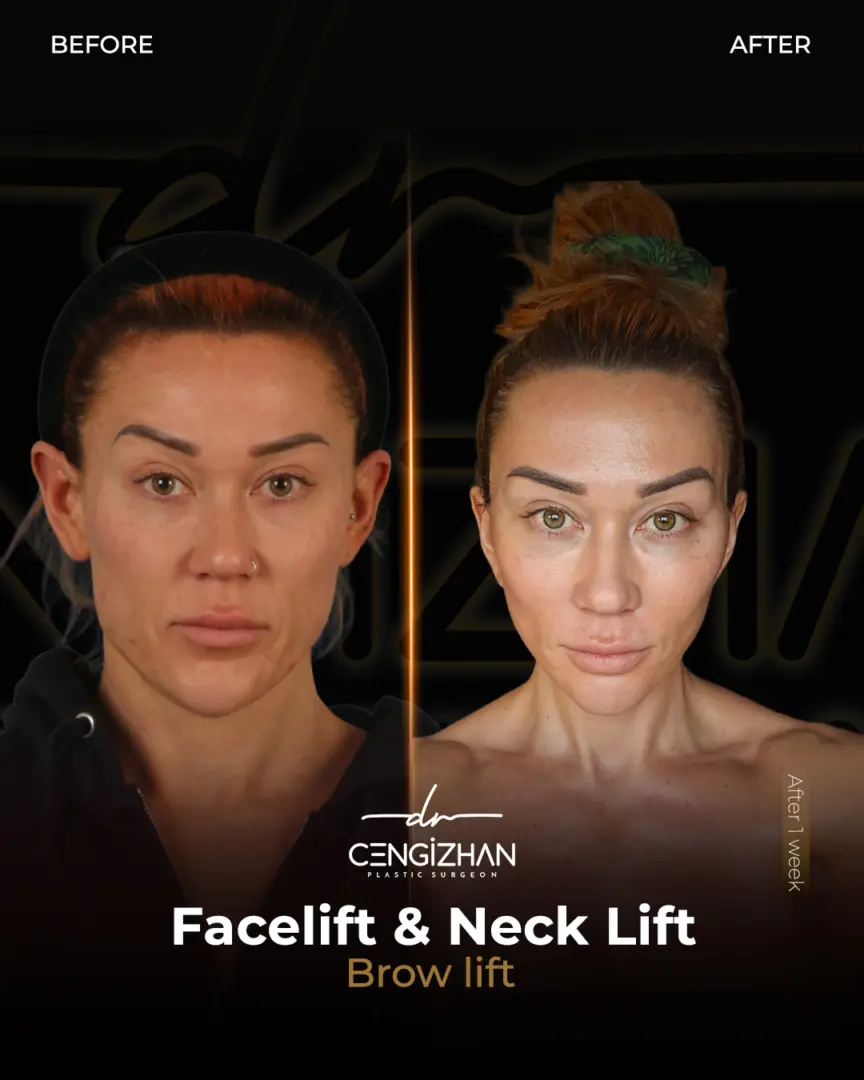
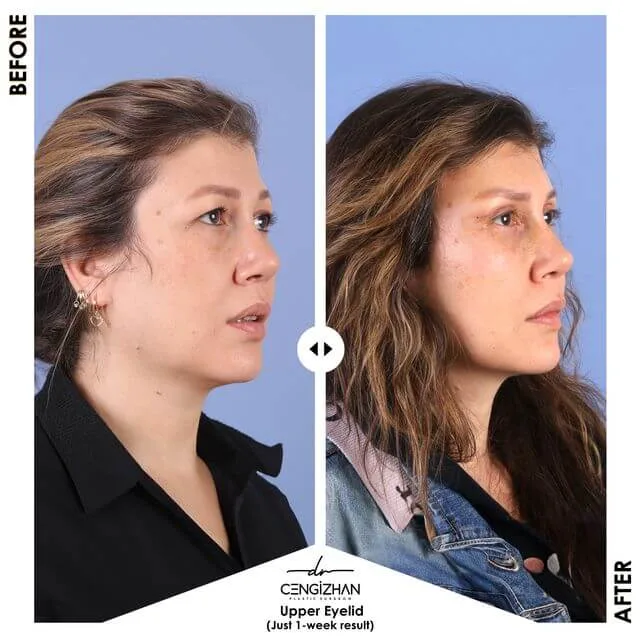
The patient came to Dr. Cengizhan Ekizceli to undergo a drastic facial transformation that would balance her features and give her a fresh, youthful appearance.
Before the Surgery
- Prior to the surgery, the patient’s skin had some laxity, making her features appear less lifted and contoured.
- Due to the mild sagging in her face, the patient also had visible nasolabial folds and marionette lines.
- Her neck also appeared to have some deep lines.
After the Surgery
- Also, her neck lift was effective in eliminating the deep lines on her neck as well as the mild skin laxity, which now makes the neck look more sculpted.
- The patient underwent a face and neck lift as well as a brow lift, which resulted in giving her that “snatched” look.
- The facelift helped give her skin a lift that eliminated the appearance of her nasolabial folds and marionette lines.
- Her facelift is also attracting attention to her bone structure and enhancing the appearance of her jawline.
- Additionally, the brow lift gave her eyebrows an arch that makes her eyes look more wide open, making her look overall refreshed.
🏥 Connect with the Estherian Clinic
The upper blepharoplasty surgery doesn’t just offer aesthetic benefits; it also boosts the functionality of the eyes. If you are interested in knowing more about blepharoplasty or any other procedure, reach out to our experts by filling out this form!