





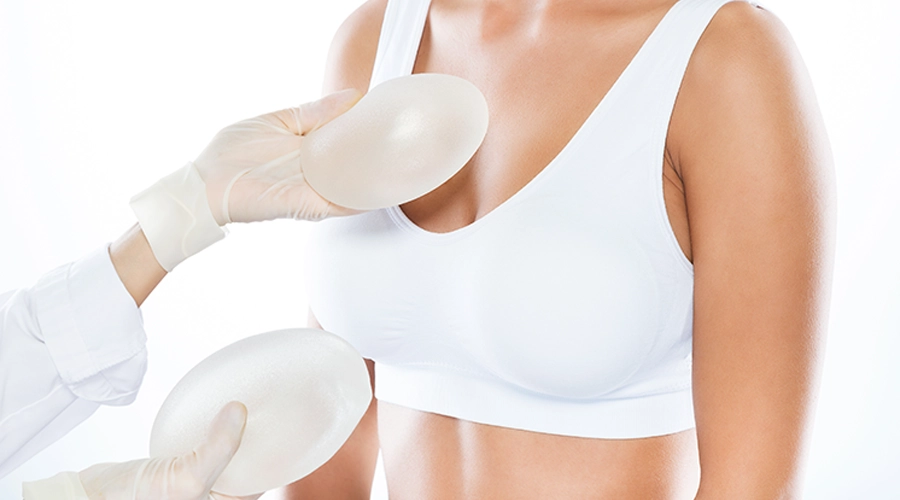
The goal is not simply to make the breasts larger. Breast shape, upper-pole fullness, asymmetry, and chest proportions are also assessed. The most appropriate method is determined according to the patient’s anatomy, expectations, and existing breast tissue.
What Is Breast Augmentation?
Breast augmentation surgery is a cosmetic surgical procedure that aims to increase breast volume and reshape the breasts.
The medical term is augmentation mammoplasty. Breast implants are among the most commonly used options for this procedure. In suitable patients, the patient’s own fat tissue may also be used.
Breast volume lost after pregnancy, breastfeeding, or weight loss may be restored with these methods. Naturally small breasts and noticeable asymmetry may also be reasons to consider treatment.
Breast augmentation alone does not correct advanced breast sagging. If significant ptosis is present, a breast lift may also need to be planned.
Why Is Breast Augmentation Performed?
Breast augmentation may be performed to create breast volume and shape that are in better proportion with the patient’s anatomy.
The procedure is not planned solely to achieve a specific bra size. Chest width, breast base dimensions, and existing tissue thickness are assessed together.
Breast augmentation may be considered for the following reasons:
- Increasing naturally small breast volume
- Restoring volume lost after pregnancy and breastfeeding
- Reducing a deflated appearance after weight loss
- Balancing a volume difference between the breasts
- Increasing fullness in the upper breast
- Creating a breast shape that is more balanced with overall body proportions
The surgical plan should reflect the patient’s own goals. Realistic expectations are an important part of the preoperative assessment.
What Are the Main Breast Augmentation Techniques?
Breast augmentation can be performed with silicone implants, fat transfer, or a hybrid technique.
Each method offers a different degree of volume enhancement and shaping. For this reason, no single technique is suitable for everyone.
| Method | Key feature | Who may consider it |
| Silicone implant | Provides a more noticeable and predictable increase in volume | Patients seeking a greater increase in breast volume |
| Fat transfer | Uses the patient’s own fat tissue | Patients seeking a more limited increase in volume |
| Hybrid technique | Combines an implant with fat transfer | Selected cases requiring additional contour refinement |
For fat transfer, fat is usually removed from the abdomen, waist, or similar areas using liposuction. The prepared fat cells are then carefully transferred into the breast tissue.
Not all transferred fat is expected to survive permanently. Some of the fat cells may be absorbed by the body over time, so additional sessions may be required.
How Are Silicone Breast Implants Chosen?
Choosing a silicone breast implant is not based on implant volume alone.
Breast base width, chest dimensions, skin characteristics, and existing breast tissue should all be assessed together. The patient’s preferred appearance is also included in the planning process.
The following factors are considered when selecting an implant:
- Implant volume
- Implant width
- Implant profile
- Implant shape
- Surface characteristics
- Thickness of existing breast tissue
- Nipple position
- Chest width
Two implants with the same volume can have different widths and projections. Therefore, the right implant cannot be selected by asking only, “How many cc?”
Implant surface characteristics should also be included in the safety assessment. A rare type of lymphoma known as BIA-ALCL has been associated more often with textured implants.
Round or Anatomical Breast Implants: Which Is Suitable?
Round and anatomical implants are designed to create different breast shapes.
Round implants may provide more noticeable fullness in the upper part of the breast. Anatomical implants distribute volume differently from the upper to the lower breast.
However, implant shape alone does not determine the final appearance. Existing breast tissue, implant placement, and skin characteristics also affect the result.
For this reason, there is no single “most natural” implant for everyone. A natural-looking result depends on choosing an implant and surgical plan that suit the patient’s anatomy.
Should Breast Implants Be Placed Over or Under the Muscle?
Breast implants may be placed beneath the breast tissue, under the muscle, or in planes that combine different tissue layers.
The plane selected by the surgeon depends on the patient’s anatomy. Breast tissue thickness is particularly important when making this decision.
| Placement | General feature |
| Subglandular | The implant is placed directly beneath the breast tissue |
| Submuscular | A substantial portion of the implant is positioned beneath the chest muscle |
| Dual plane | The implant is covered by muscle and breast tissue at different levels |
| Subfascial | The implant is placed beneath the fascial layer surrounding the muscle |
In patients with thin breast tissue, the visibility of implant edges should be considered carefully. Different options may be suitable for patients with thicker tissue coverage.
It is not appropriate to consider one placement plane superior for every patient. The surgical plan should be personalised according to examination findings.
How Is Breast Augmentation Surgery Performed?
During breast augmentation surgery, the selected implant is placed in the surgical pocket planned before the operation.
The procedure is usually performed under general anaesthesia. The surgeon works through the selected incision and creates a controlled pocket for the implant.
After the implant is placed, its position and the symmetry between the breasts are checked. The surgical incisions are then closed appropriately.
The duration of breast augmentation surgery can vary depending on the scope of the procedure. Standard implant procedures can often be completed in approximately one to two hours.
If a breast lift, fat transfer, or another procedure is added, the operating time may be longer.
Where Are Breast Augmentation Incisions Made?
The incision site in breast augmentation is selected according to the patient’s anatomy and the surgical technique being used.
The inframammary fold, the area around the areola, and the armpit are different surgical access options. The inframammary fold is one of the most commonly used approaches.
Every surgical incision leaves a scar, although its visibility can change over time. Scarring is also influenced by skin characteristics and individual wound healing.
When incisions around the areola are considered, milk ducts and possible changes in sensation should also be taken into account. Patients who plan to breastfeed in the future should discuss this with their surgeon.
Who Is a Suitable Candidate for Breast Augmentation?
Breast augmentation may be considered for patients who have completed physical development and have realistic expectations.
The patient’s general health should be suitable for surgery. The procedure is generally not planned during active pregnancy or breastfeeding.
Breast augmentation may be considered in situations such as:
- Breast volume that feels too small for the patient’s goals
- Loss of breast volume after pregnancy
- Loss of breast fullness following weight loss
- A noticeable difference in volume between the breasts
- A hollow or empty appearance in the upper breast
- A significant difference in breast development
Final suitability should be determined after an examination. Medical conditions, current medications, and previous operations should be disclosed during the assessment.
Who May Not Be Suitable for Breast Augmentation?
Breast augmentation surgery may need to be postponed or may not be suitable for patients with active health problems.
Breast tissue continues to change during pregnancy and breastfeeding. It may therefore be appropriate to wait until breast volume has stabilised.
Active infection, an unevaluated breast mass, or medical conditions that create significant surgical risk should be assessed separately. Unrealistic expectations may also affect the decision to proceed with surgery.
Smoking and nicotine use can negatively affect wound healing. A plan for stopping nicotine before and after surgery should be discussed with the doctor.
What Should Be Considered Before Breast Augmentation Surgery?
Before breast augmentation, the patient’s medical history, breast anatomy, and aesthetic goals should be assessed in detail.
Medications, supplements, previous operations, and chronic medical conditions should be reported to the surgeon. The need for breast imaging may be determined according to the patient’s age and medical history.
The following points are also assessed before surgery:
- Breast and chest measurements are taken.
- Breast sagging and asymmetry are assessed.
- Suitable implant sizes are identified.
- The implant placement plane is planned.
- The incision site is selected.
- An anaesthesia assessment is completed.
- Current medications are reviewed.
- Postoperative support is planned.
It is important for the patient to explain the desired outcome clearly. The surgeon should also explain anatomical limitations and realistic results.
What Is Recovery Like After Breast Augmentation?
Swelling, tightness, and tenderness may be expected during the first week after breast augmentation.
Recovery speed varies from person to person. The implant placement plane and any additional surgical procedures can also affect the recovery process.
| Time period | Typical recovery |
| First few days | Swelling, tightness, and tenderness with movement may occur |
| First week | A gradual return to light daily activities may begin |
| 2-4 weeks | Swelling decreases and movement becomes more comfortable |
| 4-6 weeks | Activity levels may be increased with the surgeon’s approval |
| Following months | The implants and surrounding tissues gradually settle into their final appearance |
Full recovery may take several weeks for many patients. Return to strenuous exercise should wait until the surgeon gives approval.
During the first few days, the breasts may appear high, firm, or different from what was expected. The appearance changes as swelling decreases and the tissues adapt.
What Should You Do After Breast Augmentation?
After breast augmentation, patients should follow the surgeon’s instructions for wound care and activity.
Movements that strain the surgical area should be avoided, particularly during the first few weeks. Heavy lifting and intense upper-body exercise may not be appropriate early in recovery.
If a surgical support bra is recommended, it should be worn for the specified period. The incision area should be kept clean and dry.
The medical team should be contacted if sudden one-sided swelling, increasing redness, high fever, or severe pain develops.
Follow-up is not only important during early recovery. Long-term monitoring of breast implants is also important.
When Will the Final Breast Augmentation Results Be Visible?
The result of breast augmentation becomes visible after surgery, but the final appearance is not immediate.
Postoperative swelling may be present at first. Implant position and tissue softness continue to change over time.
The appearance during the first few weeks should not be considered the final result. It may take several months for the breasts to settle into a more natural position.
The final appearance is not determined by implant choice alone. Breast tissue, skin elasticity, and chest anatomy are also important.
Can Breast Augmentation Lift Sagging Breasts?
Breast augmentation can restore mild volume loss, but it does not correct significant breast sagging on its own.
If the nipple sits clearly below the inframammary fold, the need for a breast lift may be assessed. The amount of excess skin is also important in surgical planning.
For some patients, breast augmentation and a breast lift can be performed during the same operation. This allows both breast volume and breast position to be reshaped.
The required procedure cannot be determined reliably from photographs alone. Nipple position and skin quality should be assessed during a physical examination.
Can You Breastfeed After Breast Augmentation?
Many people can breastfeed after breast augmentation, but no surgical technique can guarantee the ability to breastfeed.
The implant is usually positioned beneath the breast tissue or in a deeper plane. However, incision location and individual anatomy are also important.
Patients who want to have children in the future should discuss this with their surgeon before the operation. Incision and implant placement can then be assessed with this plan in mind.
Pregnancy and breastfeeding can cause further changes in breast volume and shape. These changes may occur independently of the implant itself.
If breastfeeding has only recently ended, it may be necessary to wait for the breast tissue to stabilise. The appropriate timing should be determined individually.
Do Breast Implants Affect Mammograms?
Patients with breast implants should continue routine breast health screening.
Before a mammogram or other breast imaging, healthcare staff should always be told that breast implants are present. Additional imaging positions may be used accordingly.
Breast implants do not replace breast cancer screening. Screening should continue according to the patient’s age, family history, and individual risk factors.
Monitoring the integrity of silicone gel implants is a separate issue. In patients without symptoms, ultrasound or MRI may be recommended at certain intervals.
The FDA recommends the first ultrasound or MRI assessment of silicone gel implants five to six years after surgery, followed by imaging every two to three years.
These recommendations do not replace routine breast cancer screening.
How Long Do Breast Implants Last?
There is no fixed lifespan for breast implants that applies to every patient.
Implants should not be considered devices that will necessarily remain unchanged for a lifetime. The risk of implant-related complications can increase over time.
However, implants do not automatically need to be replaced simply because a certain number of years has passed. Replacement decisions are based on examination and imaging findings.
Implant rupture, significant capsular contracture, a change in implant position, or new aesthetic goals may be reasons for revision surgery.
For this reason, it is useful to keep records showing the implant brand and model after surgery.
What Are the Risks of Breast Augmentation Surgery?
Breast augmentation surgery can involve complications related to surgery itself as well as to breast implants.
Bleeding, haematoma, infection, seroma, and wound-healing problems are among the surgical risks. Temporary or permanent changes in nipple or breast skin sensation may also occur.
Possible implant-related issues include:
- Capsular contracture
- Implant displacement
- Implant rupture
- Asymmetry
- Palpable implant edges
- Surface wrinkling known as rippling
- Persistent pain
- Need for additional surgery
Capsular contracture is excessive tightening of the natural scar capsule that forms around the implant. In more advanced cases, it can cause breast firmness, shape changes, or pain.
A silicone implant rupture may sometimes cause no obvious symptoms. This is described as a “silent rupture” and may be detected with imaging.
BIA-ALCL is a rare type of lymphoma associated with the capsule around a breast implant. It is not breast cancer. The risk has been found to be higher with textured-surface implants.
The characteristics of the implant being used and the potential complications should be discussed in detail before surgery.
How Is Breast Augmentation with Fat Transfer Performed?
In fat transfer breast augmentation, the patient’s own fat tissue is used to increase breast volume.
Fat is first removed from suitable areas using liposuction. Once prepared, the fat is injected in controlled amounts at different levels within the breast.
This technique may be considered for patients seeking a more limited increase in volume. Sufficient donor fat must be available.
A large, one-stage increase in breast volume is not always possible with fat transfer. Some of the transferred fat may not survive permanently.
Risks associated with fat transfer can include infection, fat necrosis, cysts, and microcalcifications. Additional fat-transfer sessions may be required.
How Are Breast Implant Size and CC Volume Determined?
Breast implant volume should be selected according to the patient’s chest dimensions and breast base width.
The cc value refers to implant volume. However, a specific cc volume does not correspond to a guaranteed bra size.
Factors affecting the result include existing breast volume, chest width, and implant profile. Skin characteristics are also important.
For this reason, choosing an implant simply by copying the size used for another person is not an appropriate approach.
The goal of planning is not to select the largest possible implant. The aim is to create a volume that suits the patient’s tissues and expectations.
How Is Natural-Looking Breast Augmentation Planned?
Natural-looking breast augmentation is planned by establishing the right proportion between implant dimensions and the patient’s anatomy.
An implant wider than the breast base is not suitable for every patient. Likewise, inadequate tissue coverage can make implant edges more visible.
The following factors are assessed together when planning a natural-looking result:
- Chest width
- Breast base diameter
- Existing breast volume
- Skin thickness
- Distance between the breasts
- Nipple position
- Implant width
- Implant projection
- Implant placement plane
Reference photos can help patients explain their expectations. However, it is not possible to reproduce another person’s result exactly.
Breast Augmentation Turkey Prices 2026
Breast augmentation costs in 2026 can vary from patient to patient depending on the technique used and the scope of surgery.
Unless there is a single verified clinic price, it is not appropriate to provide an exact fee. A personalised surgical plan should be created after consultation and examination.
Factors that may particularly affect the cost of breast augmentation surgery include:
- Brand and characteristics of the implant
- Choice between silicone implants and fat transfer
- Scope of the operation
- Whether a breast lift is required
- Additional procedures such as fat transfer
- Hospital and operating theatre facilities
- Anaesthesia plan
- Length of hospital stay
- The patient’s anatomical requirements
- Need for revision surgery
For this reason, an exact price cannot be determined by asking only, “How much does breast augmentation cost?” The appropriate technique and surgical scope must be established first.
Frequently Asked Questions About Breast Augmentation
How long does breast augmentation surgery take?
Breast augmentation surgery usually takes approximately one to two hours.
Operating time may vary depending on the technique used and any additional procedures. Additional surgery such as a breast lift can extend the duration.
Is breast augmentation surgery painful?
Pain, tightness, and tenderness may occur during the first few days after breast augmentation.
The level of discomfort can vary depending on implant placement and individual pain tolerance. Medication recommended by the doctor may be used during recovery.
When can I return to work after breast augmentation?
Many patients may be able to return to desk-based or light work within the first week.
However, the scope of surgery and the physical demands of the patient’s job can change this timeframe. More recovery time may be needed for physically demanding work.
When can I exercise after breast augmentation?
A return to strenuous exercise is generally planned once recovery has progressed and the surgeon has given approval.
Light activity such as walking may be suitable during the first few weeks. Exercises that heavily engage the chest muscles may need to be resumed later.
Will I have scars after breast augmentation surgery?
Because breast augmentation requires a surgical incision, scarring cannot be eliminated completely.
Scar location depends on the technique used. Scars may be more noticeable at first and can mature and fade over time.
Can silicone breast implants rupture?
The outer shell of a silicone breast implant can develop a tear or rupture over time.
A rupture in a silicone gel implant may sometimes cause no symptoms. This is why ongoing implant follow-up should not be neglected.
Do breast implants need to be replaced every 10 years?
Breast implants do not have to be routinely replaced simply because a specific number of years has passed.
The need for replacement is assessed according to the condition of the implant, examination findings, and imaging results.
Do breast implants cause cancer?
No definitive link has been established showing that breast implants cause conventional breast cancer.
However, rare conditions such as BIA-ALCL, which is associated with the capsule surrounding an implant, have been reported. The risk is more strongly associated with textured implants.
Can I become pregnant after breast augmentation surgery?
Breast augmentation surgery does not directly prevent future pregnancy.
However, pregnancy and breastfeeding can change breast volume and skin characteristics again. These changes may affect the appearance created by surgery.
Can I sleep on my stomach after breast augmentation?
Sleeping on the stomach during early recovery may place unnecessary pressure on the breast area.
Sleeping position and the duration of any restrictions should be determined according to the surgical technique used. The surgeon’s personalised instructions should be followed.
Can breast augmentation completely correct breast asymmetry?
Breast augmentation can reduce a noticeable difference in breast volume, but perfect symmetry cannot be guaranteed.
Natural asymmetry exists in the human body. Different implant volumes or additional shaping techniques may be used in selected patients.
What is the best breast implant size in cc?
There is no single breast implant volume that is suitable for everyone.
The ideal cc volume is determined by assessing chest width, breast base dimensions, existing tissue, and the desired appearance together.