



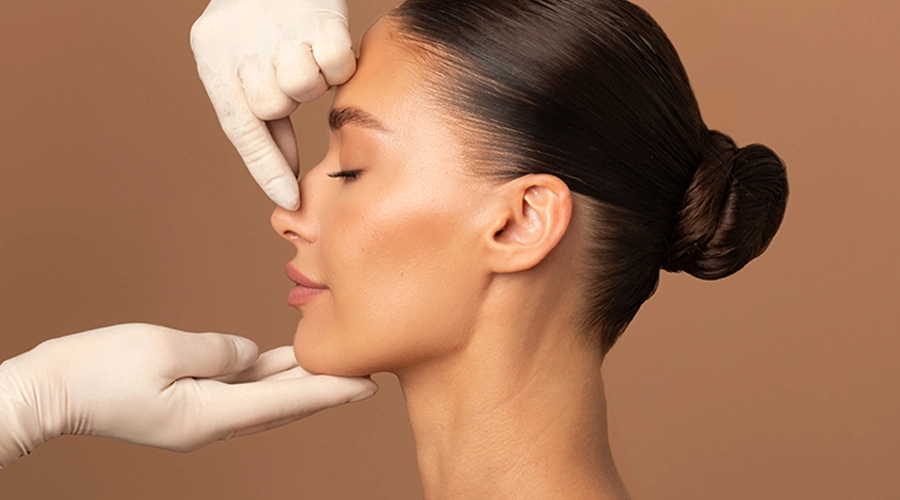
The aim is not simply to create a smaller or more upturned nose. The goal is a natural, functional nose that is balanced with the face as a whole.
Every rhinoplasty plan is different. Skin thickness, cartilage structure, facial proportions, and breathing function directly influence surgical planning.
This page covers the key questions involved in the decision-making process, including suitability, techniques, recovery, risks, and cost.
What Is Rhinoplasty?
Rhinoplasty is nose surgery performed to change the shape, proportions, or structural features of the nose.
The operation may be performed for cosmetic reasons, but it can also include correction of functional problems. In some patients, both goals are addressed during the same procedure.
A dorsal hump, nasal width, deviation, or the appearance of the nasal tip can be modified as part of rhinoplasty. The proportions of the nasal alae and nostrils may also be adjusted.
In patients with breathing problems, the internal nasal structures should also be assessed. Issues such as a deviated septum should not be considered separately from aesthetic planning.
There is no single ideal nose size in rhinoplasty. The appropriate plan is based on the patient’s existing anatomy and facial proportions.
When Is Rhinoplasty Considered?
Rhinoplasty may be performed for a range of needs related to the appearance or function of the nose.
Cosmetic concerns may include a dorsal hump, a wide nose, or a prominent nasal tip. A drooping tip or asymmetry may also be assessed.
Noticeably wide nostrils may form part of the surgical plan in some patients. Changes in nasal shape following trauma can also be addressed with rhinoplasty.
From a functional perspective, nasal obstruction and a deviated septum are important considerations. Structural problems that affect breathing require a detailed examination.
Rhinoplasty may be planned for one or more of the following concerns:
- A prominent hump on the nasal bridge
- A nose that appears wide or large in relation to the face
- A drooping or broad nasal tip
- A nose that deviates to the right or left
- Noticeably wide nostrils
- Changes in nasal shape after trauma
- Cosmetic or functional problems after previous surgery
- Breathing problems associated with nasal structure
Not every appearance requires a different surgical intervention. The need for surgery and its extent should be determined after a physical examination.
Who Is a Good Candidate for Rhinoplasty?
Suitability for rhinoplasty is not determined by nasal appearance alone. General health, anatomical development, and expectations are assessed together.
People whose facial growth is largely complete may be considered for rhinoplasty. Being physically healthy is important for surgical safety.
Smoking can negatively affect healing. For this reason, smoking and nicotine use must be considered during surgical planning.
Realistic expectations are also important. Rhinoplasty is intended to create a balanced change within the existing anatomy, not to deliver perfection.
The decision to pursue cosmetic change should be the patient’s own. Surgery should not be planned primarily around other people’s expectations.
Who May Not Be Suitable for Rhinoplasty?
Rhinoplasty may be postponed or not recommended when appropriate surgical or psychological conditions are not present.
Serious uncontrolled health problems can increase surgical risk. Bleeding disorders also require detailed assessment before surgery.
Surgery may need to be postponed in people with an active infection. Certain medications and supplements can also affect bleeding risk.
People whose facial growth is not yet complete may need to wait before undergoing surgery for purely cosmetic reasons. Functional or trauma-related cases are assessed separately.
Unrealistic expectations are also an important consideration. The patient should be able to understand the likely outcome and the limitations of surgery.
Final suitability can only be determined after the examination, medical history, and any necessary tests have been assessed together.
How Is a Rhinoplasty Consultation Performed?
A pre-rhinoplasty assessment reviews aesthetic expectations together with the anatomical and functional characteristics of the nose.
During the first consultation, the features that concern the patient are clarified. Any previous nasal surgery or trauma should be disclosed.
The nose is examined externally from different angles. The septum, airway, and other internal nasal structures may also be assessed.
Skin thickness is an important planning factor. Postoperative appearance and swelling can develop differently in thin- and thick-skinned noses.
The strength of the nasal cartilage and support of the nasal tip are also evaluated. Existing cartilage may need to be reinforced where appropriate.
Standardised photographs help assess facial and nasal proportions. Digital simulation may be used in some cases.
Simulation can make it easier to discuss possible changes, but these images should not be regarded as a guarantee of the surgical result.
What Should You Consider Before Rhinoplasty?
Before rhinoplasty, all medications, smoking or nicotine use, and existing medical conditions should be disclosed to the surgeon.
Some medications can affect bleeding risk. Aspirin and certain painkillers are examples.
These medications should never be stopped without medical advice. Any necessary changes should be made according to the recommendations of the relevant doctors.
Herbal products and dietary supplements should also be disclosed before surgery. Some products can affect bleeding or anaesthesia.
Smoking and vaping can negatively affect wound healing. Patients may be asked to avoid nicotine for a period determined by the surgeon.
Instructions on fasting and medication use on the day of surgery are provided by the anaesthesia team. These instructions should be followed carefully.
How Is Rhinoplasty Performed?
Rhinoplasty is performed by reshaping the nasal bones and cartilage according to the planned changes.
The surgical approach varies from person to person. The same incision, technique, or sequence of steps is not used in every rhinoplasty.
The surgeon may plan changes to the nasal bridge, tip, or base. Some tissues may be reduced or repositioned.
Cartilage grafts may be used when additional nasal support is required. The nasal septum is one of the most commonly considered sources for graft material.
Ear or rib cartilage may also be used when necessary, particularly in more extensive or revision procedures.
If a deviated septum is present, functional correction can be performed during the same operation. This allows appearance and breathing to be addressed together.
At the end of surgery, a protective splint may be placed over the nose. Whether internal support materials are used depends on the procedure performed.
Open vs Closed Rhinoplasty: What Is the Difference?
The main difference between open and closed rhinoplasty is how surgical access is obtained.
In closed rhinoplasty, the incisions remain inside the nostrils. In open rhinoplasty, a small columellar incision is added to the internal nasal incisions.
The columella is the strip of tissue between the nostrils. The open approach gives the surgeon direct visual access to the nasal structures.
Both approaches can be used in suitable patients. Neither method is universally better for every patient.
| Feature | Open Rhinoplasty | Closed Rhinoplasty |
| Incisions | Inside the nose and across the columella | Inside the nose |
| Surgical exposure | Provides wider surgical visibility | Provides more limited surgical visibility |
| External incision | Small columellar incision | No external incision |
| Typical use | May be preferred for complex reshaping | May be preferred in suitable anatomy |
| Technique selection | Determined by nasal anatomy | Determined by nasal anatomy |
Technique selection should not be based only on scarring or recovery time. The extent of the required changes is more important.
What Is Piezo Rhinoplasty?
Piezo rhinoplasty is a surgical approach that uses specialised devices with ultrasonic energy to shape the nasal bones.
Piezo devices can be used particularly during osteotomies involving the nasal bones. An osteotomy is the controlled cutting or repositioning of nasal bone.
Piezo is not a separate operation that defines the entire rhinoplasty procedure. It is a technology used during specific bony stages of surgery.
Current studies suggest that piezo osteotomies may reduce early postoperative swelling and bruising. However, outcomes do not depend on the device alone.
Nasal anatomy, the surgical plan, and the surgeon’s technique should be considered as a whole.
What Is Preservation Rhinoplasty?
Preservation rhinoplasty is an approach that aims to retain as much of the nose’s natural bone and cartilage framework as possible in suitable patients.
Preserving the natural lines of the nasal bridge is one of the main features of this approach. Not every nose is suitable for preservation rhinoplasty.
Techniques such as push-down and let-down may be used within this approach. Technique selection depends on the shape of the nasal bones and the intended change.
Current research suggests that preservation and structural techniques can provide comparable outcomes in appropriately selected patients. Patient selection plays an important role in the result.
For this reason, preservation rhinoplasty does not automatically mean a better or more natural result.
What Are Functional Rhinoplasty and Septorhinoplasty?
Functional rhinoplasty focuses on correcting problems involving the nasal airway and supporting structures.
The septum is the bone-and-cartilage structure that separates the nasal cavity into right and left sides. A deviated septum can make nasal breathing more difficult.
Septoplasty refers specifically to correction of the septum. Septorhinoplasty may address both the septum and the external structure of the nose.
Nasal obstruction is not always caused by a deviated septum. Enlarged turbinates or nasal valve problems may also need to be assessed.
For this reason, patients with breathing concerns should not have surgery planned solely on the basis of external appearance.
Is Tip Plasty Different from Rhinoplasty?
Tip plasty is a surgical plan in which the changes are focused mainly on the tip of the nose.
It may also be called nasal tip surgery. The width, projection, angle, and cartilage structure of the nasal tip can be assessed.
A drooping nasal tip should not be evaluated in isolation. Its relationship with the nasal bridge and facial proportions can change the surgical plan.
In some patients, treatment of the nasal tip alone may be sufficient. In others, full rhinoplasty may be more appropriate.
The required approach is determined during the examination.
Can a Crooked Nose Be Corrected with Rhinoplasty?
A crooked nose can be corrected with rhinoplasty, but the source of the deviation needs to be identified in detail.
The problem may not arise from the nasal bones alone. A deviated septum and cartilage asymmetries can also affect the external appearance.
In noses that have experienced trauma, several structures may be affected at the same time. This can make the surgical plan more extensive.
With pronounced asymmetry, perfectly mathematical symmetry may not always be possible. The aim is to bring the existing anatomy into the most balanced position possible.
Can Rhinoplasty Be Performed on Thick Skin?
People with thick nasal skin can undergo rhinoplasty after an appropriate assessment.
However, thick skin can make small underlying cartilage changes less visible. Swelling at the nasal tip may also last longer.
Preserving or strengthening tip support can be particularly important in these patients. The surgical plan should be adapted to the skin characteristics.
More time may be needed before the result can be properly assessed. Early swelling should not be mistaken for the final appearance.
Is Rhinoplasty Planned Differently for Men?
Rhinoplasty in men is also planned individually according to facial proportions and nasal anatomy.
There is no single standard for a ‘male nose’. The nasal bridge, tip, and other facial features are considered together.
Some male patients may want to preserve the existing character of their nose, while others may request a more noticeable change in shape.
The surgical plan should be based on the individual’s anatomy and expectations rather than gender stereotypes.
How Long Does Rhinoplasty Surgery Take?
The duration of rhinoplasty depends on the extent of the planned changes and the anatomy of the nose.
A primary, limited procedure may take less time. Revision rhinoplasty or extensive functional procedures may take longer.
For this reason, it is not accurate to give one operation time that applies to every patient.
Rhinoplasty is most commonly performed under general anaesthesia. Different anaesthesia options may be considered for some limited procedures.
Rhinoplasty Recovery: What to Expect
Initial recovery after rhinoplasty takes several weeks, while the final nasal shape may take considerably longer to become apparent.
Swelling around the nose can occur during the first few days. Bruising around the eyes is also possible.
Temporary nasal congestion can occur because of swelling inside the nose. This is one of the expected findings during early recovery.
The nasal splint is usually removed during one of the first follow-up visits. Exact timing depends on the technique used and the surgeon’s plan.
| Period | What can generally be expected |
| First 1-3 days | Swelling, congestion, and tenderness may be noticeable |
| First week | Healing is monitored with the nasal splint and dressings |
| 1-2 weeks | Bruising and noticeable swelling begin to decrease |
| 2-4 weeks | Returning to normal daily life becomes considerably easier |
| 1-3 months | Nasal contours begin to look more defined |
| 6-12 months | Residual swelling decreases and the result becomes increasingly clear |
| 12 months and beyond | Subtle changes, especially at the nasal tip, may continue |
These timeframes are approximate. Skin thickness, the extent of surgery, and individual healing speed can all affect recovery.
What Should You Avoid After Rhinoplasty?
After rhinoplasty, protecting the nose from impact and following the surgeon’s care instructions are important for recovery.
Keeping the head elevated during the early period may help reduce swelling. Movements that put pressure on the nose should be avoided.
The nose should not be blown forcefully until the doctor allows it. Patients may be advised to sneeze with the mouth open.
Strenuous exercise should not be resumed too early. The timeline for returning to activity varies depending on the extent of surgery.
Glasses can place pressure on the nasal bones. The surgeon should therefore be consulted about when it is safe to wear glasses again.
Sun protection is also important. During healing, protection may be recommended to reduce the risk of skin colour changes on the nose.
When Can You Exercise After Rhinoplasty?
Light activity can often begin relatively early after rhinoplasty, but strenuous exercise requires a longer waiting period.
Short walks may be possible early on depending on the patient’s condition. Running, weight training, and high-intensity exercise should be resumed later.
Contact sports carry a risk of impact to the nose. Longer protection may therefore be necessary for football, basketball, and combat sports.
Many sources suggest waiting around four to six weeks before returning to strenuous exercise. The exact timing should be determined individually.
When Can You Wear Glasses After Rhinoplasty?
Direct pressure from glasses on the nose may need to be avoided during early recovery after rhinoplasty.
This is particularly important when the nasal bones have been treated. Glasses should not be resumed until the surgeon gives approval.
Some patients may temporarily use contact lenses. Other support methods may also be considered.
The timing for returning to glasses depends on the surgery performed, so one standard timeframe should not be applied to every patient.
When Will You See the Final Rhinoplasty Result?
The first changes from rhinoplasty are visible early, but the final result usually becomes clearer over several months.
When the splint is removed, the nose is still swollen. This appearance should not be considered the permanent surgical result.
A significant amount of swelling decreases over the first weeks and months. Swelling at the nasal tip may persist for longer.
In many patients, the overall nasal contours become clearer within a few months. Subtle changes may continue for around a year.
Recovery may take longer in patients with thick skin or more extensive surgery.
Does the Nasal Tip Drop After Rhinoplasty?
The appearance of the nasal tip can change during the healing process after rhinoplasty.
Immediately after surgery, swelling may make the tip look more elevated or wider than it really is. As swelling subsides, the nose settles into a more natural position.
This change alone does not mean that the nasal tip has ‘dropped’. Tip support is an important part of surgical planning.
True structural changes should be assessed by examination. Noticeable or progressive changes require review by the surgeon.
Does Rhinoplasty Leave a Scar?
In closed rhinoplasty, most incisions are inside the nose, so there is no visible external incision.
In open rhinoplasty, a small incision is made across the columella. It usually becomes less noticeable as healing progresses.
Scar appearance can be influenced by individual wound-healing characteristics. Skin type and postoperative care also contribute.
Medical review is recommended if abnormal thickening or noticeable scar changes develop.
What Are the Risks of Rhinoplasty?
Rhinoplasty is a surgical procedure and, like other operations, carries certain risks.
Bleeding, infection, and problems related to anaesthesia are among the general surgical risks.
Risks specific to rhinoplasty can include persistent nasal obstruction or asymmetry. Changes in sensation, prolonged swelling, or scarring problems may also occur.
A hole in the septum, known as septal perforation, is a rare but important complication. Changes in the sense of smell may also develop.
Some patients may require additional surgery to achieve the desired cosmetic or functional result.
The individual’s level of risk depends on nasal anatomy and general health. The surgeon should explain patient-specific risks before surgery.
What Is Revision Rhinoplasty?
Revision rhinoplasty is a corrective nasal operation performed in someone who has previously undergone nose surgery.
The reason is not always cosmetic dissatisfaction. Revision may also be required because of breathing problems, loss of support, or noticeable asymmetry.
Previously operated tissues may contain scar tissue, and the amount of available cartilage may be more limited than in primary rhinoplasty.
For this reason, some revision procedures require additional cartilage grafts. Ear or rib cartilage may be considered.
The extent of revision surgery depends on the outcome of the previous operation and the current nasal structure.
How Should Rhinoplasty Before-and-After Photos Be Evaluated?
Rhinoplasty before-and-after photographs can help patients understand a surgeon’s approach.
However, another patient’s result does not guarantee an individual outcome. Bone, cartilage, and skin characteristics differ from person to person.
Similar angles, lighting, and facial position make photographs easier to compare. The stage of healing at which the images were taken is also important.
Early postoperative photographs may still show swelling. Long-term images are more meaningful when assessing the surgical change.
How Is Natural-Looking Rhinoplasty Planned?
Natural-looking rhinoplasty requires planning that considers the nose together with the entire face rather than in isolation.
Nasal length, width, and projection should relate to facial proportions. The angle of the nasal tip is also part of this overall balance.
It is not always necessary to completely change the existing character of the nose. Smaller adjustments may create a more balanced result in some faces.
The concept of a natural result depends on individual features. A standard nose shape should therefore not be applied to everyone.
Rhinoplasty Cost in 2026
Rhinoplasty costs in 2026 can vary according to the extent of surgery, the techniques used, and individual surgical requirements.
It is not accurate to quote one rhinoplasty price without an examination because the surgical plan is not the same for every nose.
There can be significant differences in scope between primary and revision rhinoplasty. The need for additional cartilage in revision surgery can affect cost.
Treating septal or airway problems during the same operation can also change the surgical plan.
The main factors that may affect rhinoplasty cost include:
- Whether the procedure is primary or revision rhinoplasty
- The extent of the nasal deformity
- Whether functional surgery is required
- The surgical approach used
- The need for cartilage grafting
- The estimated duration of surgery
- Hospital and operating theatre conditions
- The scope of anaesthesia
- The postoperative follow-up plan
Where there is no verified fixed clinic fee for 2026 that applies to every patient, quoting a specific figure may be misleading.
The exact rhinoplasty cost should be determined after the examination and surgical planning have been completed.
Frequently Asked Questions
Is Rhinoplasty Painful?
Pain after rhinoplasty varies from person to person but is generally at a level that can be managed with medication.
During the first few days, pressure, tenderness, and nasal congestion may feel more noticeable than pain. Severe or progressively worsening pain should be assessed.
Are Nasal Packs Used After Rhinoplasty?
Traditional nasal packing is not required for every patient after rhinoplasty.
Depending on the procedure, silicone splints or other support materials may be used. The duration of use is determined by the surgical plan.
Is It Hard to Breathe After Rhinoplasty?
Temporary difficulty breathing can occur during the first few days because of swelling and any internal nasal supports.
Nasal breathing becomes easier as swelling decreases. Persistent or worsening obstruction should be assessed by a doctor.
When Can You Return to Work After Rhinoplasty?
Many people are able to return to desk-based work within around one to two weeks.
Bruising, swelling, and the extent of surgery can affect the timeframe. Jobs involving physical effort may require a longer recovery.
Can You Sleep on Your Stomach After Rhinoplasty?
Sleeping face down is generally not recommended during early recovery.
Keeping the head elevated and avoiding pressure on the nose are important. The timing for returning to a normal sleeping position should follow the surgeon’s advice.
When Does the Nose Look Smaller After Rhinoplasty?
After surgery, swelling can make the nose look larger than its true size.
As swelling decreases, the nasal contours become more defined. Swelling at the nasal tip in particular can take months to fully resolve.
What Age Can You Have Rhinoplasty?
Rhinoplasty is generally considered after facial and nasal growth are largely complete.
The appropriate age varies between individuals. Earlier surgery may be assessed separately when there is a functional problem or trauma.
Can the Nose Grow Again After Rhinoplasty?
The nasal bones are not expected to return to their previous size and grow back after rhinoplasty.
However, nasal tissues continue to be affected by the natural ageing process. Swelling can also change the perceived size of the nose during the first few months.
Can Rhinoplasty Improve Breathing Problems?
Rhinoplasty may help improve breathing when the problem is caused by anatomical abnormalities in the nasal structure.
The septum, nasal valve, and other airway structures should be assessed. Not every case of nasal obstruction has the same cause.
Is Closed Rhinoplasty Better?
Closed rhinoplasty is not better than open rhinoplasty for every patient.
The most suitable approach depends on nasal anatomy and the required surgical changes. Successful outcomes can be achieved with either method.
Does Piezo Rhinoplasty Heal Faster?
Piezo technology may help reduce early swelling and bruising in some patients.
However, overall recovery time does not depend on piezo use alone. Skin characteristics and the extent of surgery are also important.
Are Rhinoplasty Results Permanent?
The structural changes created with rhinoplasty are intended to be long lasting.
However, the tissues of the nose and face continue to be affected by natural ageing. Trauma can also alter the appearance in later years.
When Can You Have a Second Rhinoplasty?
The timing of revision surgery should be determined according to the nature of the concern and the healing status of the nasal tissues.
Swelling and scar tissue can take a long time to mature. For this reason, a revision decision should not be made too early based on appearance alone.
Do You Need to Massage the Nose After Rhinoplasty?
Nasal massage is not routinely necessary for every patient after rhinoplasty.
Massage should only be performed when recommended by the surgeon and using the technique demonstrated. Uncontrolled pressure can damage healing nasal tissues.