





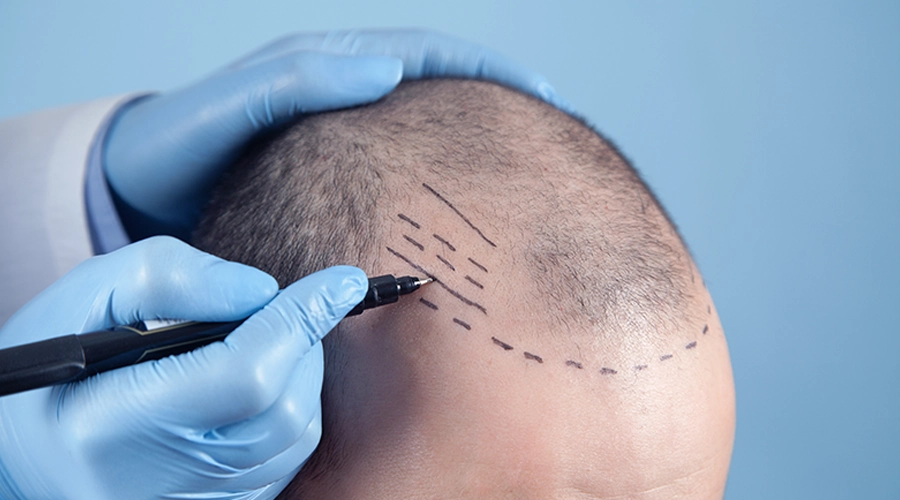
Hair transplantation is not limited to the day of surgery. Diagnosis, hairline design, technique selection, and the recovery process all play an important role in the outcome. The possibility of future hair loss should also be included in the treatment plan.
What Is a Hair Transplant and How Does It Work?
A hair transplant is the surgical transfer of follicular units from a donor area to a recipient area. The donor area is usually taken from the back and sides of the scalp.
A follicular unit is a natural grouping that contains one or more hairs growing together. Modern hair transplantation aims to preserve these natural groups so that a more balanced distribution can be planned across the hairline and recipient area.
Transplanted follicles largely retain the biological characteristics of the donor area. However, a hair transplant does not stop hair loss in existing, non-transplanted hair. Future hair loss should therefore be considered during planning.
Who Is a Good Candidate for a Hair Transplant?
Hair transplantation may be considered for people with sufficient donor capacity and a type of hair loss that is suitable for surgery. Male pattern hair loss is one of the most common indications. Hair transplantation may also be suitable for selected women.
Suitability is not determined only by the size of the thinning or bald area. Donor density, hair shaft thickness, and the rate of progression of hair loss should be assessed together.
A hair transplant may be considered in situations such as:
- Male pattern hereditary hair loss
- Significant recession of the hairline
- Localised, permanent areas of hair loss
- Selected scar areas under suitable conditions
- The need to redesign or restore the hairline
- Female pattern hair loss when donor capacity is adequate
Not every type of hair loss is suitable for hair transplantation. The cause of hair loss should be identified first.
Who May Not Be Suitable for a Hair Transplant?
It may not be appropriate to plan a hair transplant immediately when hair loss is active or its cause has not been identified. The underlying reason for the hair loss should be investigated first.
Active scarring alopecia, diffuse thinning in the donor area, or uncontrolled hair loss can affect surgical planning. In some hair disorders, treatment may be delayed until the condition is stable. PubMedPubMed
Serious systemic illnesses or health conditions that may affect healing should also be assessed. Any medications being used should be disclosed to the doctor before the procedure.
In very young patients, focusing only on the current hairline can create long-term problems. As hair loss progresses, new thinning areas may develop behind the transplanted region.
For this reason, the course of hair loss and donor reserve are often more important than a fixed age limit.
What Is Assessed Before a Hair Transplant?
Before a hair transplant, the cause of hair loss, donor capacity, and the likelihood of future loss should be evaluated. This assessment forms the basis of the surgical plan.
The current condition of the scalp is examined first. Hair shaft thickness and donor density are assessed, and areas of miniaturisation are also taken into account.
Important factors in planning include:
- The type and extent of hair loss
- The follicular unit capacity of the donor area
- Hair shaft thickness and texture
- The current position of the frontal hairline
- The extent of thinning in the crown
- Previous hair transplant procedures
- Family history of hair loss
- Current medications
- General health status
- The patient’s expectations
Additional assessment may be required when the cause of hair loss is unclear. In women especially, surgery should not be planned before the cause of diffuse thinning has been evaluated.
What Are the Differences Between FUE, DHI, Sapphire FUE and FUT?
FUE and FUT primarily describe how grafts are harvested from the donor area. DHI generally refers to the way grafts are implanted into the recipient area.
| Method | Key feature | Donor area | Implantation |
| FUE | Follicular units are extracted individually | Small punch extraction sites | Placed into prepared recipient sites |
| Sapphire FUE | After FUE extraction, channels may be created with sapphire blades | Same as FUE | Grafts are placed into the prepared channels |
| DHI | Grafts are generally extracted using FUE | Same as FUE | Placed using an implanter pen |
| FUT | A strip of skin is removed from the donor area | Linear incision | Dissected grafts are placed into the recipient area |
FUE is one of the most widely used approaches in modern hair transplantation. Follicular units are extracted individually using small punch devices. With FUT, a strip of hair-bearing skin is removed from the donor area.
DHI should not be considered a separate graft-harvesting method. Grafts are generally obtained using an FUE-based extraction process and are then placed into the recipient area with implanter devices. International hair restoration guidelines also highlight this distinction in the use of the term DHI.
It is not accurate to claim that one method is superior for every patient. Donor characteristics, the recipient area, and the planned number of grafts should all be considered when selecting a technique.
How Many Grafts Are Needed for a Hair Transplant?
The number of grafts needed for a hair transplant is determined individually according to the size of the area and the available donor capacity. Giving an exact number based only on photographs can be misleading.
One graft does not mean one hair. A single follicular unit can contain more than one hair shaft.
The surface area of hair loss is important when planning graft numbers, but it is not the only factor. Hair diameter, existing hair, and hair curl can also affect the appearance of density.
The donor area is a limited resource. Using the highest possible number of grafts is therefore not always the right approach. Excessive extraction can cause permanent thinning in the donor area. Donor depletion is recognised as a possible complication in current FUE literature.
In advanced hair loss, graft distribution between the frontal area, mid-scalp, and crown should be planned carefully.
How Is a Natural Hairline Designed?
A natural hairline is not created simply by making the forehead as small as possible. Facial proportions and the possibility of future hair loss should be considered together.
Designing the hairline too low or too straight can create an artificial appearance. It can also use grafts unnecessarily.
For a natural result, the hairline should be appropriate for the person’s age. Temple transitions and the direction of hair growth should also be included in the design.
Finer, suitable follicular units may be preferred in the first row, with density increasing gradually behind the hairline.
Hairline design should not focus only on the current appearance. It should also remain appropriate if hair loss continues in the future.
Can a Hair Transplant Lower the Hairline and Reduce Forehead Height?
In suitable candidates, a hair transplant can move the frontal hairline forward and visually reduce forehead height. However, a high or wide forehead is not always caused by hair loss.
Different surgical options may be considered for people with a naturally high hairline. Hair transplantation for forehead reduction and surgical hairline lowering are not the same procedure.
With hair transplantation, grafts are added in front of the existing hairline. With hairline lowering surgery, the hair-bearing scalp is surgically advanced forward.
The most appropriate approach depends on forehead height and hair density. Scalp characteristics and the patient’s expectations should also be assessed.
How Is a Hair Transplant Performed?
Hair transplantation involves harvesting donor grafts and placing them into target areas after a personalised hairline has been planned.
On the day of the procedure, the hairline and recipient areas are reassessed. The boundaries of the donor area are defined and the necessary preparations are completed.
After local anaesthesia, follicular units are extracted according to the selected technique. Protecting grafts from trauma, dehydration, and unnecessary waiting time is important. Appropriate graft handling during the procedure can affect their growth potential.
The direction, angle, and distribution of hair in the recipient area are planned before the grafts are placed into the prepared sites.
Procedures covering larger areas may take longer. The required time varies according to the number of grafts and the technique used.
How Long Does a Hair Transplant Take?
A hair transplant usually takes several hours. The duration depends on the number of grafts and the technique being used.
A small hairline procedure may take less time, while treatment covering a large area may require a longer surgical day.
Fast graft extraction alone is not a sign of quality. Controlled follicle extraction and appropriate graft storage are more important.
In extensive hair loss, excessive graft use in a single session may be avoided. A staged treatment plan may be more appropriate for some patients.
What Should You Do During the First Days After a Hair Transplant?
During the first few days after a hair transplant, the recipient area should be protected from mechanical trauma. The aftercare protocol may vary depending on the technique used.
The clinic should explain when and how the first wash should be performed. The transplanted area should not be rubbed aggressively, and scabs should not be removed prematurely.
During the first few days, patients may be advised to:
- Protect the transplanted area from impact and friction
- Follow the washing protocol provided by the clinic
- Avoid picking or manually removing scabs
- Use prescribed medications as directed
- Follow the doctor’s advice regarding strenuous physical activity
- Discuss smoking with the doctor
- Contact the clinic if unusual pain or discharge develops
Mild tenderness, redness, or swelling may occur. The duration can vary according to skin characteristics and the extent of the procedure.
Pain, swelling, itching, and temporary redness are among the early postoperative issues reported after FUE.
When Does Scabbing Go Away After a Hair Transplant?
Scabbing usually develops during the first few days after a hair transplant and gradually decreases with controlled washing. The timeline is not identical for everyone.
Visible redness and scabbing may remain for the first one or two weeks. Patients should follow the recommended aftercare programme rather than forcing the scabs off.
Once the scabbing has resolved, the transplanted area begins to look more natural. In some skin types, redness may take longer to disappear completely.
What Is Shock Loss After a Hair Transplant?
Shock loss is the temporary shedding of transplanted hair shafts after the procedure. It does not necessarily mean that the grafts have been lost.
Shock loss most commonly occurs in the weeks following surgery. Because new growth does not begin immediately, this period can be concerning for patients.
While the transplanted hair shafts shed, the follicular structures may remain within the scalp. New growth then emerges gradually during the next hair cycle.
Temporary shedding can also affect existing hairs around the treatment area. Current studies of FUE complications include temporary effluvium among reported postoperative events.
When Do Hair Transplant Results Become Visible?
Hair transplant results develop gradually and the final appearance takes months to emerge. The way the scalp looks during the first few weeks does not represent the final outcome.
| Period | What is generally expected |
| First 1-2 weeks | Scabbing and early healing |
| First few weeks | Temporary shedding may begin |
| Months 3-4 | The first new hairs may become visible |
| Months 6-9 | Density and hair shaft thickness may begin to increase |
| Around month 12 | The result can largely be assessed |
| Months 12-18 | Maturation may continue in some areas |
New hairs may initially appear fine or uneven. Hair shafts can become thicker over time.
Changes in the crown may become noticeable later than in other areas. The appropriate time to assess the result varies according to the patient and the area treated.
Is a Hair Transplant Permanent?
Hair transplanted from a suitable donor area is expected to continue growing long term. However, a hair transplant should not be viewed as a procedure that stops all future hair loss.
Androgenetic hair loss can continue in existing, non-transplanted hair. This may create new thinning areas over the years.
Long-term planning that preserves donor reserve is therefore particularly important in younger patients. When appropriate, medical options aimed at protecting existing hair may be assessed by a doctor.
Hair may also become thinner with age. For this reason, the same level of density throughout life cannot be guaranteed.
Does Hair Grow Back in the Donor Area After a Hair Transplant?
A follicular unit that is completely removed with FUE does not regenerate at the same extraction point. The number of grafts that can be taken from the donor area is therefore limited.
Grafts are extracted in a balanced distribution across the donor area so that surrounding hair can help camouflage the extraction points.
Removing too many grafts can leave the donor area looking thin and irregular. This is commonly described as overharvesting.
Preserving donor capacity is especially important in people with advanced hair loss because a second procedure may be needed in the future. Donor depletion is a recognised complication associated with FUE.
Can Women Have a Hair Transplant?
Hair transplantation can be performed in women when the pattern of hair loss is suitable and donor capacity is adequate. However, the diagnostic assessment may differ from that used in men.
Hair thinning in women may be more diffuse and widespread. In some patients, the donor area can also be affected by thinning.
A decision should therefore not be based only on the appearance of the frontal area. Hormonal, dermatological, or systemic causes should be investigated when necessary.
Surgical options may be considered for hairline recession or permanent hair loss limited to specific areas. A comprehensive 2025 review emphasised the need for personalised patient selection in women.
Can a Hair Transplant Be Performed Without Shaving?
Unshaven or partially shaven hair transplantation may be possible in selected patients. Suitability depends on the technique and the number of grafts required.
With approaches such as long-hair FUE, it may be possible to work without completely shaving the donor area. This option can be considered for patients who want to minimise the visible signs of treatment. Scientific reviews published in 2026 include long-hair FUE among contemporary hair restoration options.
However, an unshaven technique is not better for everyone. Procedure time and technical difficulty may increase.
A different preparation plan may be more appropriate when a large number of grafts is required. The decision should be based on surgical requirements as well as cosmetic preference.
What Are the Risks of Hair Transplant Surgery?
Hair transplantation is a surgical procedure and is not completely risk-free. Although many complications can be managed with appropriate follow-up, careful assessment remains important.
Possible problems include pain, swelling, bleeding, and infection. Folliculitis, temporary redness, and shock loss can also occur.
With FUE, small areas of colour change or excessive thinning may develop in the donor area. More serious wound-healing problems can occur in rare cases.
Unnatural hair growth direction in the recipient area can affect the cosmetic result. Grafts placed at an incorrect angle may make the hairline look artificial.
A current literature review published in 2026 indicates that patient selection, technical execution, and postoperative care can influence the risk of complications.
The healthcare team should be contacted if severe pain, increasing redness, discharge, or fever develops.
Can You Have a Second Hair Transplant?
A second hair transplant may be possible if donor capacity remains sufficient and the patient is medically suitable. However, not everyone is a candidate for another session.
A second procedure may be planned to increase existing density or to treat newly thinned areas caused by progression of hair loss.
The effect of the first procedure on the donor area should be assessed. If too many grafts were removed during the first operation, options for a second procedure may be limited.
For this reason, the first hair transplant should be planned with future needs in mind rather than focusing only on the current area of hair loss.
Hair Transplant Turkey Prices 2026
Hair transplant costs in 2026 vary according to the technique used, the number of grafts required, and the scope of the procedure. There is no single fee that applies to every patient.
A higher graft count can affect the cost, but not every clinic charges strictly per graft. Some centres price treatment by case or as a package.
Price information published in 2026 also shows considerable variation between clinics. Unverified market averages should therefore not be treated as definitive clinic prices.
Key factors that may affect hair transplant cost include:
- The hair transplant technique used
- The number of grafts required
- The extent of hair loss
- The condition of the donor area
- Whether treatment is performed in one or multiple sessions
- Whether a shaved or unshaven approach is planned
- Whether additional procedures are required
- The scope of the procedure and follow-up care
- Package services such as accommodation or transfers
A precise hair transplant price should be determined after assessing the hair and donor area. The planned graft number and overall scope of treatment should be considered together during the initial assessment.
Frequently Asked Questions
Is a Hair Transplant Painful?
Hair transplantation is usually performed under local anaesthesia. Brief sensitivity or a stinging sensation may be felt while the anaesthetic is administered.
Mild pain or tightness can occur after the procedure. The level of discomfort varies according to the individual and the extent of treatment.
What Is the Best Age for a Hair Transplant?
There is no fixed age limit that applies to everyone. The type of hair loss and how quickly it is progressing are more important factors.
Future hair loss can be difficult to predict in very young patients. Long-term hairline and donor planning are therefore important.
When Can You Return to Work After a Hair Transplant?
Many people can return to desk-based work after the first few days. Visible redness and scabbing may last longer.
The return-to-work timeline may be different for physically demanding jobs. Postoperative instructions from the treating doctor should be followed.
Can Hair Fall Out Again After a Hair Transplant?
Transplanted hairs may undergo temporary shock loss during the first few weeks. This usually does not mean that the graft itself has been lost.
Existing natural hair that was not transplanted may continue to thin in the future. A hair transplant therefore does not completely stop the underlying hair-loss process.
Can Everyone Receive 3,000 or 4,000 Grafts?
No. The graft number should be based on the size of the area and the person’s safe donor capacity.
Two people with a similar area of hair loss can have very different donor density. Standard graft packages should therefore not replace personalised surgical planning.
Which Is Better, FUE or DHI?
There is no single method that is universally better for every patient. In addition, FUE and DHI do not describe the same stage of the procedure.
FUE relates to graft extraction, while DHI generally refers to graft placement using an implanter device. Hair characteristics and the overall surgical plan should be considered when choosing a technique.
What Happens If the Donor Area Is Insufficient for a Hair Transplant?
If donor capacity is insufficient, it may not be possible to cover every target area safely. Priority areas can be selected and a more limited plan may be created.
Exceeding safe donor limits can increase the risk of permanent thinning. Target density should therefore be based on the available graft reserve.
When Can You Exercise After a Hair Transplant?
The timing of a return to exercise varies according to the extent of the procedure and the healing process. Strenuous exercise may need to be avoided during the early period.
The treating team should advise when light and more intensive exercise can be resumed.
Can You Wear a Hat After a Hair Transplant?
Hat use should be controlled during early recovery because contact or pressure can affect the transplanted area. The appropriate timing varies according to the technique used.
Patients should obtain approval from the treating team before wearing a hat.
Why Do Hair Transplant Results Vary from Person to Person?
Results are influenced by donor quality, hair characteristics, graft handling, and surgical planning. Individual healing characteristics can also affect the outcome.
Even when the same technique is used, identical density or appearance cannot be guaranteed for every patient.