

Obesity is a prevalent issue in the modern era. According to the WHO (World Health Organization), approximately 43% of the global adult population is overweight. From sedentary lifestyle factors and poor diet choices to socioeconomic issues, there are many reasons for this uptick in obesity statistics worldwide. However, all hope is not lost. There are many surgical and non-surgical weight loss procedures available to lose weight effectively and gain back control of your life and health.
📉 What is Non-surgical Weight Loss?
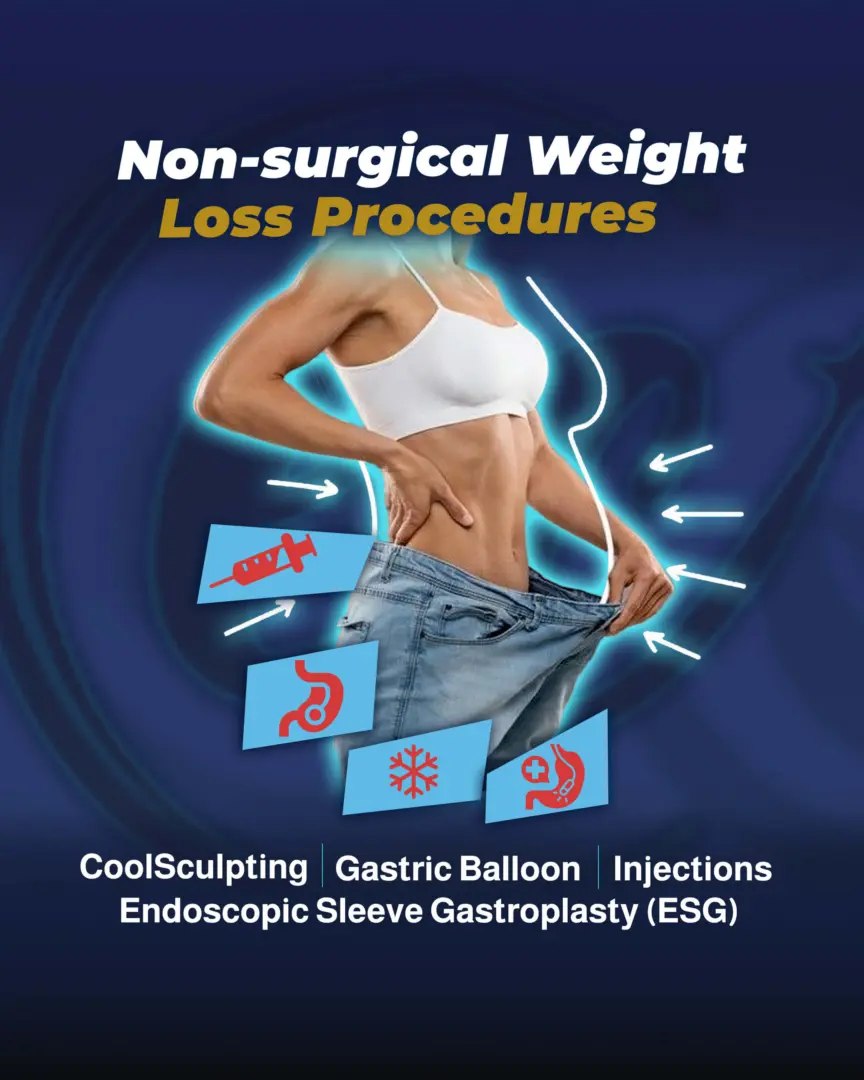
A non-surgical weight loss is weight loss achieved through interventions other than conventional bariatric (weight loss) surgery. Notable non-surgical weight loss treatments include prescription medications, lifestyle modifications, and minimally invasive procedures.
Medical weight loss without surgery is appealing to many because there is almost no risk and little to no recovery period. Moreover, non-surgical weight loss procedures are also more cost-effective compared to their surgical counterparts.
🚶♀️ Who Can Benefit From Non-surgical Weight Loss Procedures?
Patients who can benefit from non-surgical bariatric options include:
- People who do not want to commit to invasive surgery
- Individuals who, for some reason, are not suitable candidates for traditional weight loss surgery
- People with a BMI (Body Mass Index) of 25 or higher
- Patients with secondary health issues along with obesity, such as Diabetes, Hypertension, Polycystic Ovarian Syndrome, etc.
- Individuals who want to try all available treatment options before committing to surgical intervention
Sometimes physicians recommend non-surgical weight loss treatments before surgery to improve the overall prognosis and reduce risks. In essence, non-surgical weight loss procedures are best for people who want to try a steady and consistent approach to weight loss under the oversight of trained medical professionals.
⚖️ Types of Non-Surgical Weight Loss
Common non-surgical weight loss treatments available to patients are as follows:
Prescription Medications
Weight-loss medications can be in tablet or injectable form. The oral medications function as prescription appetite suppressants and fat-absorption inhibitors. Injectables (E.g., Semaglutide for weight loss), on the other hand, are GLP-1 agonists.
Simply put, they copy the actions of a naturally occurring hormone in the human body called GLP-1 or Glucagon-like Peptide-1. GLP-1 is responsible for pro-weight-loss actions, such as decreasing appetite, slowing down the rate of gastric emptying, triggering Insulin release, etc.
Body Sculpting
Also known as body contouring, these are a group of cosmetic procedures that aim to improve the definition and contours of specific body parts for better overall aesthetics. Body sculpting treatments work by getting rid of excess fat deposits, tightening the overlying skin, and improving body proportions.
Areas of treatment commonly include the abdomen, thighs, chin, jawline, love handles, and buttocks. Examples of non-surgical body contouring treatments include Cryolipolysis (CoolSculpting), Laser lipolysis, Radiofrequency Body Contouring, and HIFU (High-intensity Focused Ultrasound).
Minimally Invasive Procedures
Minimally invasive weight loss treatments include options such as the Gastric Balloon procedure and ESG (Endoscopic Sleeve Gastroplasty). These procedures use an endoscope that is inserted through the mouth, hence, foregoing the need for applying incisions or stitches. They work by either reducing the functional area of the stomach or slowing down its emptying, hence making a person feel full with smaller-than-normal portions of food.
Lifestyle Modifications
Lifestyle modifications and behavioral therapy are important aspects of non-surgical weight loss. This is usually the first treatment option for most people on their weight loss journey. The aim is to implement healthy lifestyle habits and diet choices to achieve a caloric deficit and meaningful weight loss.
👙 How to Choose The Most Effective Non-Surgical Weight Loss Procedure?
People with obesity or weight-related issues often struggle with the choice of an appropriate non-surgical weight loss procedure. They go by the latest buzz words in weight loss treatment, like GLP-1 medication Ozempic. However, the decision is not as simple as that. For example, one can not compare CoolSculpting vs weight loss shots without understanding what each treatment option entails.
Some important considerations that go into picking the best non-invasive fat reduction treatment for specific patients include:
- BMI (Body Mass Index) at the time of presentation
- Individual weight loss goals
- Overall health status of the candidate
- Presence of any secondary health issues (Diabetes, HTN, etc.)
The final decision is usually made by a trained medical professional after reviewing the results of a detailed medical history, examination, investigations, and scans. Moreover, most non-surgical weight loss plans are a combination of various approaches, rather than focusing on only one type of treatment.
🏥 Surgical Vs Non-surgical Bariatric Procedures
Non-surgical bariatric treatments, like injections for weight loss, are a great option for people who do not want to undergo surgery or for any reason are not eligible for it. Non-surgical weight loss procedures take away the risk of anesthesia, incisions, or stitches. Furthermore, there are no surgical risks, complications, or need for a prolonged recovery period with non-surgical weight loss.
Applied properly, under the guidance of trained professionals, non-surgical bariatric procedures can achieve gradual, healthy, and sustainable weight loss. A huge advantage of non-surgical treatment options is that their implementation does not interfere with the individual’s daily life and work activities. Clinicians can also easily adjust non-surgical plans to individual needs and requirements on the go.
In conclusion, in the world of healthy weight loss, non-surgical weight loss procedures have an important place before considering invasive surgical intervention.
✨ Real Success Stories, Real Results: 360 Lipo – BBL – J-Plasma (Extensive Body Transformation)
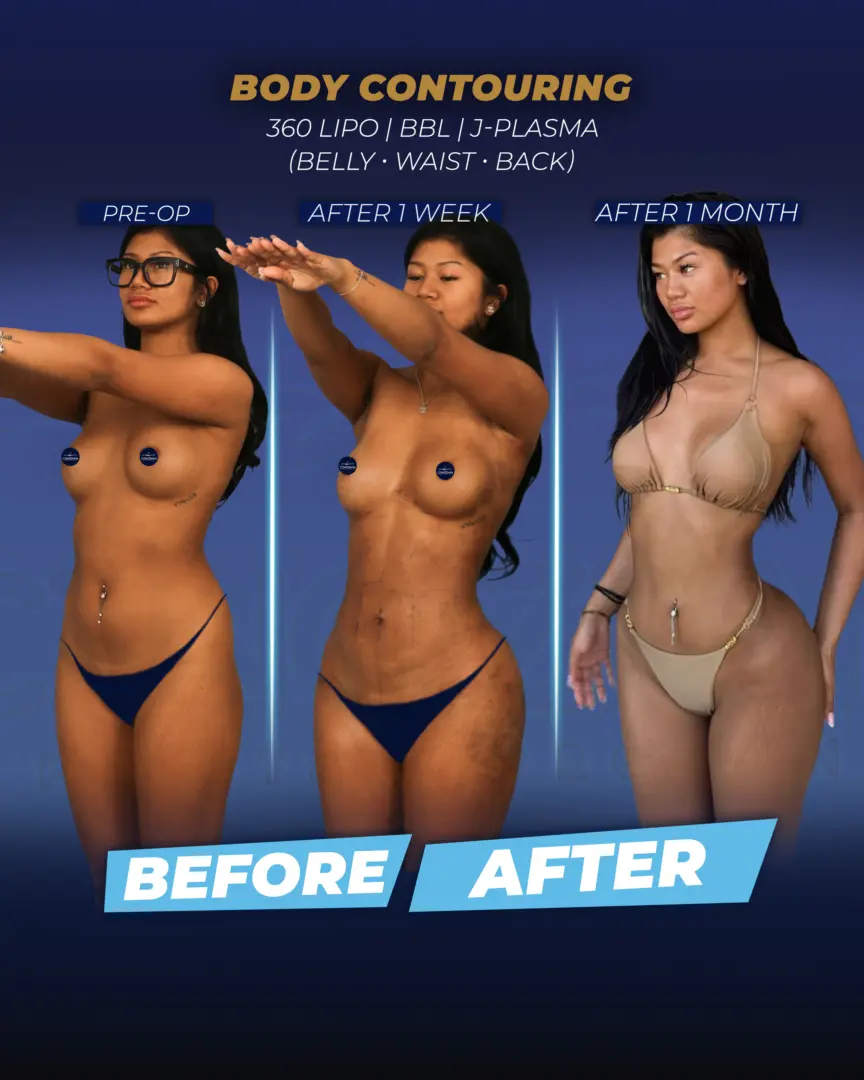
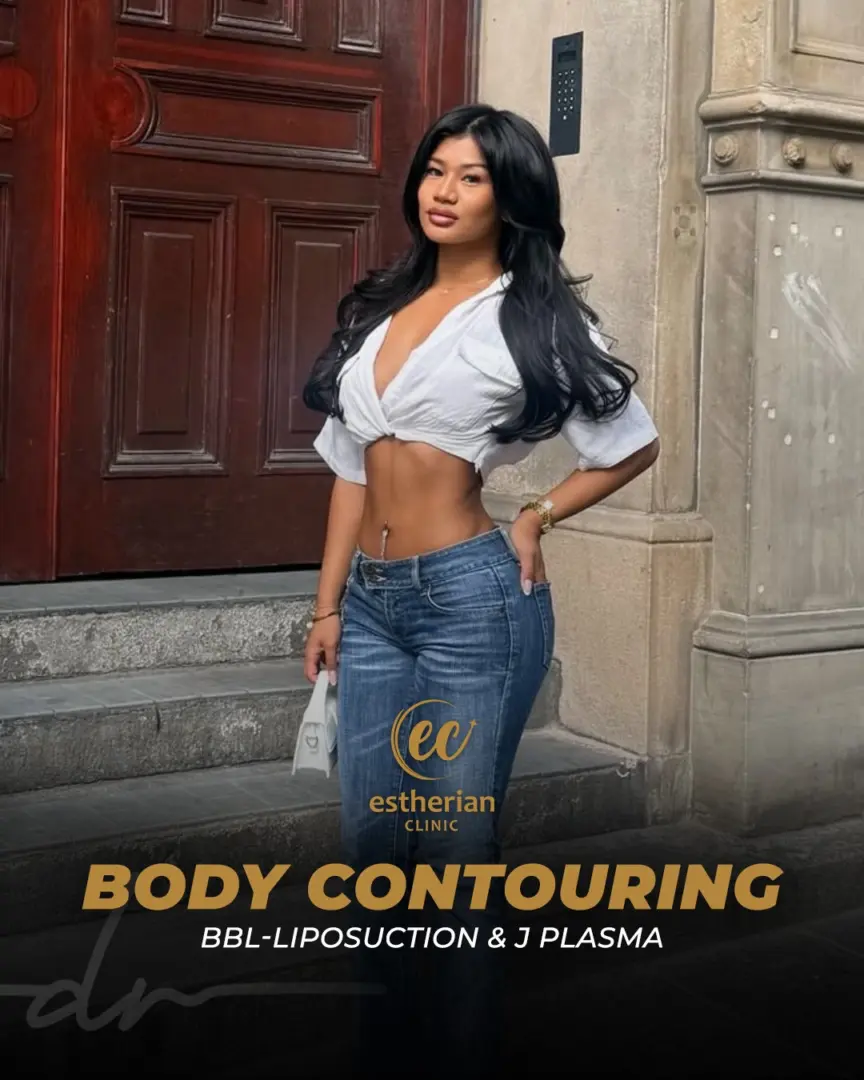
This patient came to Dr. Cengizhan Ekizceli for a comprehensive body transformation targeting her belly, waist, and back. She wanted a more defined silhouette, which is why Dr. Cengizhan Ekizceli performed a combined procedure of 360 Lipo, a BBL, and a J-plasma procedure. Let’s take a deeper dive into which procedures she underwent and how they improved her body’s contour.
Before the Surgery
- Prior to the surgery, there was a small amount of fat accumulation in her midsection.
- The fat accumulation in her abdominal area also gave her mid-section a slight bulge, which was preventing her body from looking hourglass.
- Her buttocks also had a rather flat shape, which made the sides of her hips look uncurvy.
After the Surgery
- The 360 lipo was instrumental in eliminating the fat accumulation in her abdomen, the flanks, and the backside.
- In fact, the procedure not only gave her a flat stomach but also slimmed down her mid-section all the way around, giving her body that smooth look that most women desire.
- It made her back and flanks look more contoured compared to before.
- The BBL procedure, on the other hand, significantly volumized her hips.
- Her one-month post-op results show that the 360 Lipo and BBL have helped her reach her aesthetic goal of having a defined and curvaceous shape.
- Finally, the patient also underwent a J-Plasma procedure to improve skin texture and tightening.