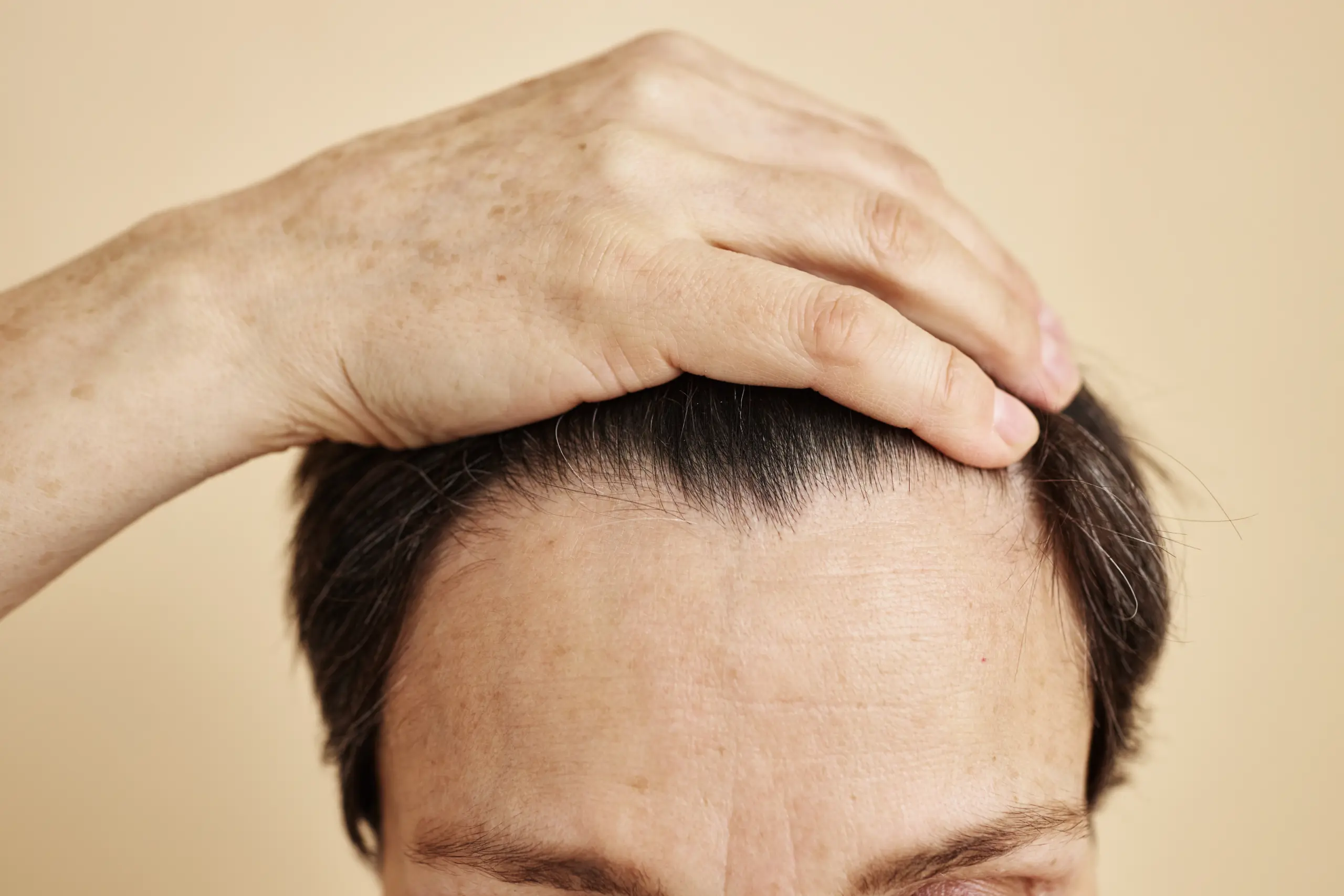

A large forehead can throw off the balance of your entire face, and for many people, forehead reduction surgery (also called hairline lowering surgery) is the most direct way to fix it. But before booking anything, most patients ask the same question first: is this actually safe?
The honest answer is that forehead reduction is generally considered a safe and effective cosmetic procedure when it’s performed by an experienced surgeon on a suitable candidate — but like any surgical procedure, it carries real risks. In this guide, we’ll walk through what can go wrong, how often it actually happens, and what separates a smooth result from a “gone wrong” horror story you might have seen online.
For a full overview of the procedure itself, see our complete guide to forehead reduction surgery.
What Is Forehead Reduction Surgery?
Forehead reduction, or hairline lowering surgery, is a surgical technique that moves the hairline forward to shorten the vertical height of the forehead. It’s typically done through an incision hidden along the existing hairline, through which the surgeon advances the scalp and removes the excess forehead skin.
Because it reshapes one of the most visible facial features on the face, precision matters enormously here. The surgical procedure demands not just technical skill, but a genuine understanding of scalp anatomy, tension distribution, and how the tissue will heal over time.
Is Forehead Reduction Safe?
For the right patient, yes — this is a well-established procedure with decades of documented outcomes. Complication rates are relatively low when the surgery is performed in an accredited facility by a board-certified surgeon who specializes in this specific technique.
That said, “safe” doesn’t mean “risk-free.” Safety depends heavily on three factors:
- The surgeon’s specific experience with hairline-lowering techniques (not just general cosmetic surgery)
- Whether you’re actually a good candidate for forehead reduction in the first place
- How closely you follow post operative care instructions during healing
A candidate for forehead reduction is typically someone with good scalp laxity (elastic, mobile skin), a stable hairline (not actively receding), and healthy hair density along the hairline to camouflage the scar. Patients with active pattern hair loss or very tight scalps are often steered toward alternatives instead.
The Real Risks and Complications
Here’s where “gone wrong” stories usually come from — not because the surgery is inherently dangerous, but because of surgeon inexperience, poor patient selection, or unrealistic planning.
1. Visible Scarring
Every incision leaves a scar. In skilled hands, the scar sits directly at the hairline and is camouflaged by hair regrowth through a technique called trichophytic closure. When done poorly, however, visible scarring can appear as a shiny, widened, or hairless band — one of the most common complaints in “gone wrong” cases.
2. Hair Loss Along the Incision
Some degree of hair loss (telogen effluvium) near the incision line is common in the first few months and is usually temporary. But if hair follicles are damaged during closure — from excessive tension or poor technique — the loss can become permanent, leaving a visible gap.
3. Nerve Damage
The forehead is rich with sensory nerves. Temporary numbness or tingling along the scalp is expected initially, but improper dissection can occasionally cause more lasting nerve damage, resulting in altered sensation or, rarely, difficulty with eyebrow movement.
4. Hairline Irregularities
An uneven, unnaturally straight, or overly aggressive hairline advancement can look artificial. This is almost always a surgical technique issue tied to surgeon skill rather than an unavoidable risk of the procedure itself.
5. Infection and Delayed Healing
As with any incision-based surgery, infection is possible, though uncommon with proper sterile technique and post operative care. Smoking, diabetes, and poor wound hygiene all raise this risk.
Complication Snapshot
| Complication | How Common | Usually Caused By | Typically Permanent? |
|---|---|---|---|
| Visible scarring | Uncommon with skilled closure | Poor technique, excess tension | Sometimes |
| Hair loss at incision | Common (mild), rare (severe) | Follicle damage, tension | Usually temporary |
| Nerve-related numbness | Common initially | Normal healing process | Usually resolves in months |
| Permanent nerve damage | Rare | Surgical error | Occasionally |
| Infection | Rare | Poor aftercare, underlying health issues | No, if treated promptly |
| Hairline irregularity | Uncommon with experienced surgeons | Inexperienced technique | Can be revised |
Recovery: What "Normal Healing" Actually Looks Like
Understanding a realistic recovery arc helps you tell the difference between expected healing and a genuine complication.
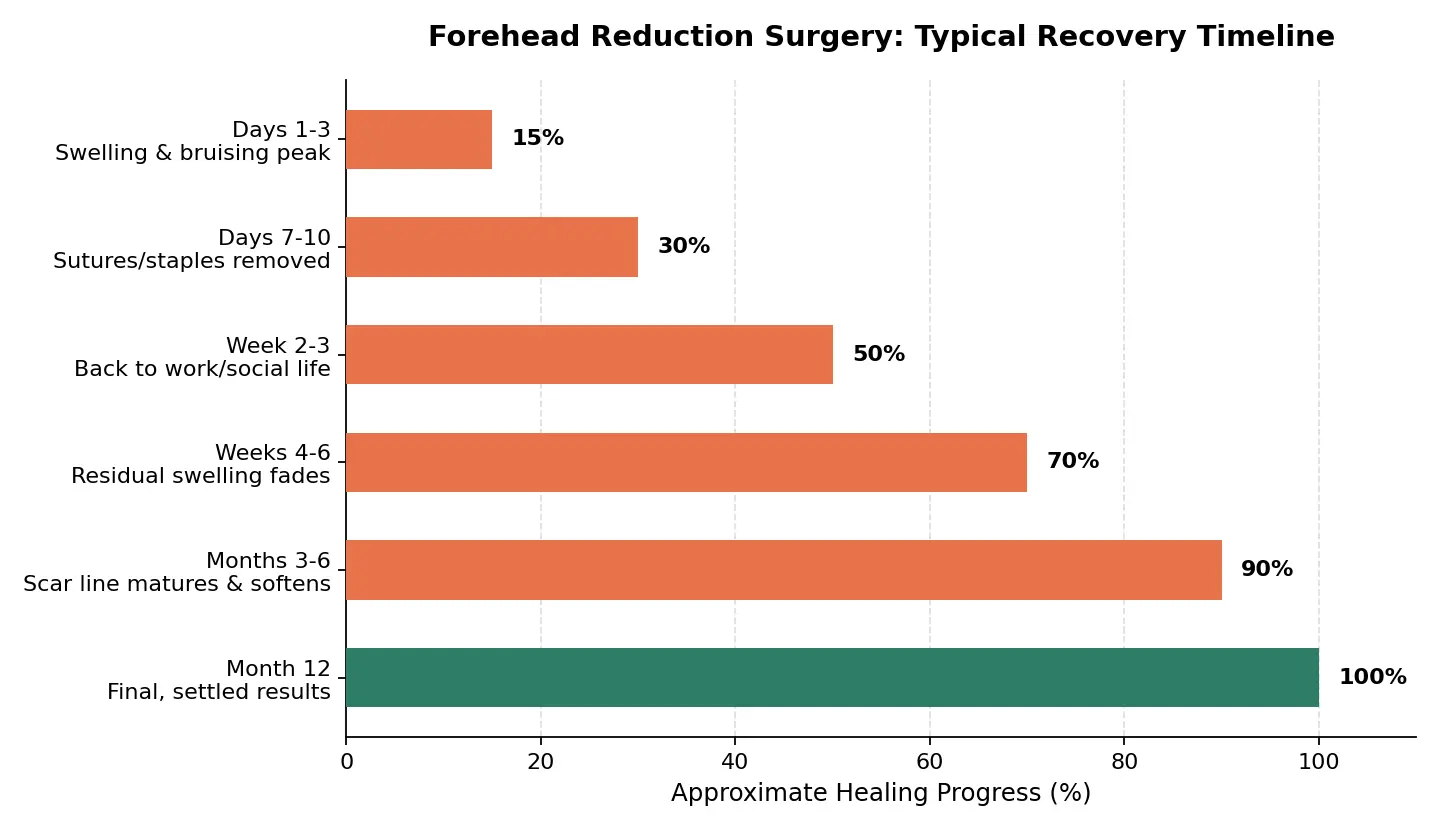
Most patients see swelling and bruising peak in the first few days, with sutures removed around day 7–10, and a return to normal activities within two to three weeks. Full scar maturation, where the incision line fades and blends with the surrounding skin, can take long term patience — often six months to a full year.
Why "Gone Wrong" Cases Happen
When you search for horror stories, a pattern shows up almost every time: the surgeon wasn’t a true specialist in this niche technique, the patient wasn’t a good fit for the surgery, or expectations weren’t managed properly beforehand.
Reputable clinics address this by:
- Reviewing photos and testimonials from previous patients with similar hairline and scalp characteristics
- Setting realistic expectations about scar visibility, sensation changes, and final hairline position
- Explaining alternatives — including a brow lift or hair transplant — when forehead reduction alone isn’t the ideal fit
Forehead Reduction vs. Brow Lift vs. Hair Transplant
These three procedures are often confused, but they solve different problems:
- Forehead reduction physically moves the hairline down and shortens forehead height
- A brow lift repositions the eyebrows and softens forehead wrinkles without changing hairline position
- A hair transplant adds density to a receding or thinning hairline but doesn’t change the underlying bone structure or forehead proportions
Some patients even combine forehead reduction with a later hair transplant to refine the hairline’s natural irregularity, which — done correctly — actually improves camouflage of the scar.
Forehead Reduction Surgery Cost
Forehead reduction surgery cost varies significantly based on the surgeon’s experience, geographic location, whether the procedure is combined with a brow lift, and the complexity of your specific anatomy. Rather than chasing the lowest price, it’s worth remembering that revision surgery to correct a poorly executed hairline is more expensive — financially and emotionally — than paying for an experienced specialist the first time.
How to Reduce Your Risk
If you’re seriously considering this cosmetic procedure, a few steps go a long way toward a safe outcome:
- Choose a surgeon who performs hairline-lowering procedures regularly, not occasionally
- Ask to see real results from previous patients with a hairline and scalp type similar to yours
- Disclose your full medical history, including any history of keloid scarring or hair loss
- Follow every post operative care instruction exactly, including activity restrictions and wound care
- Avoid smoking before and after surgery, since it significantly impairs healing
Conclusion
Forehead reduction can be transformative when it’s done right — softening facial proportions and boosting confidence for years afterward. The risks are real, but they’re also largely preventable through careful surgeon selection, honest expectations, and disciplined aftercare. The “gone wrong” stories you’ll find online are almost always a story about the wrong surgeon or the wrong candidate, not a flaw in the procedure itself.
If you’d like a personalized assessment of whether you’re a good fit, the best next step is to book a consultation with a surgeon who specializes specifically in hairline-lowering techniques. You can also read our full breakdown of the procedure on our forehead reduction surgery page.
Frequently Asked Questions
How long does the scar take to fade?
Most incision lines soften and blend into the surrounding hairline within six to twelve months, especially when hair grows through it naturally.
Will I need a hair transplant afterward?
Not usually. Some patients choose one later purely to refine hairline density or irregularity, but it isn’t a requirement for a safe and effective result.
Can forehead reduction be combined with a brow lift?
Yes — many surgeons combine the two when a patient wants both a shorter forehead and a subtle brow repositioning in a single surgical procedure.
What questions should I ask before surgery?
Ask directly about the surgeon’s experience with this specific technique, how many cases they’ve performed, and whether you can see results from previous patients with a similar hairline pattern.