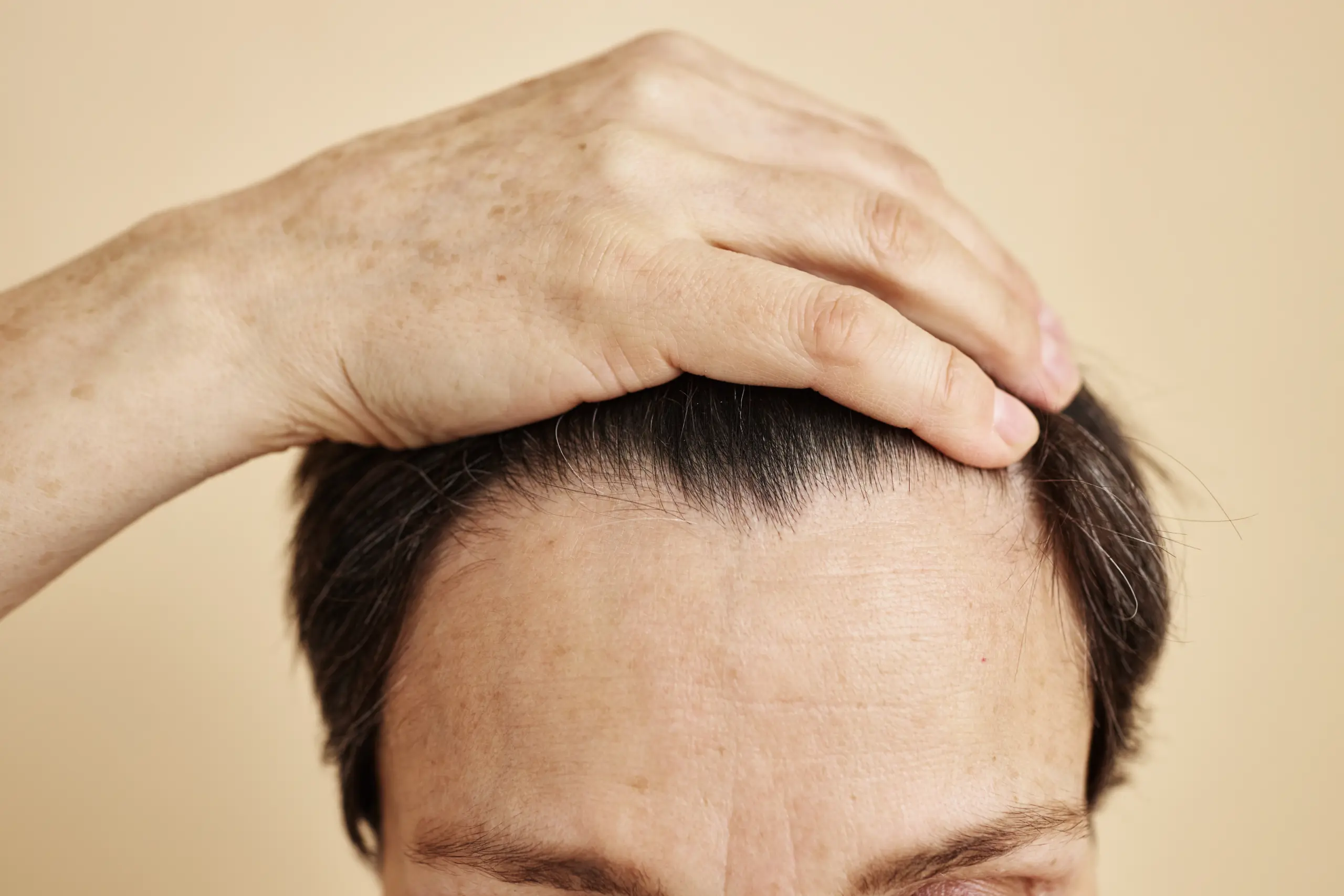

A high, receding hairline can make the forehead look disproportionately large and add years to your appearance. For men and women who feel their upper face dominates their features, hairline lowering surgery — also called forehead reduction surgery — offers a permanent, single-session solution. In recent years, Turkey offers some of the most experienced surgical teams and advanced clinics for this procedure, attracting patients from across Europe, the US, and the Middle East.
This guide walks through how the surgery works, who qualifies as a good candidate, what recovery looks like, and why so many patients choose surgery in Turkey over options closer to home.
What Is Hairline Lowering Surgery?
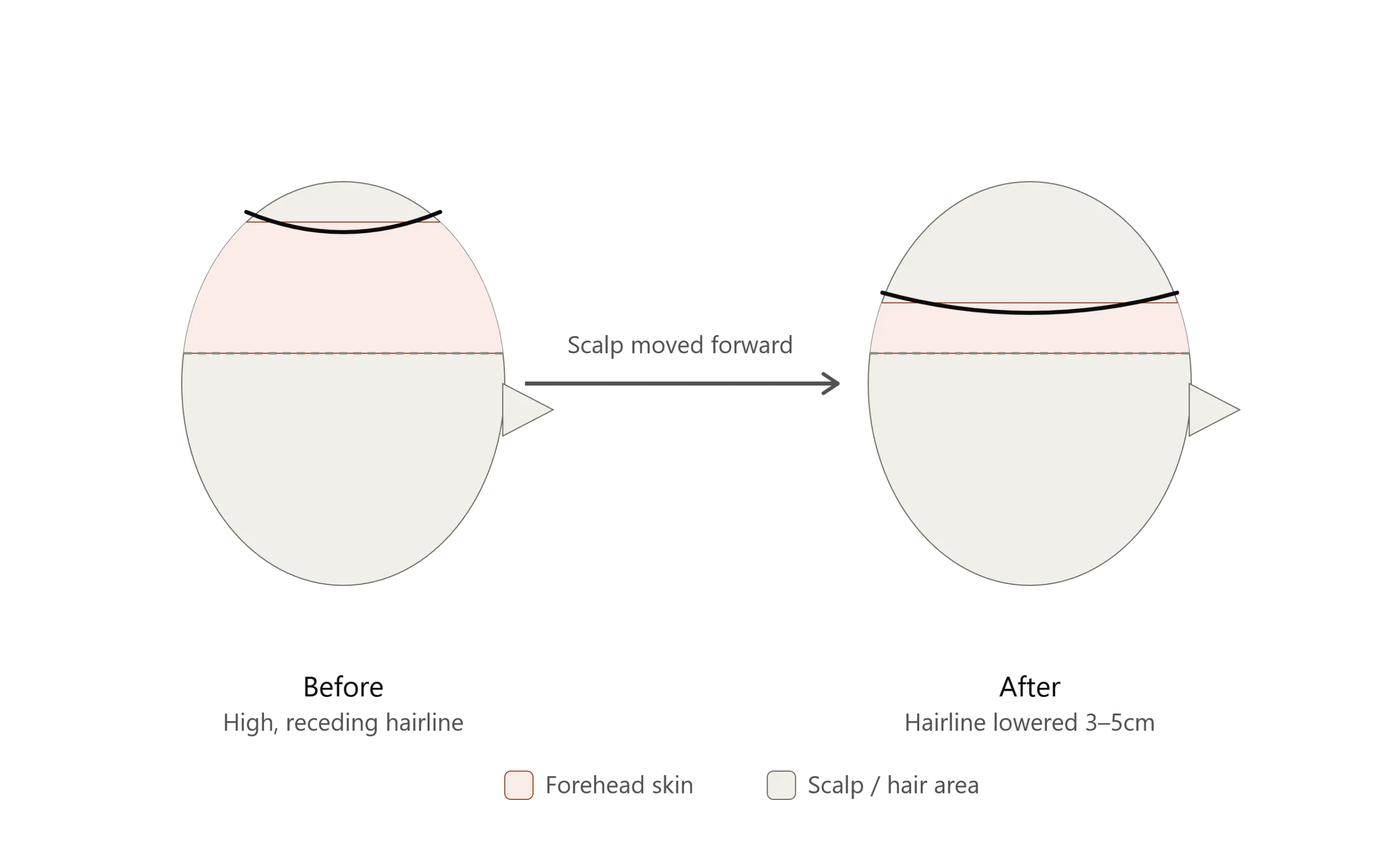
Hairline lowering surgery is a cosmetic procedure designed to reduce the distance between the eyebrows and the hairline by physically moving the hairline forward. Unlike hair transplants, which relocate individual hair follicles one by one, this technique surgically removes a strip of forehead skin and advances the scalp forward, bringing existing, fully-dense hair down to a lower, more natural position.
The result is an immediate reduction in forehead height — often 2 to 6 centimeters — without waiting months or years for transplanted grafts to grow. Many patients with receding hairlines or a naturally tall forehead find this approach faster and more predictable than transplantation alone.
Hairline Lowering vs. Hair Transplant: What's the Difference?
Patients researching hair loss solutions often confuse these two approaches, but they solve different problems.
| Feature | Hairline Lowering Surgery | Hair Transplant |
|---|---|---|
| Goal | Physically reduce forehead size | Add density to thinning areas |
| Method | Scalp advancement, skin excision | Follicle extraction and re-implantation |
| Results visible | Immediately after healing | 8–12 months after growth cycle |
| Best for | Naturally high or large forehead | Pattern hair loss, thinning crown |
| Downtime | 10–14 days | 5–10 days |
| Combinable? | Yes, often paired together | Yes, often paired together |
In many cases, surgeons combine both surgical procedures: hairline lowering to correct the overall proportions, followed by a small transplant along the new hairline to soften the edge and create a natural, irregular growth pattern.
Who Is a Good Candidate?
Not everyone with a high forehead needs surgery, and not every hair loss pattern is treatable this way. Ideal candidates typically share the following traits:
- A large forehead that is proportionally out of balance with the rest of the face, present since childhood rather than caused by ongoing hair loss
- Sufficient scalp elasticity, allowing the skin to stretch and advance without excessive tension
- Stable hair loss, meaning no active, progressive balding at the back or sides of the scalp
- Realistic expectations about the degree of change and the visibility of a fine scar along the new hairline
- General good health, with no uncontrolled medical conditions that would affect wound healing
Patients with early-stage male or female pattern baldness are sometimes better suited to hair transplants alone, since lowering the hairline in someone with ongoing hair loss can create an unnatural look as thinning progresses. A qualified surgeon will assess scalp laxity, hairline shape, and facial proportions during consultation to confirm candidacy.
The Procedure Step by Step
A typical hairline lowering procedure follows these stages:
- Consultation and marking – The surgeon evaluates scalp laxity, draws the planned new hairline, and discusses the desired reduction in forehead height.
- Anesthesia – The procedure is usually performed under local anesthesia with sedation, though general anesthesia is sometimes used for combined surgical procedures.
- Incision – A hairline incision is made just behind the existing hairline, following its natural, irregular shape rather than a straight line.
- Scalp advancement – The forehead skin is separated from the underlying tissue, and the scalp is pulled forward to reduce the size of the forehead.
- Removal of excess skin – The excess skin left at the incision site is trimmed away.
- Closure – Once the scalp is repositioned, the incision is closed with fine sutures using techniques designed to minimize tension and scarring.
The full operation generally takes two to four hours, and most patients return home the same day or after one night of observation.
Recovery Timeline
Recovery time varies by individual, but most patients follow a similar healing pattern:
- Days 1–3: Swelling around the forehead and eyes is common; mild discomfort is managed with medication.
- Days 4–7: Swelling begins to subside; patients can usually return to light daily activities.
- Days 10–14: Sutures are removed, and the incision line is well on its way to closing fully.
- Weeks 3–6: Most visible swelling and tightness resolve; patients can resume exercise and normal routines.
- Months 3–6: The scar continues to soften and fade, typically becoming well camouflaged by surrounding hair.
Numbness or tightness across the scalp is normal in the initial weeks and usually resolves as nerves regenerate. Following post operative care instructions — keeping the area clean, avoiding strenuous activity, and protecting the incision from sun exposure — significantly improves healing outcomes.
Is It Safe? Understanding the Risks
Is it safe to undergo hairline lowering surgery? When performed by an experienced, board-certified surgeon, the procedure has a strong safety profile. As with any cosmetic surgery, risks exist and should be discussed openly during consultation, including infection, temporary numbness, visible scarring, or asymmetry. Choosing a surgeon who regularly performs this specific procedure — rather than a generalist — is the single biggest factor in minimizing complications.
Why Patients Choose Turkey for This Procedure
Turkey offers a unique combination of factors that has made it a leading destination for cosmetic procedures, including hairline lowering and forehead reduction surgery:
- Specialized expertise: Turkish clinics perform an exceptionally high volume of hairline and hair restoration procedures, giving surgeons deep, focused experience.
- Cost advantage: Prices for surgery in Turkey are typically a fraction of equivalent procedures in the UK, US, or Western Europe, without compromising surgical standards.
- All-inclusive packages: Many clinics bundle the operation, accommodation, transport, and follow-up care into a single package, simplifying the process for international patients.
- Modern facilities: Leading clinics use the same accredited techniques and equipment found in top Western hospitals.
Patients considering this route should still verify credentials, review before-and-after cases, and confirm that follow-up communication is available after returning home.
Combining Hairline Lowering with Hair Transplants
For patients dealing with both a large forehead and thinning at the hairline, combining both surgical procedures in a staged approach often produces the most natural, balanced result. The lowering surgery addresses overall facial proportions, while a subsequent transplant along the new hairline adds soft, irregular density that mimics natural growth. Surgeons typically recommend waiting several months between the two procedures to allow the scalp to heal fully.
If you’re exploring your options, our dedicated page on forehead reduction surgery covers the technique in greater depth, including detailed before-and-after examples and consultation guidance.
Final Thoughts
Hairline lowering surgery offers a direct, permanent way to correct a disproportionately large forehead, often delivering more immediate results than hair transplants alone. With careful candidate selection, an experienced surgical team, and realistic expectations, patients can achieve natural, balanced results. For those exploring surgery in Turkey, thorough research into clinic credentials and surgeon experience remains the most important step toward a safe, successful outcome.
This article is for informational purposes only and does not constitute medical advice. Consult a qualified surgeon to determine whether hairline lowering surgery is right for you.
Frequently Asked Questions
How much does hairline lowering surgery cost in Turkey?
Costs vary by clinic and the extent of correction needed, but Turkish clinics generally offer significantly lower prices than comparable Western clinics, often including accommodation and aftercare in the package price.
Will there be a visible scar?
A fine scar along the new hairline is unavoidable, but surgeons design the incision in an irregular, zig-zag pattern that blends with surrounding hair, making it very difficult to notice once healed.
How long do results last?
Results from hairline lowering surgery are permanent, since the underlying skull structure and skin position are physically altered.
Can women have this procedure?
Yes. Hairline lowering is common among women seeking to reduce a naturally large forehead and improve overall facial proportions.
How soon can I travel home after surgery in Turkey?
Most patients can fly home around 5 to 7 days after the procedure, once initial swelling has decreased and the surgeon confirms healing is progressing normally.