

Having hooded eyes can be a frustrating experience. Hooded eyes make the eyelids look heavy and droopy, which makes the overall face look tired and exhausted. No matter how much sleep you get, hooded eyes can still make you look sleep-deprived. Extreme hooding in the eyes can disrupt peripheral vision. Both surgical and non-surgical solutions exist to help with hooded eyes. The upper blepharoplasty procedure aims to eliminate excess skin, which helps make the eyelids look lifted. Botox, on the other hand, is a non-surgical solution to help with droopy eyelids. Stay with us to know all about Blepharoplasty (upper eyelid surgery) vs Botox for hooded eyes.
⚕️ What Really Causes Hooded Eyes?
People have hooded eyes because there is a lot of skin on the eyelids in the crease area, which can make the eyelids look droopy. Ultimately, some people have naturally hooded eyes due to genetics, while others can get them over time due to the effects of aging.
Some of the reasons why people have hooded eyes are:
Ethnicity & Genetics
Several ethnic groups around the world have naturally hooded eyes. These include East & Central Asians, Siberians, Arctic populations, etc. People from these ethnicities have a higher likelihood of having hooded eyes due to bone structure, eyelid fat deposits, and genetics.
Aging
With age, the skin gradually loses its collagen and elastin. This leads to sagging, especially along the lateral part of the eyebrows, which in turn causes drooping of the upper eyelids as well.
Anatomy
A highly defined brow bone and sunken or deep-set eyes predispose a person to a hooded appearance to the eyes. Brow ptosis or droopiness of the lateral brow also leads to hooded eyes.
Lifestyle
Lifestyle factors such as smoking, excessive handling of the peri-ocular skin, inadequate skincare, and excessive time in the sun are all culprits that cause hooded eyelids.
Health-issues
Rarely, people with nerve or muscle-related health issues can develop hooded eyes due to ptosis or paralysis.
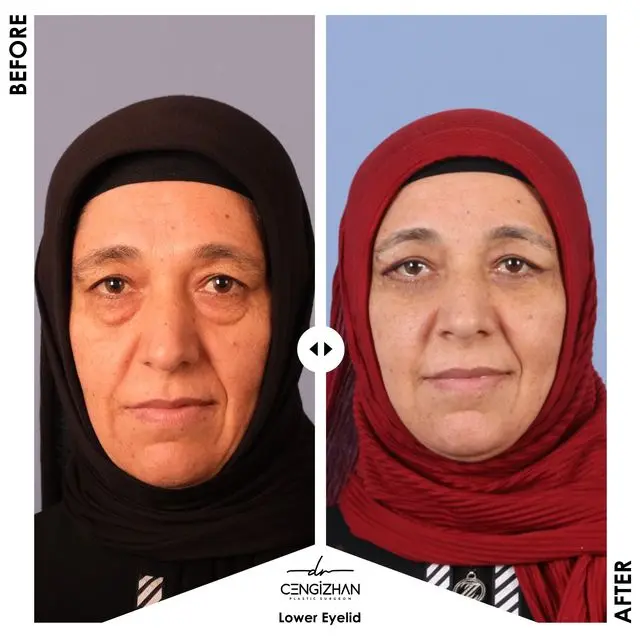
👁️ A Detailed Analysis of the Upper Blepharoplasty Procedure
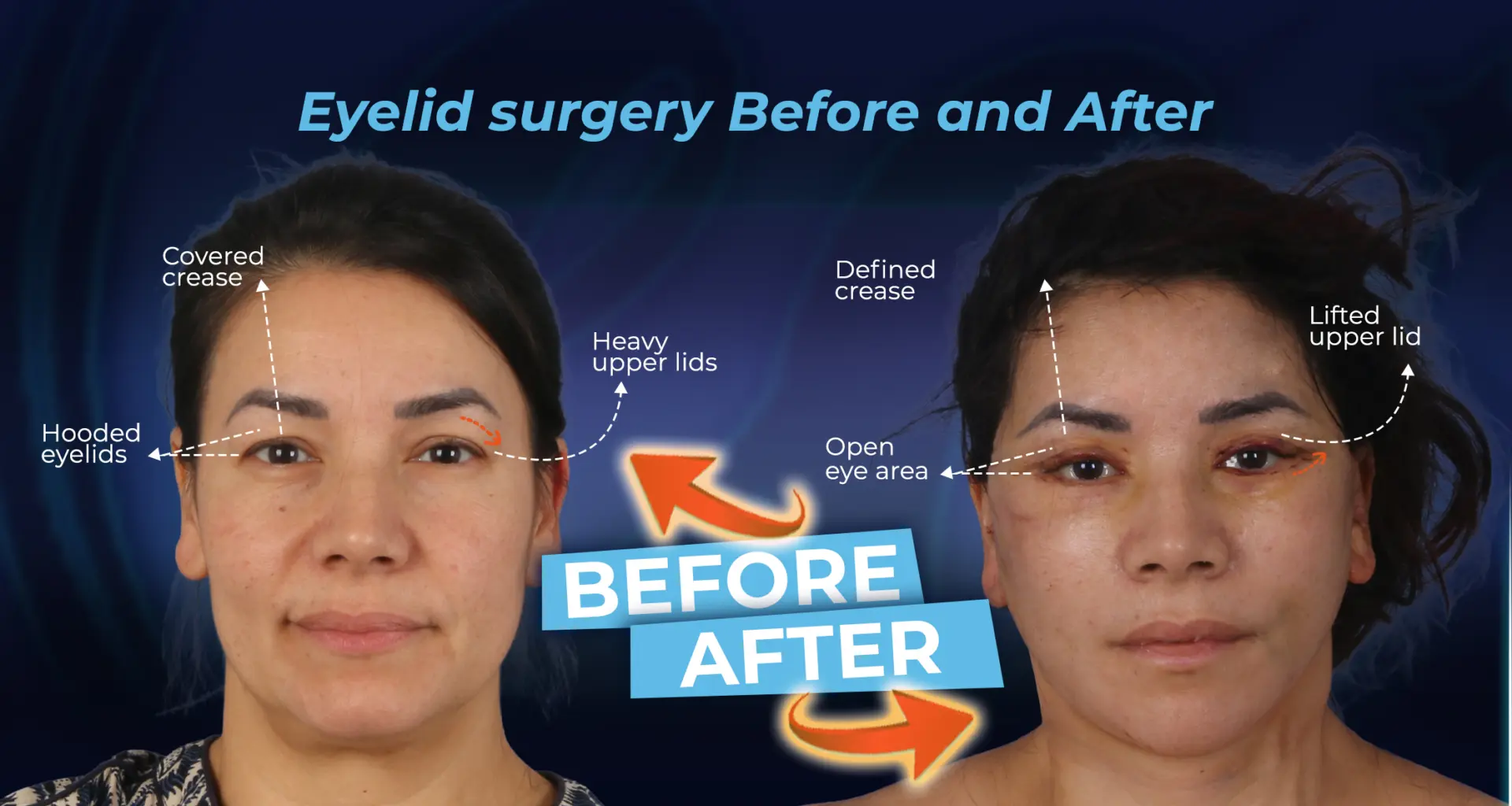
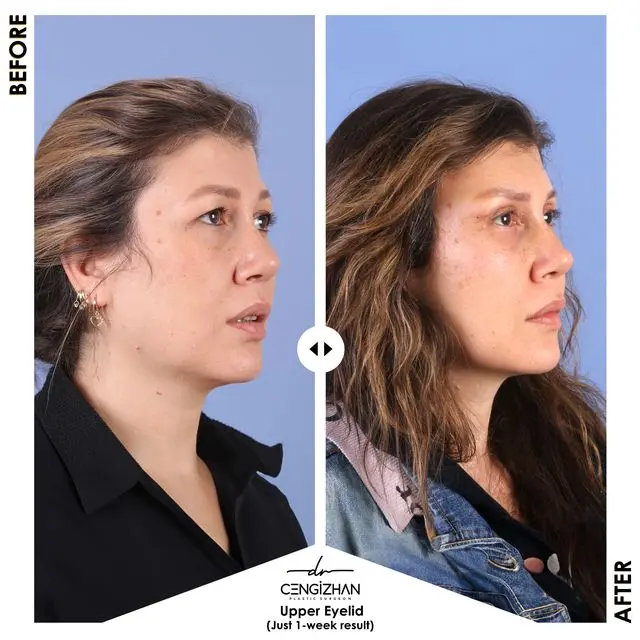
Upper eyelid blepharoplasty aims to help with lax eyelids or eyelids with excess skin and make the eyelid look lifted and smooth. The goal of this procedure is to help give the face a youthful appearance by making the eyes look rejuvenated. Also referred to as the upper eyelid surgery, the upper blepharoplasty procedure is a surgical eyelid lift that involves removing the excess skin, fat, and tissue in the eyelid.
🔴 This cosmetic eyelid surgery begins with a consultation where the surgeon will analyze the patient’s face and decide whether the patient is the ideal candidate for this surgery. Next, the surgeon administers anesthesia to make the procedure painless for the patient. The surgeon will now make an incision in the eyelid. The incision is carefully made in the natural crease of the eyelid to ensure that the resulting scar isn’t visible. Next, the excess skin, muscle, and fat will be removed while the surgeon adjusts the rest of the skin and tissue to achieve lifted eyelids. Finally, the surgeon will suture the incisions.
Pros of the Upper Blepharoplasty Procedure
- The upper blepharoplasty surgery gives permanent and drastic results.
- There is only a small amount of scarring that isn’t as visible since it exists in the crease of the eyelids.
- Additionally, the recovery time is short and smooth.
- The surgeon can examine the patient’s face during the consultation to customize the procedure according to the needs of the patient.
- Since this surgery lifts the eyelids, it can even help with improved vision.
Cons of the Upper Blepharoplasty Procedure
- Since this procedure is a surgery, there is a risk of bleeding and infection.
- This surgery is also quite costly.
💉 A Deep Dive into Botox for Hooded Eyes
Botox is a great non-invasive solution for hooded eyes. This hooded eyelid treatment focuses on the muscles that make the eyelids droop and gives them a slight lift to open up the eyes.
If the eyes have a moderate amount of hooding, Botox can certainly be a great fix for hooded eyes. Unlike the surgical eyelid lifts, Botox only takes a few minutes to be administered. However, the doctor administering the Botox should be an experienced one to prevent any risks and accidents.
🔴 Botox is used on certain muscles, such as the corrugator muscle (located in the eyebrow), the procerus muscle ( located between the eyebrows), and the orbicularis oculi (this muscle sits under the skin and surrounds the eye). These are muscles that pull the brows lower, which can cause hooding. Botox relaxes these muscles, which lifts the eyelids and eliminates the heavy and saggy look of the eyelids.
Pros of Botox for Hooded Eyes
- Botox is a great temporary solution for hooded eyes, and the results will begin to appear in only about 3 to 5 days.
- The downtime for this procedure is extremely short.
- It is the perfect procedure for those who don’t want to commit to getting surgery.
- Botox works best when there is moderate hooding in the eyelids.
- The subtle lift that Botox gives can help enhance vision.
Cons of Botox for Hooded Eyes
- The results are temporary and only last for a few months.
- Additionally, the injection site may end up with some bruising. This should be expected.
- This procedure can result in some asymmetry in the eyelids.
- If not done correctly, it can result in overly lifted eyebrows.
✨ A Head-to-Head Comparison Table of Upper Blepharoplasty vs. Botox for Hooded Eyes
Here is a head-to-head comparison of Blepharoplasty vs. Botox for correcting hooded eyelids.
| Botox | Upper Blepharoplasty |
| Botox for hooded eyes works by preventing the muscles that pull the lid downwards from contracting. | An upper Blepharoplasty achieves an eyelid lift by surgically removing the extra skin, fat deposits. |
| Botox is a non-surgical and non-invasive treatment for hooded lids. | A Blepharoplasty is a cosmetic surgical procedure and requires the administration of local anesthesia. |
| The effects of Botox are temporary and are suitable for mild upper eyelid drooping. | The changes made during an upper blepharoplasty surgery are permanent. The procedure is suited for moderate to severe drooping of the eyelids. |
| The lifted appearance of the eyelids after Botox administration usually lasts for approximately 3 to 6 months. | Surgical outcomes of an upper Blepharoplasty procedure are highly durable and long-lasting. |
| Re-treatment is required to maintain outcomes. | With proper maintenance, there is no need for re-treatment. |
| Botox is suitable for people who want to avoid surgery or have other health issues that make them ineligible for surgical intervention. | An upper Blepharoplasty is a hooded eyelid treatment best suited for people in good health and with no secondary health issues. |
| Botox is a non-surgical eyelift and hence has minimal downtime. | The early recovery period for a Blepharoplasty lasts 1 to 2 weeks. |