





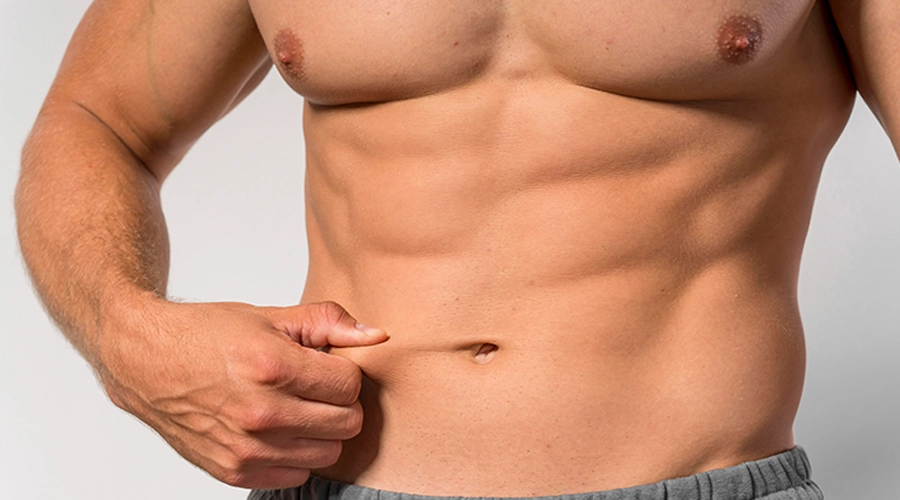
Six-pack contouring may be planned using abdominal etching or a high-definition liposuction approach. The appropriate technique depends on fat distribution, muscle anatomy, and skin elasticity. For this reason, the same depth or pattern of muscle definition is not created in every patient.
What Is Six-Pack Surgery?
Six-pack surgery is a cosmetic body contouring procedure in which abdominal fat is selectively sculpted to make the transitions between the muscles more visible. In the medical literature, this approach is also known as abdominal etching.
Traditional liposuction is a broader approach to fat reduction and body contouring. In six-pack contouring, fat is not removed evenly from every area. Different depths of sculpting may be used according to the anatomical borders of the muscles.
The goal is not to create artificial-looking muscle lines. The rectus abdominis, midline, and surrounding anatomy are assessed so that the contours follow the patient’s natural structure.
For this reason, preoperative anatomical marking is an important part of the procedure.
How Is Six-Pack Surgery Performed?
During six-pack surgery, the natural borders of the abdominal muscles are identified and the fat in these areas is sculpted in a controlled manner.
Before surgery, the patient is assessed while standing. The position of the abdominal muscles, waistline, and fat distribution are examined. The surgeon then marks the areas to be contoured according to the patient’s anatomy.
Fat is then accessed through small entry points using liposuction cannulas. The thickness of the fat layers over and around the muscles may be reduced to different levels.
This variation can make the natural shadows between the muscles more visible. The central abdominal line and the lateral borders of the muscles may also be included in the contouring plan.
The type of anaesthesia and the duration of surgery vary according to the extent of the procedure. Additional body contouring procedures performed at the same time may also affect the operating time.
What Is the Difference Between Abdominal Etching and Liposuction?
Abdominal etching uses liposuction principles but involves more detailed contouring with a specific focus on highlighting muscle anatomy.
| Feature | Six-Pack / Abdominal Etching | Traditional Liposuction |
| Primary goal | Enhance muscle definition | Reduce localised fat |
| Planning | Based on muscle anatomy | Based on overall body contour |
| Fat removal approach | Selective and may use different depths | May be more uniform |
| Typical candidate | People with suitable muscle tone and skin elasticity | People with localised fat deposits |
| Target result | Athletic, defined abdomen | More balanced body contour |
In six-pack contouring, the amount of fat removed is not the only factor that matters. The areas where fat is deliberately preserved also influence the result.
If the main concern is localised abdominal fat, conventional liposuction may be sufficient. If greater muscle definition is desired, abdominal etching may be considered.liposuction
Who Is a Good Candidate for Six-Pack Surgery?
Six-pack surgery is generally considered for people whose weight is relatively stable, whose skin has good elasticity, and who have some underlying abdominal muscle tone.
The procedure can be planned more predictably in patients with a thin to moderate layer of localised fat over the abdomen.
Suitability is not determined by weight alone. Fat distribution, muscle development, skin quality, and the patient’s expectations are assessed together.
People who may be considered for six-pack surgery often have the following characteristics:
- Their weight is close to their target weight and relatively stable.
- They have stubborn fat in the abdominal area.
- They have adequate skin elasticity.
- They have a defined underlying abdominal muscle structure.
- Their general health is suitable for surgery.
- They have realistic expectations about the results.
- They can maintain a lifestyle that supports weight stability after surgery.
Final suitability should be determined after a physical examination and medical assessment.
Who May Not Be Suitable for Six-Pack Surgery?
Six-pack surgery alone may not be sufficient for people with significant skin laxity or a large amount of abdominal fat.
Abdominal etching is not a weight-loss operation. Liposuction should not be considered a substitute for overall weight loss either.
In people with substantial skin laxity, the skin may not conform adequately to the muscles after fat removal. In such cases, other surgical options may be more appropriate.
For example, a tummy tuck may be a better option when there is significant excess skin.tummy tuck surgery
Uncontrolled chronic conditions, health problems that may affect healing, and smoking should also be assessed. Current medications should be discussed with the surgeon.
If pregnancy is planned or a major weight change is expected in the near future, the timing of surgery may need to be reconsidered.
How Is Six-Pack Contouring Planned for Men and Women?
Six-pack contouring can be performed in both women and men, but the target level and pattern of muscle definition are individualised.
In men, the central line and horizontal muscle intersections may be emphasised more strongly for a classic six-pack appearance. Contouring the flanks can also influence the overall proportions of the torso.
In women, a softer abdominal definition may be preferred. The vertical midline and waist transitions may be highlighted more subtly.
However, this is not a fixed rule. The patient’s anatomy and desired appearance form the basis of the surgical plan.
For a natural result, contouring should follow the actual position of the muscles. Applying the same six-pack template to every patient is not appropriate.
How Should You Prepare for Six-Pack Surgery?
Before six-pack surgery, the patient’s general health and abdominal anatomy should be assessed in detail.
During the examination, skin elasticity, muscle structure, fat thickness, and any previous surgical scars are evaluated. Weight changes and previous operations are also discussed.
Regular medications, vitamins, and herbal supplements should be disclosed to the doctor. Products that may affect bleeding risk should only be adjusted under medical guidance.
Smoking and nicotine products can affect wound healing. Their use should therefore be discussed with the surgeon before the operation.
It is also important to have realistic expectations before surgery. The procedure can only create definition within the limits of the patient’s existing muscle anatomy.
Is Six-Pack Surgery the Same as a Tummy Tuck?
Six-pack surgery and a tummy tuck are different procedures that address different anatomical concerns.
Six-pack contouring primarily shapes the fat layer to highlight muscle definition. A tummy tuck can address significant excess skin and abdominal wall laxity.
| Concern | Approach More Commonly Considered |
| Localised fat | Liposuction |
| Poor muscle definition | Six-pack / abdominal etching |
| Significant skin laxity | Tummy tuck |
| Skin laxity with excess fat | Tummy tuck with additional contouring |
| Goal of an athletic abdominal appearance | Personalised high-definition contouring |
If skin elasticity is poor, fat removal alone may not be sufficient. The surgical plan is adjusted when excess skin is present.
For this reason, the most appropriate operation is not chosen solely according to the desired appearance. The underlying anatomical concern must also be assessed.
What Is Recovery Like After Six-Pack Surgery?
Swelling, bruising, tightness, and tenderness can be expected after six-pack surgery. Recovery time varies according to the extent of the procedure.
A compression garment or abdominal corset may need to be worn for the period recommended by the surgeon. This is intended to help control swelling and support the tissues.
Daily activities may be limited during the first few days. Light walking may begin early in recovery depending on the surgeon’s assessment.
Many people may be able to return to desk-based work within the first few weeks. Jobs that require physical effort may require a longer recovery period.
| Period | What Can Generally Be Expected |
| First week | Swelling, bruising, and tenderness may be noticeable |
| 2-3 weeks | Daily activities may become more comfortable |
| 4-5 weeks | Swelling continues to decrease and contours become more defined |
| Week 6 and beyond | Activity may be increased gradually with the surgeon’s approval |
| Following months | The final contour becomes clearer as residual swelling decreases |
This timeline is not the same for everyone. The extent of surgery and individual healing speed can change recovery times.
When Can You Return to Exercise After Six-Pack Surgery?
A return to exercise should be gradual and based on the stage of healing and the extent of the procedure.
Heavy lifting and strenuous abdominal exercises may need to be avoided during the early recovery period. The tissues need time to adapt to the new contour.
Light activities may be resumed sooner. The surgeon’s approval should be obtained before returning to intense fitness training, weightlifting, or abdominal exercises.
After liposuction, activity is generally increased gradually. Exercise levels may be reassessed from around the sixth week onward.
Feeling well is not, by itself, enough reason to return to strenuous exercise. Tissue healing may take longer than the visible recovery suggests.
When Will You See the Results of Six-Pack Surgery?
The first contours may be visible early after six-pack surgery, but the final result becomes clearer as swelling decreases.
During the first few weeks, swelling may temporarily obscure the muscle lines. As the tissues heal, the transitions across the abdomen may become more defined.
Swelling after liposuction can continue to decrease for weeks. Smaller amounts of residual swelling may take longer to resolve completely.
For this reason, the result should not be judged during the first few days. The final appearance can be assessed more accurately after several months of healing.
Muscle anatomy, skin quality, and fat distribution all influence the outcome. It is normal for results to vary between individuals.
Are Six-Pack Surgery Results Permanent?
Some of the fat cells removed during six-pack surgery do not return, but weight changes can alter the appearance of the abdomen.
The remaining fat cells can enlarge with weight gain. This can make the abdominal muscle lines less visible again.
Ageing, changes in skin elasticity, and major weight fluctuations can also affect the result over time.
Maintaining a stable weight is important for preserving the result. Balanced nutrition and regular exercise can also help maintain the abdominal contour.
Six-pack surgery is not a substitute for exercise and healthy nutrition. These habits remain important after surgery.
What Are the Risks of Six-Pack Surgery?
Because six-pack surgery is a surgical procedure, the possibility of complications cannot be eliminated completely.
Studies of abdominal etching have reported complications such as contour irregularities, seroma, pigment changes, infection, and haematoma.
Other potential risks associated with liposuction include asymmetry, altered sensation, swelling, and wound-healing problems. Rarely, more serious circulatory or respiratory complications may occur.
With high-definition contouring in particular, excessive or uneven fat removal can create unnatural-looking contours.
For this reason, the following factors should be assessed before surgery:
- General health
- Previous operations
- Current medications
- Smoking and nicotine use
- Individual risk factors for blood clots
- Skin elasticity
- Thickness of the fat layer
- Realistic aesthetic expectations
Individual risks can only be determined in detail after an examination and medical assessment.
Can Six-Pack Surgery Be Combined with Other Cosmetic Procedures?
In suitable patients, six-pack surgery may be planned together with other body contouring procedures.
In men, if there is also excess fat or glandular tissue in the chest, gynecomastia surgery may be considered.gynecomastia surgery
If there is excess fat around the waist, back, or flanks, contouring does not necessarily have to be limited to the abdomen. The proportions of the entire torso may be assessed together.
People with skin laxity may require a different surgical plan involving a tummy tuck.tummy tuck
Whether multiple procedures can be performed during the same operation depends on the patient’s health. Total operating time and overall surgical burden should also be considered.
Six-Pack Surgery Turkey Prices 2026
Six-pack surgery costs in 2026 vary according to the extent of the procedure and the individual surgical plan.
There is no single fixed price that applies to every patient seeking abdominal muscle definition. The technique used and the areas to be contoured can vary from person to person.
Key factors that may affect the cost include:
- The amount of fat in the abdominal area
- The liposuction technique used
- The extent of contouring
- Whether the waist and flanks are included
- Estimated operating time
- The type of anaesthesia used
- Hospital and operating theatre conditions
- Whether an additional surgical procedure is required
- The patient’s existing body structure and surgical needs
Giving a precise six-pack surgery price without a verified, individual assessment may be misleading.
The exact cost should be determined after consultation and creation of the treatment plan.
Frequently Asked Questions
Does Six-Pack Surgery Actually Create Abdominal Muscles?
No. Six-pack surgery does not create new muscle or enlarge existing muscle. It aims to make the natural contours more visible by sculpting the fat layer over the abdominal muscles.
Is Six-Pack Surgery a Weight-Loss Procedure?
No. Six-pack surgery is a body contouring procedure, not a weight-loss treatment. Different approaches may be needed for people with significant excess weight.
Do You Need to Exercise Before Six-Pack Surgery?
Well-developed muscle tone can provide more noticeable and natural abdominal definition. However, suitability is not determined by exercise history alone. Skin quality and fat distribution are also important.
Can Women Have Six-Pack Surgery?
Yes. Abdominal etching can also be performed in women. The target muscle definition and waist contour are personalised according to the patient’s anatomy.
Do You Need to Wear a Compression Garment After Six-Pack Surgery?
A compression garment or abdominal corset may form part of the recovery plan. The surgeon determines how long it should be worn according to the extent of the procedure.
Does Six-Pack Surgery Leave Scars?
Small access incisions are required for liposuction cannulas, so scars can occur. These incisions are planned to be as limited and discreetly positioned as possible. Their appearance depends on individual healing.
When Can You Return to Work After Six-Pack Surgery?
Return-to-work timing depends on the physical demands of the job. Desk-based work may be possible within the first few weeks, while physically demanding jobs may require a longer period of rest.
Will the Abdominal Muscles Be Visible Immediately After Six-Pack Surgery?
Early changes may be visible soon after surgery, but swelling can temporarily obscure the muscle lines. The final contour becomes clearer as the swelling subsides.
What Happens If You Gain Weight After Six-Pack Surgery?
Weight gain can cause the remaining fat cells to enlarge, which may make the abdominal muscle definition less visible over time.
Can Six-Pack Surgery and a Tummy Tuck Be Performed Together?
In some patients, both procedures may be considered within the same surgical plan. The decision depends on excess skin, fat distribution, and general health.
Does Everyone Get the Same Result from Six-Pack Surgery?
No. Results vary according to muscle anatomy, skin elasticity, fat distribution, and individual healing. The surgical plan is therefore personalised.